Skip to content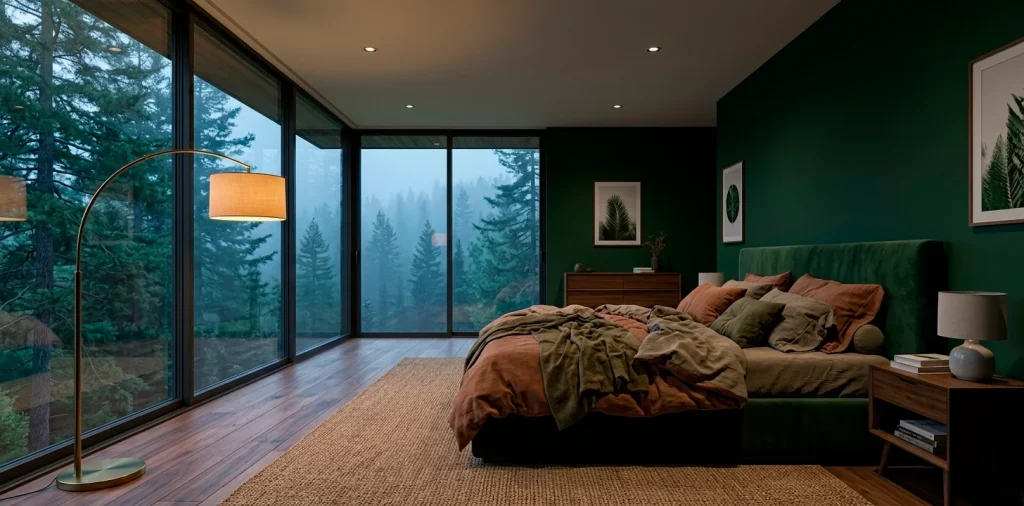
Stop settling for a bedroom that feels like a sterile hospital wing. You deserve a space that feels like a quiet, mossy clearing in the middle of an ancient woods. Forest green isn’t just a color; it’s a whole vibe that grounds your soul after a chaotic day. Whether you want to go full monochrome or just add a few piney accents, I’ve got the roadmap to turn your sleep space into a moody, nature-inspired fortress. Ready to ditch the boring beige and embrace the dark side of the forest? Let’s transform your room into the ultimate retreat.
The All-In Monochrome Wall Treatment
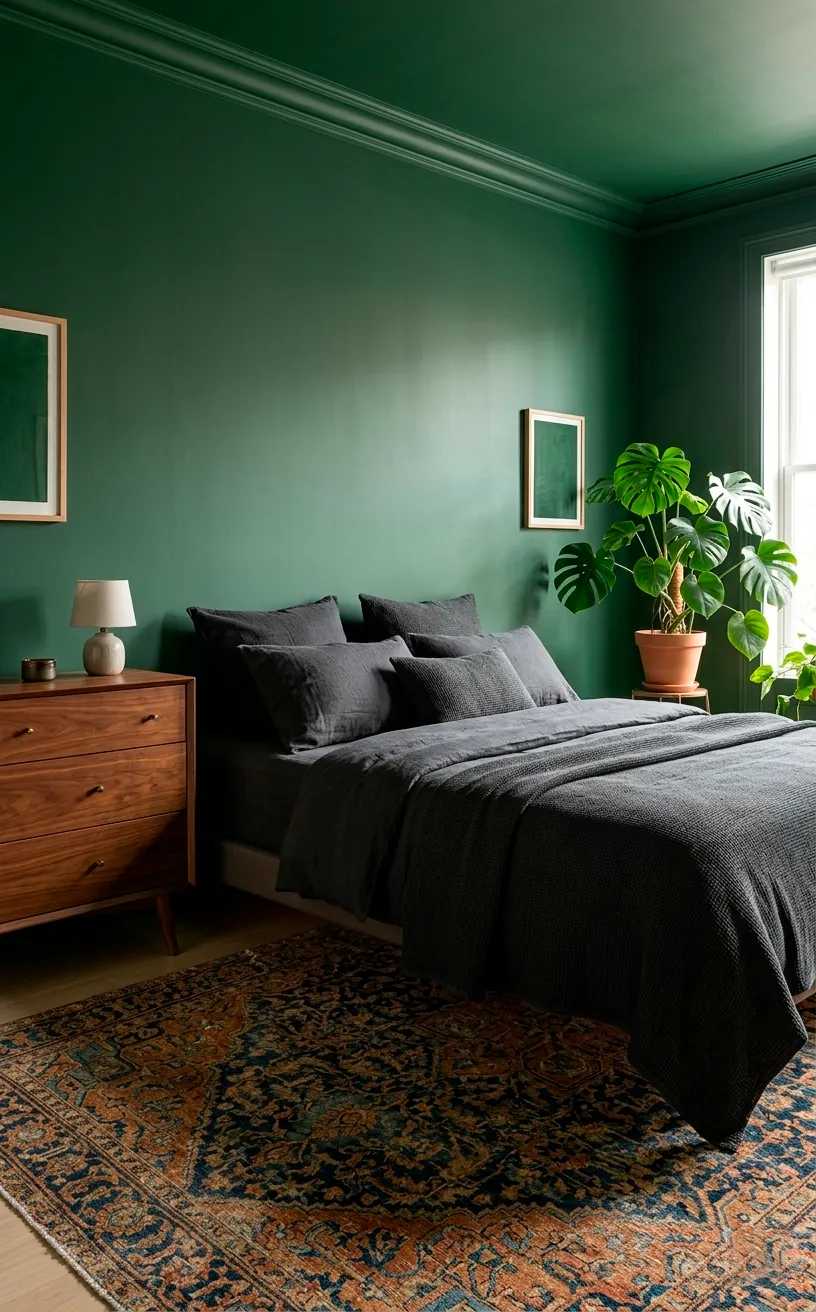
If you really want to commit, paint everything green. I mean everything—the walls, the trim, even the radiator if it’s looking a bit sad. Enveloping the room in a single dark hue eliminates harsh visual breaks and makes the space feel infinitely more expansive yet cozy. Why do we always assume dark colors make a room feel tiny? IMO, it actually does the opposite by blurring the corners. I recently painted my own guest room this way, and now I never want to leave. Just make sure you pick a matte or eggshell finish to keep that sophisticated, non-reflective forest floor feel. It’s basically like living inside a giant emerald, but way more comfortable for sleeping.
Plush Green Velvet Headboards
Nothing says ‘I have my life together’ quite like a velvet headboard. It adds a layer of tactile luxury that plain cotton just can’t touch.
Ever noticed how velvet catches the light? In a dark green room, it creates these beautiful highlights and shadows that mimic the dappled light of a canopy. It’s the perfect backdrop for your late-night reading sessions.
A useful little gift for your home
🎁 Free Plant Finder Tool
Filter 250+ houseplants by style, size, and care level to find your perfect green companion in seconds.
We’ll email you the link. Plus, you’ll join our newsletter for fresh home inspiration.
I suggest pairing a deep emerald velvet with brass accents to really lean into that high-end lodge aesthetic. It’s soft, it’s dramatic, and it feels like a literal hug for your head. Seriously, your pillows will thank you for the upgrade.

Raw Walnut Furniture Contrast
Green and wood are basically the peanut butter and jelly of interior design. Walnut furniture provides the perfect warmth to balance out the cool, dark tones of a forest green wall.
I love how the deep brown grain of walnut looks against a dark pine backdrop. It feels intentional and grounded. Have you ever seen a tree that didn’t look good against its own leaves? Exactly. Stick to clean lines and tapered legs to keep the look modern rather than ‘grandpa’s old cabin’ vibes. tapered leg furniture really helps lift the room and prevents it from feeling too heavy.

Golden Brass Accents for Sparkle
Let’s be real: a dark room needs a little jewelry. Brass or gold hardware acts like those little spots of sunlight hitting the forest floor.
Switching out your boring silver drawer pulls for brass ones is the easiest DIY you’ll ever do. It instantly elevates the mood.
Why does gold look so good with green? It’s a classic color theory win that screams sophistication without trying too hard.
I personally recommend adding a brass floor lamp in the corner to catch the evening light. It provides that necessary metallic pop that prevents the dark green from looking too flat or muddy. Golden brass lamps are a total game changer for moody spaces.

Layered Earthy Textiles
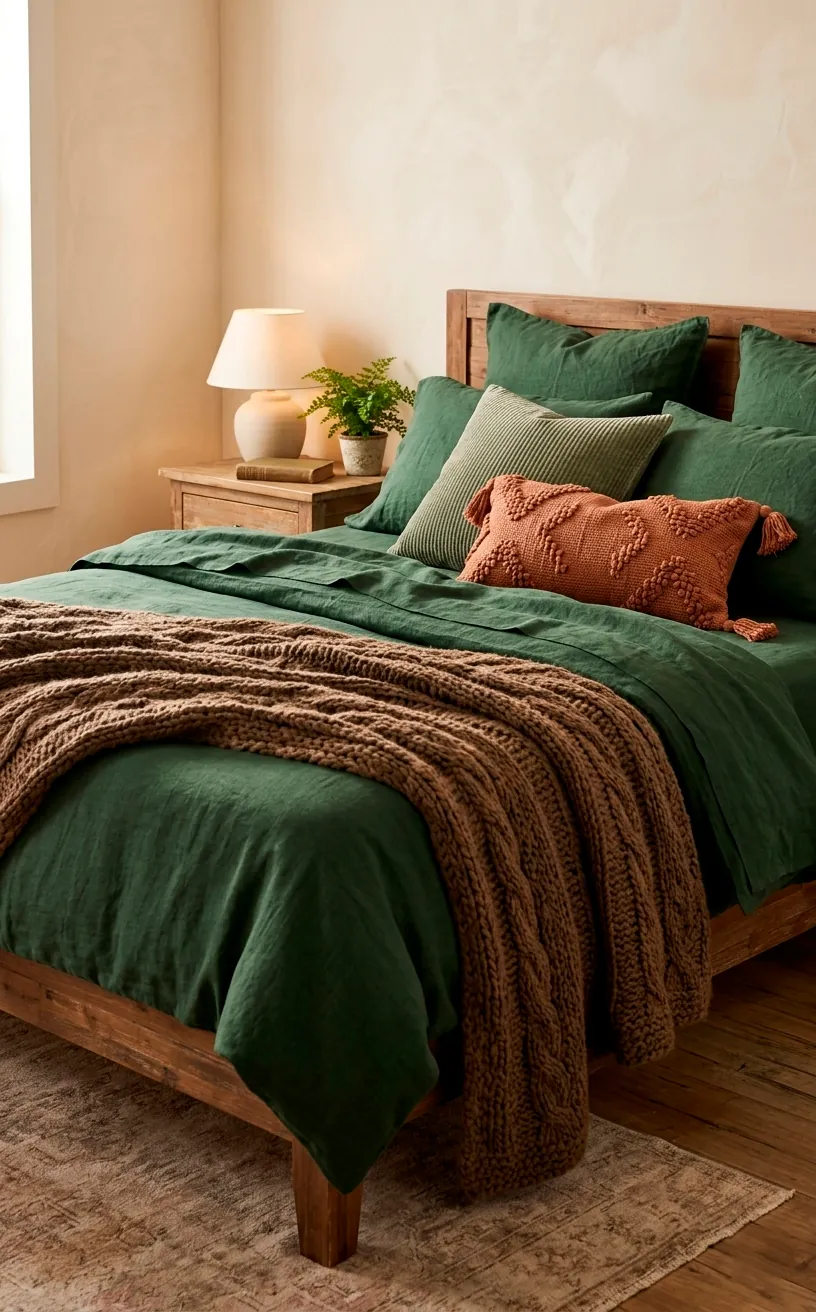
Don’t stop at the paint; you need to layer your textiles like you’re dressing for a chilly autumn hike. Mix linen, wool, and cotton in varying shades of green, brown, and ochre.
I think a chunky wool throw at the foot of the bed adds just enough ‘crunch’ to the room. It breaks up the smoothness of the sheets and adds that much-needed visual weight. Layering is the secret sauce to making a room look like a professional designed it rather than just a furniture catalog. Keep the colors muted to maintain that serene, nature-inspired flow throughout the space.
The Indoor Jungle Vibe
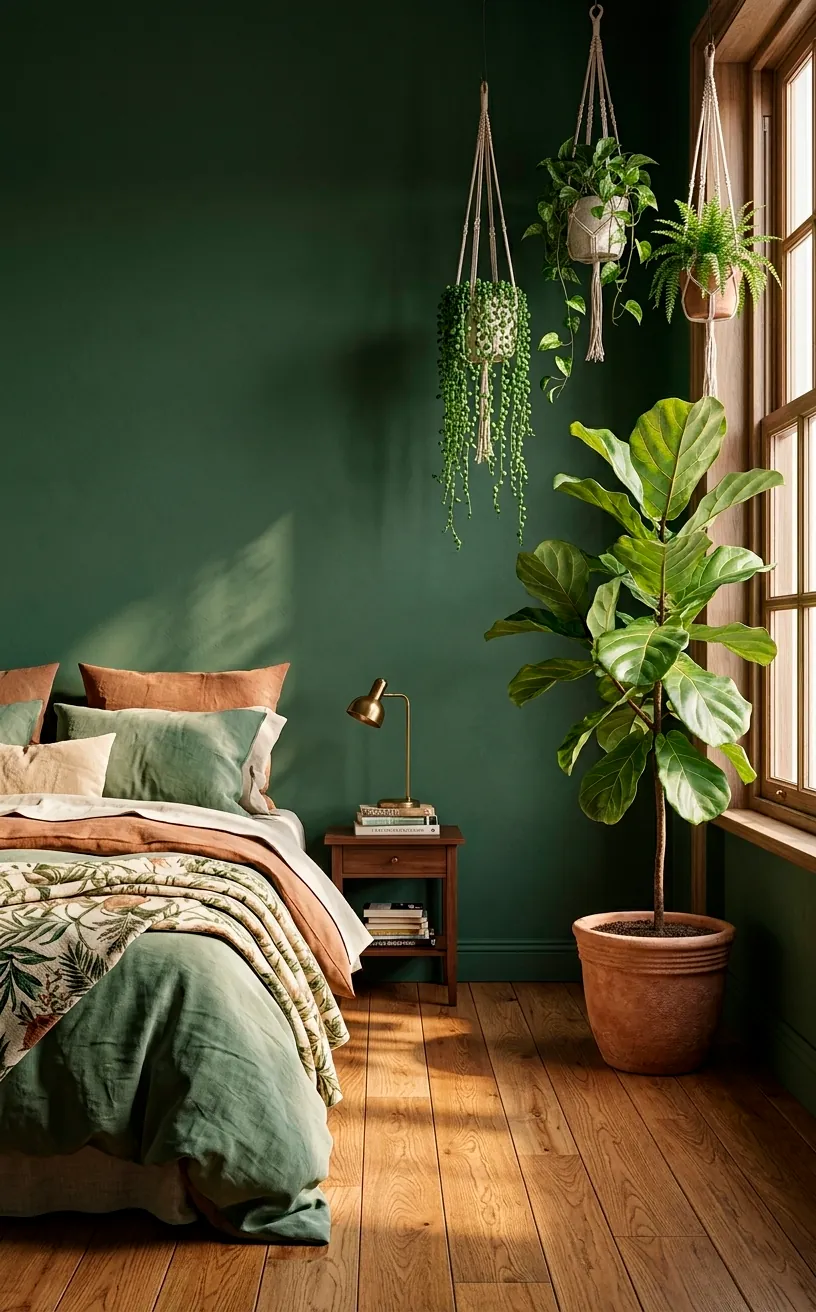
You can’t have a forest-inspired room without some actual life in it. Adding leafy plants like Monstera or Fiddle Leaf Figs creates a 3D forest effect. The different shades of green from the leaves will pop beautifully against the darker wall paint. It creates a sense of depth that paint alone can’t achieve. Plus, they clean the air while you sleep, which is a nice bonus for those of us who aren’t great at opening windows in the winter. Just don’t overwater them, okay? FYI, a dead plant is the quickest way to ruin a moody aesthetic. Dark academia plant styling can give you some great tips on how to arrange them.
Moody Botanical Art Gallery
Empty walls are for minimalist galleries; forest bedrooms need soul. Frame some vintage botanical prints or dark landscape photography.
I suggest using dark wood or black frames to keep things grounded. It ties the nature theme together perfectly without feeling cheesy.
Ever noticed how a single piece of art can change the whole mood of a corner? It’s like a window into another world.
Don’t be afraid to go big with your art. One massive canvas of a misty forest can act as a secondary window, bringing that outdoor calm right to your bedside. It’s a low-effort, high-impact way to reinforce the theme.

Textured Limewash Finish
Flat paint is fine, but limewash adds a movement that feels like ancient stone or tree bark. It gives the walls a mottled, velvety appearance that reacts beautifully to light. I’m obsessed with the way it creates natural depth without needing a single piece of decor. It’s subtle, earthy, and feels incredibly high-end. If you want your room to feel like a hidden cave in the woods, this is the way to go. Just be prepared for a bit more work during application—it’s a labor of love, but the payoff is 100% worth it.

Dark Flooring and Area Rugs
Don’t ignore what’s under your feet. Dark hardwood or slate floors anchor the room’s moody palette.
If you’re stuck with light carpet, a large, dark area rug can save the day. I recommend something with a subtle pattern or a deep mossy texture.
It feels so much more grounding to step onto something dark and soft when you wake up. It completes the ‘forest floor’ feeling that we’re going for. Plus, it hides dust much better than white rugs, which is a total win for the lazy decorators among us (myself included).

The Fifth Wall: Green Ceilings
Feeling brave? Paint the ceiling green too. This is the ultimate move for creating a cocoon-like environment. It stops the eye from wandering up to a stark white void and keeps the mood consistent throughout the entire volume of the room.
I think it works best in rooms with decent ceiling height, but honestly, it’s cozy in small spaces too. It feels like being tucked under a dense canopy. Pair it with a statement chandelier—maybe something in brass or wood—to draw the eye up and celebrate the drama.

Antique Mirrors for Depth
Dark rooms can sometimes feel a bit heavy, so add an antique mirror to bounce light around without breaking the vintage vibe.
A foxed or distressed mirror fits the ‘old forest’ theme way better than a shiny new one.
I love how the silvering reflects the green walls in a soft, blurry way. It adds mystery and makes the room feel like it has its own history.
Why go for basic when you can find something with a weathered gold frame at a flea market? It adds character and a touch of ‘haunted forest’ chic that is weirdly comforting.

Leather Elements for Warmth
Introduce some cognac or chocolate leather into the mix. A leather accent chair or even just leather pulls on a dresser add a rugged, organic texture that complements forest green perfectly. Leather feels timeless and only gets better as it ages and gets that nice patina. I think it’s the perfect bridge between ‘outdoor gear’ and ‘interior luxury.’ It adds a masculine edge to the softness of the bed linens, balancing the room out perfectly. If you have the space, a small leather reading nook is the ultimate goal.

Blackened Metal Hardware
If brass is too flashy for you, go for matte black hardware. It disappears into the shadows and creates a very modern, streamlined look.
I love how black metal bed frames look against deep green walls—it’s like an iron gate at the edge of the woods.
It’s subtle, edgy, and doesn’t distract from the main star of the show: the color.
IMO, black accents help ground the more organic elements of the room. It provides a sharp, man-made contrast to the soft plants and textured linens, making the whole design feel more curated and less like a random collection of forest stuff.

Natural Woven Textures
Bring in some rattan, jute, or seagrass to add that raw, crunchy texture. A jute rug under the bed or a rattan pendant light can break up the darkness with some natural tan tones. These materials remind me of dried grass and bird nests—sounds weird, but it totally works for a nature theme. They add a light, airy quality that prevents the moody green from feeling suffocating. It’s all about balance, and these woven pieces are the perfect weight to keep things feeling fresh and organic. Plus, they’re super durable and hide pet hair like a charm.

Window Treatments and Light Control
Finally, you need to control the light to keep it moody. Heavy velvet curtains in a matching green or a dark charcoal will block out the world. When they’re closed, you’re in your own private sanctuary. When they’re open, they frame the view of the outdoors like a masterpiece. I always tell people to hang their curtains high and wide to make the windows look bigger. It’s a classic designer trick that works every single time. Get some blackout liners if you’re serious about your sleep—there’s nothing worse than a ‘moody’ room that’s ruined by a 6 AM sunbeam hitting you right in the eye.

A useful little gift for your home
🎁 Free Plant Finder Tool
Filter 250+ houseplants by style, size, and care level to find your perfect green companion in seconds.
We’ll email you the link. Plus, you’ll join our newsletter for fresh home inspiration.
Wrapping Up Your Forest Haven
Creating a moody forest green bedroom is all about embracing the shadows and leaning into natural textures. By mixing deep colors with wood, brass, and plenty of plants, you turn a standard sleeping area into a soulful retreat that actually recharges your batteries. It’s bold, it’s cozy, and it’s a lot more interesting than another white-walled room. So, are you ready to pick up a paintbrush and go green? Let me know in the comments which of these ideas you’re planning to steal for your own home!