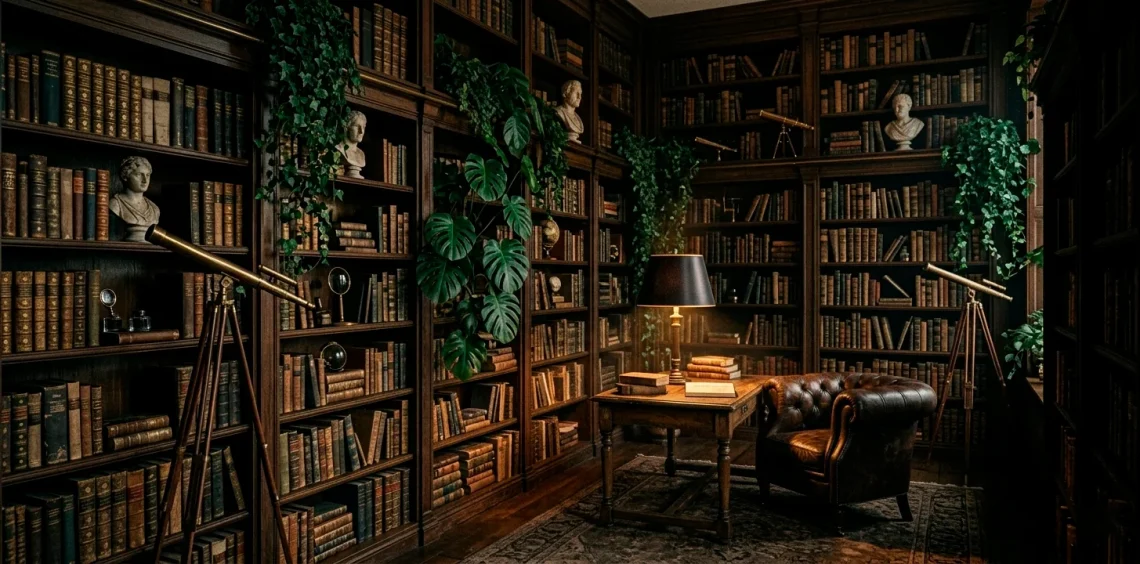
Forget the bright, white-walled ‘plant parent’ aesthetic for a second. We’re going deeper into the stacks—where the smell of old paper meets the damp earth of a conservatory. Dark academia isn’t just about wearing tweed jackets; it’s about creating a mood that feels like a forgotten library. Ready to turn your home into a scholar’s retreat? Let’s grow some history.
Embracing the Gothic Conservatory Vibe
I’ve always felt that modern minimalism is a bit… well, sterile. Give me a cluttered desk and a shadowy corner any day! To nail the dark academia plant vibe, you need to think like a 19th-century botanist who hasn’t seen the sun in weeks. It’s about low-light survivors and moody foliage that look like they’re reclaiming an ancient ruin. Ever felt like your living room was missing a secret history? By layering cascading vines over old hardcovers, you create a narrative. I personally started with a single Pothos, and now my bookshelves look like a scene from a gothic novel. FYI, it’s addicting. 🪴

Choosing Your Moody Greenery
Not every plant fits the ‘haunted library’ brief. You want leaves that look dramatic under the glow of a single lamp. IMO, the darker the foliage, the better. Have you noticed how a Black Raven ZZ plant almost looks like it belongs in a Victorian seance?
I recommend plants with deep burgundy or forest green hues. They contrast beautifully against mahogany or dark walnut shelves. Think about the texture too—velvety leaves feel much more ‘academic’ than shiny, plastic-looking ones.
Essential foliage for the look:
- Alocasia Polly for its jagged, skeletal leaves.
- Velvet Leaf Philodendron for that soft, expensive texture.
- Maranta Red Vein for a touch of ‘blood-stained’ color.

The Art of the Vintage Vessel
Please, I’m begging you: ditch the neon plastic pots. If it doesn’t look like it was excavated from a Roman ruin or found in a dusty attic, does it even belong here? I spend way too much time hunting for weathered terracotta and tarnished brass.
You can transform a cheap pot with a little bit of ‘aging’ paint, but nothing beats the real deal. I love using old apothecary jars for water propagation—it looks like a mad scientist’s experiment! Ever thought about using a vintage trophy as a planter? It adds that ‘varsity’ touch that is so core to the academia aesthetic.

Curating Curiosities and Leaves
The magic happens when you stop seeing plants as isolated objects. They are part of a larger story! I like to tuck small succulents between heavy bookends or let vines crawl over a framed butterfly specimen. It’s all about that ‘lived-in’ museum feel.
Don’t be afraid to crowd your shelves. A few well-placed obsidian rocks or brass compasses nestled in the soil can make a simple houseplant look like a rare find from a field expedition. Does your shelf tell a story of discovery? If you need more inspiration for your walls to match this vibe, check out this Dark Academic Gallery Wall Guide.
Items to mix with plants:
- Bronze animal figurines (ravens or owls are a must).
- Magnifying glasses with wooden handles.
- Geological specimens like quartz or fool’s gold.

Mastering the Chiaroscuro Effect
In the world of Dark Academia, shadows are your best friend. You don’t want flat, bright light that washes everything out. I prefer moody, directional lighting that creates high contrast—what the old masters called chiaroscuro.
Position your plants so they catch the light from a banker’s lamp or a nearby window, leaving the rest of the foliage in deep shadow. This makes the green pop in a way that feels cinematic and mysterious. Ever noticed how a Snake Plant looks ten times more intimidating when it’s backlit? It’s all about the drama, baby! 🕯️

Training Your Vines to Wander
There is something so poetic about a plant literally trying to eat your library. I love training English Ivy or Heartleaf Philodendron to grow along the tops of my book spines. It gives the impression that the room has been abandoned to nature for decades. Use small, clear command hooks to guide the vines where you want them. It’s a simple trick, but it makes the styling feel intentional rather than messy. IMO, a shelf without a vine is a missed opportunity for some serious ‘ancient ruin’ vibes. Just watch out for those wandering tendrils—they’ll grab your favorite novel if you aren’t careful!

The Beauty of Preserved Botanicals
Look, I get it—sometimes we forget to water things. Or maybe you have a corner so dark even a plastic plant would give up. That’s where dried flowers and preserved ferns come in.
I love mixing dried eucalyptus or deep red roses into my displays. They add a ‘memento mori’ vibe that fits the Dark Academia theme perfectly. Have you ever tried pressing flowers in your heaviest books? It’s a classic scholar move.
Preserved choices for a moody look:
- Dried Baby’s Breath in black.
- Preserved Eucalyptus for that dusty silver-green.
- Dried Lotus Pods for an architectural, eerie feel.

Terrariums: Miniature Victorian Worlds
If you want to feel like a 19th-century naturalist, you need a terrarium. These glass-enclosed ecosystems were huge in the Victorian era (Wardian cases, anyone?). I personally find them much easier to maintain because they create their own little humid atmosphere. Plus, they look incredibly scholarly sitting on a desk next to a stack of notes. Ever wondered how to keep a delicate moss alive? A closed glass cloche is the secret. It’s like having a tiny, mysterious forest trapped in time right on your shelf. 🌿

Adding the Glimmer: Brass and Patina
Every dark room needs a little light to bounce around. I always look for antique brass watering cans or gold-leafed frames to nestle among my plants. The metal develops a patina over time that looks so much more authentic than shiny chrome.
I think the warmth of brass pairs perfectly with the deep greens of a Monstera or a Rubber Tree. It adds a touch of ‘old money’ elegance without being too flashy. If you want to lean into the library look even more, consider adding a Golden Brass Lamps Home Library Guide to your reading list. Does your plant corner feel a bit too flat? A few metallic accents will fix that instantly.

Maintaining the Mystery
Styling is one thing, but keeping the vibe alive requires a bit of work. Nothing ruins the ‘mysterious scholar’ aesthetic like a half-dead, crispy plant! I make it a habit to dust my leaves once a week. Dust shows up really clearly on dark plants like the ZZ or Rubber Tree, and it makes them look neglected in a bad way, not a cool way. FYI, using a soft cloth with a bit of diluted neem oil keeps them shiny and bug-free. Remember, you’re the curator of this museum—keep your specimens healthy and they’ll keep your shelves looking legendary for years to come.

Final Thoughts on Dark Growth
Creating a dark academia plant sanctuary is all about balancing the living with the old. By mixing moody foliage, vintage vessels, and scholarly curiosities, you transform your home into a place of history and mystery. It’s a vibe that celebrates the passage of time—dust, shadows, and all. Which plant are you adding to your library first? Let me know in the comments! 🪴🕯️