Skip to content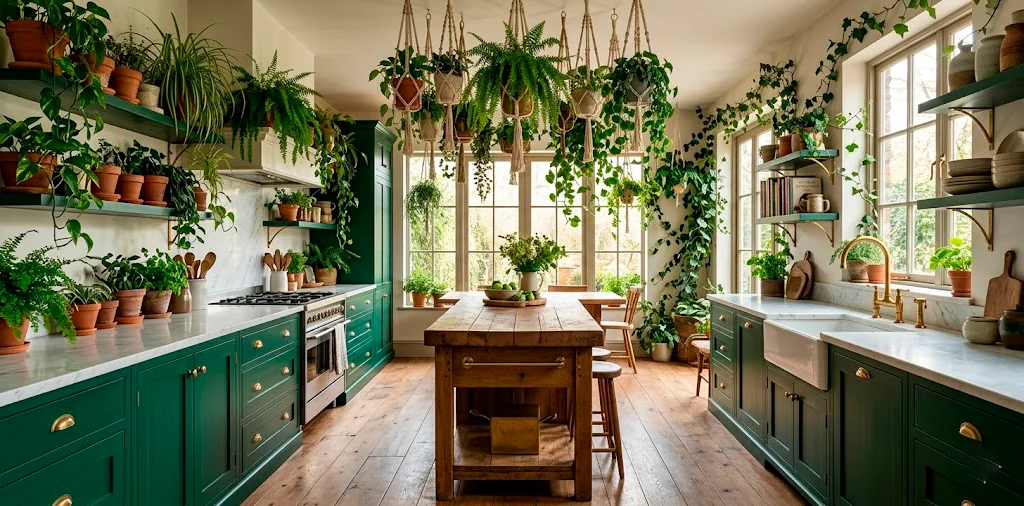
I finally realized that my kitchen didn’t need more high-tech gadgets; it needed a soul. If you feel like your cooking space currently has the personality of a damp paper towel, the botanical green aesthetic is your cure. I transitioned my own space last year and suddenly, making coffee feels like a ritual in a high-end spa. Who wouldn’t want that kind of vibe while burning toast? I’ll show you exactly how to breathe life into your kitchen without turning it into an uncontrollable jungle.
Go Bold with Emerald Cabinetry
I honestly think emerald green cabinets act as the ultimate statement piece for a botanical kitchen. This bold shade anchors the room while providing a rich, organic backdrop for everything else. Dark green hides spills way better than white, which is a total win for anyone as messy as I am.
You should pair these deep tones with warm metals to keep the space from feeling too heavy or cave-like. It provides a luxurious foundation that screams sophistication without trying too hard. Have you ever seen a more regal color that still feels so connected to the earth?

Install a Living Herb Backsplash
Why settle for a boring tile wall when you can literally grow your dinner on it? I installed a vertical herb garden right behind my prep area, and it changed the game. FYI, having fresh basil within arm’s reach makes you feel like a Michelin-star chef even when you’re just heating up leftovers. This living feature adds texture, a divine scent, and a vibrant pop of living green that no ceramic tile can replicate. Just make sure you provide enough light so your cilantro doesn’t decide to give up on life after a week.
A useful little gift for your home
🎁 Free Plant Finder Tool
Filter 250+ houseplants by style, size, and care level to find your perfect green companion in seconds.
We’ll email you the link. Plus, you’ll join our newsletter for fresh home inspiration.

Drape Trailing Pothos Over Shelves
Nothing says botanical like plants that actually try to take over the room. Trailing pothos is the undisputed king of the low-maintenance kitchen world. I let mine spill over the edges of the upper shelves to create a ‘waterfall’ of green.
It softens the hard lines of the cabinetry and hides those awkward gaps between the ceiling and the cupboards. Are you worried about killing them? These plants are notoriously hard to destroy, even for the most forgetful waterers among us.
Essential leafy features:
- Heart-leaf Philodendron for a romantic vibe
- Golden Pothos for a splash of yellow-green
- Satin Pothos for silvery, textured leaves

Embrace Sage Green Wall Tiles
Sage green tiles offer a softer approach if dark emerald feels too brave for your first step. This muted, earthy tone reflects light beautifully and mimics the soft dusty greens of a morning forest. If you enjoy this earthy vibe in the kitchen, you might love these 20 stunning green powder room ideas.
I suggest using a zellige or handmade tile to get those subtle variations in color. It looks much more authentic and organic than flat, machine-made squares. Plus, it makes the whole wall look like a piece of art rather than just a backsplash.

Display Vintage Terracotta Pots
There is something so grounding about the combination of burnt orange terracotta and deep green leaves. I started collecting vintage clay pots from thrift stores because they add an aged, European garden feel to the windowsill.
They breathe better than plastic, which your plants will appreciate. Don’t worry about the white salt stains that appear on the outside over time; that’s just ‘patina,’ and it makes you look like you know what you’re doing.
Potting essentials:
- Aged clay pots for vintage appeal
- Saucers to protect your wood counters
- Pebble top-dressing for a clean finish
I love how the warm clay tone contrasts with the cool greens of a fern or a succulent. It feels like a small piece of a Mediterranean patio right next to your toaster.

Swap for Warm Brass Hardware
If you want your green kitchen to look expensive without actually spending a fortune, switch to brass hardware. The gold tones act like jewelry for your cabinets. I replaced my old chrome pulls in about twenty minutes, and the transformation was shocking. Cold silver just doesn’t sing with botanical greens the way brass does. It warms up the entire color palette and adds a vintage, timeless glow that feels very intentional.

Hang Framed Botanical Prints
You don’t need a green thumb to have a green wall. I filled a small corner of my kitchen with a gallery wall of botanical illustrations. It’s a great way to introduce the theme if you’re the kind of person who accidentally kills a cactus.
Look for vintage-style prints with scientific names of herbs or ferns. These add a sophisticated ‘old world explorer’ vibe that complements the living plants nearby.
Framing ideas:
- Slim black frames for a modern edge
- Ornate gold frames for a classic look
- Natural oak frames for a scandi-botanical feel

Opt for Glass-Front Greenhouse Cabinets
TBH, standard solid cabinets can feel a bit claustrophobic in a small kitchen. I love the idea of glass-front cabinets because they act like miniature greenhouses. When you fill them with green glassware and maybe a small potted ivy peeking through, the look is incredibly airy.
It forces you to stay organized, which is either a blessing or a curse depending on how many mismatched mugs you own. The transparency allows the green theme to flow from the outside in, making the room feel significantly larger.

Add a Retro Mint Appliance
If painting your cabinets feels like too much work, a mint green appliance can do the heavy lifting for you. I bought a retro-style toaster in a soft seafoam green, and it instantly became the focal point of the counter. IMO, these pastel greens provide a playful, nostalgic touch to the botanical aesthetic. It breaks up the seriousness of the dark wood and heavy greenery with a bit of whimsical charm. It’s like a breath of fresh air for your countertop.

Install Natural Wood Floating Shelves
Natural wood is the perfect partner for green. I installed oak floating shelves to replace some clunky upper cabinets, and the room instantly felt more like a forest than a kitchen. Natural textures really elevate the space, so check out these 10 honey-hued rattan kitchen accents.
The raw grain of the wood provides an organic texture that grounds the bright green of the plants. Use these shelves to display your favorite botanical-themed cookbooks or a collection of wooden bowls. It creates a layered, lived-in look that feels incredibly cozy.

Incorporate Leafy Patterned Curtains
Windows are the bridge to the outside world, so why not frame them with foliage? I chose linen curtains with a subtle leaf print to bring the botanical theme to the textiles.
When the sun shines through, the pattern casts beautiful, leafy shadows across the floor. It’s an easy way to soften the space and introduce pattern without committing to wallpaper.
Textile tips:
- Choose breathable linen or cotton
- Look for watercolor-style prints for a soft look
- Stick to a white or cream base to keep it bright

Place a Large Olive Tree in the Corner
Every kitchen has that one awkward, empty corner that collects dust. I filled mine with a large potted olive tree, and it transformed the entire scale of the room.
Even a high-quality faux tree works wonders if you don’t have the light for a real one. The silvery-green leaves add a sophisticated, Mediterranean touch that feels incredibly high-end.
Why an olive tree?
- It adds height and drama
- The muted colors blend with any green shade
- It creates a focal point without cluttering the counter
I suggest placing it in a large wicker basket to add more natural texture. It makes the kitchen feel like a natural extension of a lush backyard garden.

Use Botanical Floor Tiles
If you really want to go all-in, look down. Patterned floor tiles with leaf or floral motifs can ground the whole botanical aesthetic. I’ve seen some stunning cement tiles that look like a Victorian conservatory floor. It’s a bold move, but it pays off by making the kitchen feel like a permanent indoor garden. Keep the rest of your decor simple so the floor can be the star of the show.

Choose Veined Marble Countertops
Marble is a natural stone, so it fits the botanical theme perfectly. I prefer a white marble with deep green veining to tie the cabinets and plants together.
It feels cool to the touch and adds a level of luxury that balances the more rustic elements like terracotta or wood. While it requires a bit of maintenance, the organic patterns are nature’s own artwork, and no two slabs are exactly the same.

Incorporate Woven Bar Stools
You need to balance all that green with some warm neutrals. IMO, woven rattan or seagrass bar stools are the best way to do this. They remind me of outdoor garden furniture but brought inside for a more relaxed, tropical botanical vibe.
They add a much-needed layer of texture that keeps the kitchen from looking too ‘flat.’
Texture benefits:
- Breaks up solid blocks of color
- Adds a handcrafted, organic feel
- Complements both light and dark greens

Display Copper Pots and Pans
Copper and green are a match made in heaven. I hang my copper cookware on a wall rack because the shiny orange metal pops beautifully against a green wall. It gives off serious French country kitchen vibes. Plus, copper is a natural material that fits the organic theme, and it develops a beautiful patina over time that just looks better and better.

Start a Seedling Tray
Why keep your gardening limited to the backyard? I keep my tiny seedlings right on the kitchen counter in a dedicated tray. This look screams ‘functional botanical’ and reminds me that I actually can grow things.
It adds a literal growth element to the room. Use wooden or galvanized trays to keep the look cohesive with the rest of your decor. Watching those tiny green shoots pop up while you’re waiting for the microwave is surprisingly meditative.

Hang Dried Eucalyptus Bundles
If you want that spa-like scent I mentioned earlier, hang dried eucalyptus from your pot rack or under a shelf. It stays green for a long time and releases a wonderful aroma every time the kitchen gets steamy from cooking.
It’s a low-effort way to add a different texture of green that doesn’t require any watering.
Why eucalyptus is great:
- It smells incredible when heated
- The dusty blue-green color is gorgeous
- It lasts for months without maintenance
- It looks effortlessly chic and ‘undone’
I love how the long, slender leaves contrast with the rounder leaves of a pothos. It adds a bit of architectural interest to your plant collection.

Switch to Floral and Leafy Tea Towels
Never underestimate the power of a good dish towel. I swapped my boring gray ones for towels featuring vintage botanical prints. It’s the easiest and cheapest way to inject the theme into your space. Drape them over the oven handle or the sink edge for a quick splash of color. It shows that you’ve thought about even the smallest details in your green sanctuary.

Create a Greenhouse Window Nook
If you have a window over your sink, turn it into a miniature greenhouse. I added glass shelves across the window frame so I could stack even more plants in the direct light. It’s a brilliant way to maximize space and creates a beautiful screen of green between you and the neighbors. It turns the chore of washing dishes into a journey through a botanical garden.
Adding these glass layers allows the light to pass through while supporting your sun-loving herbs. This fits perfectly with the latest 2026 wellness interior design trends which prioritize light and nature. It’s the ultimate finishing touch for a kitchen that feels truly alive.

A useful little gift for your home
🎁 Free Plant Finder Tool
Filter 250+ houseplants by style, size, and care level to find your perfect green companion in seconds.
We’ll email you the link. Plus, you’ll join our newsletter for fresh home inspiration.
Conclusion
Your kitchen shouldn’t just be a place to boil water; it should be a living, breathing sanctuary that makes you happy. Adding botanical green elements connects your home to nature and creates a timeless, calm atmosphere. Which of these 20 ideas are you grabbing first? Let me know in the comments! I hope your new green space brings you as much peace as mine does. 🌿