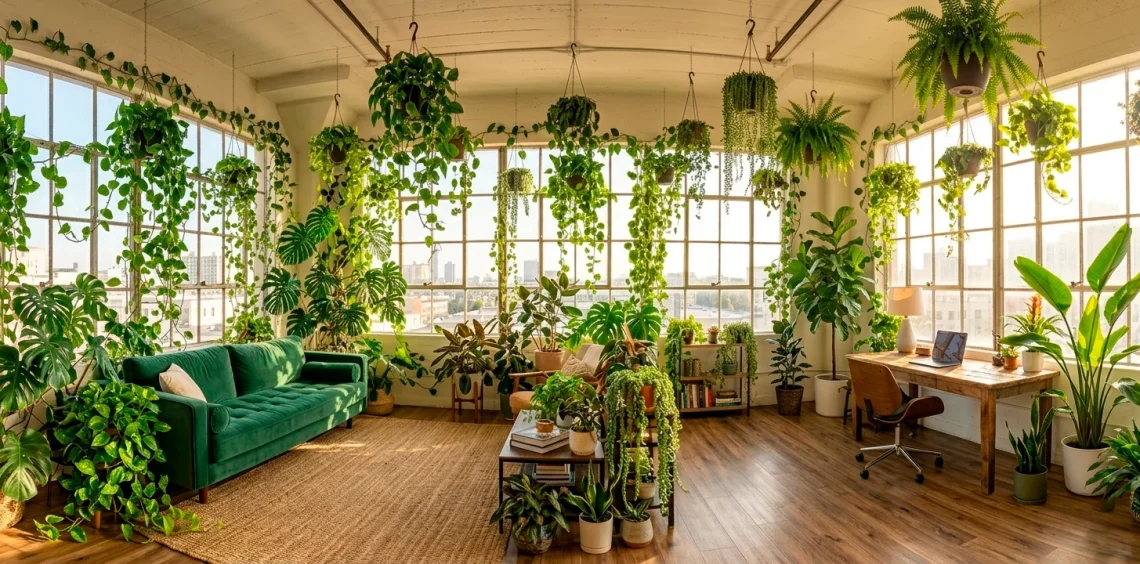
You finally signed the lease on that cozy studio, but now you’re staring at four white walls wondering if you actually live in a shoebox. Don’t panic. I’ve been there, and I promise you don’t need a sprawling mansion to build a botanical empire. Your limited square footage is actually a secret weapon for creating an immersive, jungle-like vibe that feels intentional rather than cluttered. Let’s ditch the ‘minimalist’ excuse and turn your living space into a breathing, green sanctuary that makes your neighbors jealous.
Maximize Your Vertical Real Estate
Living in a studio means floor space is more precious than a reserved parking spot in Manhattan. Why waste it on heavy pots when your walls are literally begging for a makeover? I started using wall-mounted planters last year and honestly, it changed my life. You can install a modular trellis system or simple floating shelves to keep your foliage off the ground and at eye level.
Think about it: who needs a massive gallery wall of overpriced art when you can have a living, breathing tapestry of Philodendrons? These vertical setups draw the eye upward, making your ceiling feel ten feet taller than it actually is. It’s basically a literal growth hack for your apartment’s floor plan. Just make sure you use sturdy anchors unless you want a midnight visit from a falling terra cotta pot.

Hang it Like You Mean It
If your floor is full and your walls are covered, look up. Ceilings are the most underrated real estate in a studio apartment. I’m a huge fan of macramé hangers because they add that retro texture while keeping your plants safe from curious pets or clumsy feet. Ever thought about a ‘curtain’ of hanging plants in front of your window? It provides privacy without blocking that sweet, sweet vitamin D. Seriously, hanging baskets create layers of depth that make the room feel much fuller. Use varying heights to keep the visual interest high and the ‘clutter’ feel low. IMO, a few well-placed hooks can do more for your vibe than any rug ever could. 🌿

Transform Your Bathroom into a Spa
Stop neglecting the one room where plants actually want to live. Your bathroom is basically a natural humid chamber, which is perfect for those high-maintenance ferns that usually shrivel up and die the moment you look at them.
I put a Bird’s Nest Fern in my shower corner, and it’s thriving on my steam alone. It’s like a free humidifier for your green friends.
You don’t even need a window if you choose low-light champs like ZZ plants or Snake plants. They’ll just sit there, looking pretty and purifying your air while you struggle with your skincare routine. It’s the ultimate low-effort, high-reward move for any plant lover.

Integrate Plants into Your Bookshelves
Books are great, but a shelf full of nothing but paper feels a bit stiff, doesn’t it? I love tucking small succulents or trailing Ivy between my favorite novels. It breaks up the horizontal lines and adds a pop of life to your storage.
Trailing plants like ‘String of Pearls’ look incredible when they drape over the edge of a high shelf. It creates a waterfall effect that feels organic and wild. If you want to dive deeper into this specific aesthetic, you should check out this guide on dark academia plant styling to really nail that moody, intellectual jungle look.

The Power of One Statement Plant
Sometimes, less is more, but when it comes to size, I say go big or go home. A single, massive Monstera Deliciosa or a tall Fiddle Leaf Fig can anchor an entire corner of your studio. It creates a focal point that screams ‘I have my life together’ even if you’re eating cereal for dinner.
I once bought a six-foot Bird of Paradise, and suddenly my tiny living area felt like a boutique hotel. It’s an investment, sure, but it fills space more effectively than three small side tables ever could.
Large plants also help define different zones in an open-concept studio. Use one to separate your ‘bedroom’ from your ‘living room.’ It’s a literal living screen that doesn’t feel restrictive.
Just be prepared for the ‘is that real?’ questions from every guest who walks through the door. Yes, Susan, I actually remember to water it once a week. 🙄

Window Sills Are Prime Real Estate
Don’t leave your window sills empty; that’s just wasted potential. This is the prime spot for sun-worshippers like Echeveria, Aloe, or even a mini herb garden. I keep my basil and mint right on the sill so I can pretend I’m a gourmet chef while boiling pasta. It smells amazing and looks adorable. If your sill is too narrow, you can buy clip-on extensions that widen the surface area. It’s a game-changer for those of us with old-school, skinny ledges. Plus, it gives you something pretty to look at when the view outside is just another brick wall.

Use Tiered Plant Stands
When you run out of flat surfaces, start building up. Tiered plant stands allow you to stack your greenery without taking up a massive footprint. I use a three-tier wooden stand in my entry nook, and it holds about eight plants in the space of one.
It’s all about creating visual layers. Putting taller plants at the back and shorter ones at the front creates a mini-forest effect that feels much more lush than just lining them up in a row.
Mixing materials like wood, metal, and wicker also adds texture to your decor. It prevents your ‘jungle’ from looking like a generic nursery aisle and makes it feel like a curated collection. Why settle for one level when you can have three?

Create Micro-Ecosystems with Terrariums
Terrariums are the ultimate studio apartment hack because they are basically self-contained jungles. If you’re someone who forgets to water things (no judgment), a closed terrarium is your new best friend. They recycle their own moisture, so you barely have to touch them.
I love how they look on a coffee table or a desk; they’re like little glass-encased worlds. You can get super creative with moss, tiny ferns, and even little figurines if you’re feeling whimsical. It’s high-impact decor that takes up almost zero space. FYI, they also make great conversation starters when you have people over.

Mirror, Mirror on the Wall
Want to double the size of your jungle without buying a single new plant? Add a mirror. Placing a large mirror behind a cluster of plants creates an illusion of depth that makes your collection look twice as dense.
It also reflects light into the darker corners of your studio, which your plants will definitely appreciate. I put a floor-length mirror behind my Monstera and suddenly my one plant looked like a whole thicket.
It’s the oldest trick in the interior design book, but it works every single time. Plus, you get to see the beautiful undersides of your plants’ leaves without having to move them around.
Does this count as cheating? Maybe. But in a studio apartment, we play by our own rules. If a mirror makes my space feel like a greenhouse, I’m sold.

Use Plants as Room Dividers
Living in a studio often means your bed is two feet away from your kitchen. It’s not ideal. Using a tall, open bookshelf filled with plants is the chicest way to create ‘rooms’ without building walls. It lets light through so the space doesn’t feel closed off, but provides enough of a visual break to give you some privacy. I used an IKEA Kallax filled with trailing Pothos to hide my sleeping area, and it feels so much more secluded. It’s functional, it’s green, and it beats a boring folding screen any day of the week.

Light Up the Dark with Grow Lights
Let’s be real: not every studio comes with floor-to-ceiling windows. If your apartment is a bit of a dungeon, don’t give up on your jungle dreams. Modern grow lights are actually quite stylish now—gone are the days of those hideous purple neon bars.
You can find sleek, minimalist LED lights that look like regular desk lamps. I have a few ‘halo’ lights that stake directly into the soil. They provide the full spectrum of light your plants need to survive while doubling as cool accent lighting for your room.
It’s a small price to pay to keep your Fiddle Leaf Fig from dropping all its leaves in protest of your north-facing window. Lighting is everything, both for your plants’ health and your apartment’s aesthetic. Ever noticed how a well-lit plant just looks… happier?

Start a Propagation Station
Why buy new plants when you can just make more for free? I’m obsessed with propagation stations. All you need are some glass jars or test tubes and some water. Placing them on a sunny windowsill or a wall-mounted rack looks incredibly intentional and scientific.
Watching roots grow is weirdly satisfying—it’s like a slow-motion science project that ends with a new plant. It’s also a great way to fill those tiny gaps on your shelves.
Plus, if you accidentally kill the mother plant (it happens to the best of us), you’ve got a backup ready to go. It’s basically plant insurance that looks like art.

The Low-Light Legends
If you’ve got a corner that hasn’t seen the sun since the 90s, don’t put a fake plant there. Instead, recruit the low-light legends. Snake plants and ZZ plants are basically indestructible. I once forgot to water my ZZ plant for two months, and it actually looked better.
These plants are perfect for filling those awkward shadows under your TV stand or in your entryway.
They bring life to dead zones without requiring a specialized lighting rig.
Cast Iron plants are another great option—they’re named that for a reason. They can handle neglect, low light, and your occasional bouts of forgetfulness.
Basically, they’re the roommates you wish you had: quiet, low-maintenance, and always looking good.

Furniture with a Green Soul
Why buy a regular side table when you can buy one with a built-in planter? Functional furniture that incorporates greenery is a huge space-saver. I’ve seen benches with end-planters and desks with dedicated ‘green zones.’ It makes the plants feel like a core part of your home rather than an afterthought. If you’re a DIY fan, you can easily modify a standard shelf by cutting a hole for a pot. It keeps your surfaces clear while still letting you enjoy that jungle vibe. It’s the ultimate integration for a tight studio where every inch of furniture has to work double time.

Play with Texture and Foliage
A real jungle isn’t just one type of leaf; it’s a chaotic mix of shapes, sizes, and colors. To make your studio feel authentic, mix soft, feathery ferns with broad-leaved Monsteras and sharp, architectural Snake plants.
I love adding a few ‘pop of color’ plants like a Pink Princess Philodendron or a Neon Pothos to break up the sea of forest green. It adds personality and makes the space feel curated.
Don’t be afraid to experiment with different pot textures too—terracotta, glazed ceramic, and even woven baskets. For more ideas on how to round out your space, take a look at these decor essentials for a warm studio apartment. It’s all about creating a rich, sensory experience that makes your home feel like a destination rather than just a place to sleep.

Conclusion
Creating an indoor jungle in a studio apartment isn’t about having a huge yard; it’s about having a huge imagination. By using vertical space, choosing the right plants for your light, and integrating greenery into your furniture, you can turn a tiny box into a lush retreat. It’s your sanctuary, so make it as wild as you want. Which of these 15 ways are you going to try first to green up your space? Let me know in the comments! Honestly, if I can keep a Fiddle Leaf Fig alive in a fourth-floor walk-up, you’ve got this.