Stop staring at those flat, uninspired walls that look like a doctor’s waiting room. We’ve all been there, thinking a few basic frames will fix the vibe, only to realize the room still feels cold. Texture is the secret sauce that turns a house into a curated home. I’m talking about layers that make you want to reach out and touch the wall—literally. Ready to ditch the boring grids and embrace some serious dimension? Let’s build something your neighbors will definitely try to copy. ✨
Artisanal Woven Baskets
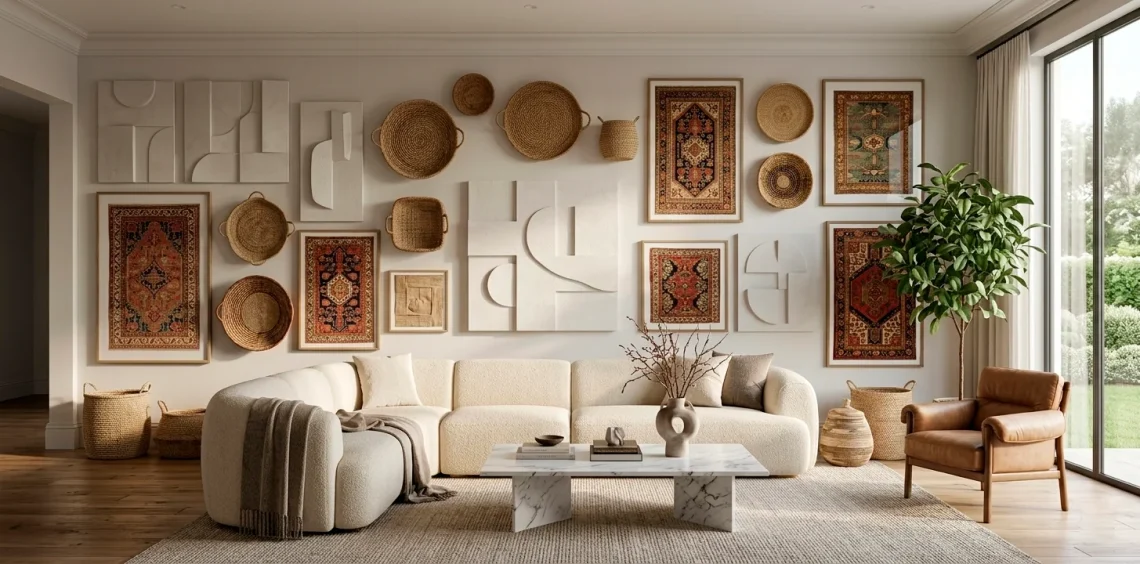
Woven baskets are basically the MVPs of the textured wall world. I once tried hanging a heavy metal plate, and my drywall literally surrendered under the pressure. Baskets, though? They’re light, earthy, and brilliantly hide those weird scuff marks you still haven’t painted over. I love how they bring an immediate sense of ‘I travel to exotic places’ even if the farthest you went lately was the local craft store. Ever noticed how a single flat wall can feel like it’s closing in on you?
Grouping these beauties creates a rhythmic, organic flow that softens sharp architectural lines. I usually stick to a common color palette but mix up the heights and weave patterns to keep the eye moving.
Key basket features:
- Varying depths between 2 and 6 inches.
- Natural fibers like seagrass, raffia, or jute.
- Hand-dyed patterns in muted terracotta or charcoal.

Framed Vintage Textiles
If you have a gorgeous old rug or a piece of hand-loomed linen tucked in a drawer, please stop hiding it! Framing textiles is the ultimate ‘designer secret’ for adding instant warmth. I personally adore the look of a tattered vintage mudcloth encased in a sleek, modern frame. It’s that perfect tension between old-world soul and contemporary precision. Doesn’t the contrast just make the whole room feel more expensive? I find that using a floating mount inside the frame allows the frayed edges to show, which adds even more tactile interest. IMO, this is the easiest way to make a space feel like a high-end boutique hotel.

Sculptural Macramé Hangings
Okay, hear me out—macramé has come a long way since the 70s basement era. Modern fiber art is sophisticated, heavy, and incredibly textural.
I love using a massive, chunky cotton piece as the anchor for a gallery wall because it absorbs sound and makes the room feel incredibly cozy. Have you ever walked into a room that sounded ‘echoey’ and felt instantly uncomfortable?
Fiber art fixes that. I recommend looking for pieces that incorporate wooden elements or brass rings to break up the cream-on-cream look. It’s like a warm hug for your wall, honestly.

DIY 3D Plaster Art
Plaster art is essentially the DIY version of a museum exhibit, minus the ‘don’t touch’ signs. You take a canvas, smear some joint compound on it like you’re frosting a giant cake, and suddenly you’re an ‘artist.’ It adds that sculptural, monochromatic depth that designers drool over. It’s all about the interplay of light and shadow, right?
I recommend checking out these Japandi living room ideas to see how this minimalist vibe really comes together. I once spent an entire Saturday making these, and FYI, it’s surprisingly therapeutic. Just don’t wear your favorite sweater while doing it.

Curated Antique Mirrors
Why settle for one mirror when you can have five? A gallery of antiqued mirrors doesn’t just add texture; it adds light and the illusion of space. I hunt for frames with ‘character’—which is code for ‘slightly beaten up but looks cool.’
The ‘texture’ here comes from the foxing on the glass and the ornate carvings on the frames.
Mirror selection tips:
- Mix gold leaf, tarnished silver, and dark wood frames.
- Look for ‘speckled’ or ‘cloudy’ glass for a vintage feel.
- Combine round, oval, and rectangular shapes for variety.
I love how the reflected light dances around the room as the sun moves. It’s basically living art that changes every hour. Plus, you get five different places to check if there’s spinach in your teeth. Win-win!

Pressed Dried Botanicals
Nature is the ultimate texture designer. I think there’s something so poetic about a gallery of pressed ferns or wildflowers.
It brings the outdoors in without the responsibility of keeping a plant alive. (Let’s be real, some of us struggle with that).
I prefer using glass-on-glass floating frames for these.
It makes the delicate veins of the leaves pop against your wall color. I once did a whole wall of these for a friend, and the way the shadows fall through the glass is just… chef’s kiss. 🌿

Modern Wood Slat Art
Wood adds a warmth that paint just can’t touch. Instead of a boring flat panel, try a gallery of wood slat pieces. The repetitive vertical lines create a sophisticated architectural feel that mimics expensive custom carpentry.
I love the way the natural grain contrasts with the sharp, clean edges of the slats. If you’re into that organic-modern look, this is your holy grail. Check out these modern walnut wood interior ideas to see how deep, rich wood tones can transform a room’s energy. It’s amazing how a few planks of wood can make a room feel grounded and expensive.

Metal Sculptural Elements
Forget flat prints for a second and consider metal. I’m talking about brass discs, wrought iron geometries, or copper leaves. Metal introduces a completely different ‘temperature’ to the wall. It’s hard, reflective, and adds a bit of edge to a soft room.
I usually mix metal pieces with softer items like canvas or wood to keep the wall from feeling too industrial. Have you noticed how a pop of brass can make a neutral room suddenly look finished? It’s like jewelry for your house.

Ledge-Style Ceramic Gallery
Who says a gallery wall has to be flat against the surface? I love using ultra-slim picture ledges to display a collection of handmade ceramics.
The ‘texture’ here comes from the matte glazes, the gritty clay bodies, and the shadows cast by the vessels themselves. It turns your wall into a functional art installation. I suggest grouping vases with different neck heights to keep the arrangement from looking like a grocery store shelf. It feels very ‘European studio,’ don’t you think?

Heavy Impasto Canvas Art
Impasto is just a fancy word for ‘the artist used so much paint it looks like frosting.’ I am obsessed with this.
When you hang a canvas with thick, visible brushstrokes, you’re adding a layer of physical movement to the wall. It’s not just an image; it’s a record of the artist’s hands.
Why go for a flat print when you can have something with literal peaks and valleys of paint?
Tips for impasto art:
- Use a spotlight to enhance the shadows of the paint strokes.
- Choose monochromatic colors to let the texture do the talking.
- Large-scale pieces work best as a central focus.

Vintage Ceramic Plates
Plate walls are a classic for a reason, but let’s modernize them. Instead of grandma’s delicate florals (unless that’s your vibe!), try a collection of heavy, handmade stoneware plates.
The uneven edges and speckled glazes add a rustic, tactile quality that feels grounded. I like to arrange them in a tight, geometric grid to make the organic shapes feel more intentional and designer-led. It’s a great way to fill a large kitchen or dining wall without spending a fortune on massive canvases.

Architectural Salvage Pieces
There is something so undeniably cool about hanging a piece of history on your wall. I’m talking about old window frames, corbels, or even weathered shutters.
The texture of flaking paint and century-old wood provides a soul that brand-new items just lack.
Does it feel a bit ‘shabby chic’? Maybe. But when you pair it with modern furniture, it becomes ‘sophisticated eclectic.’ It’s all about the balance! I find that one large architectural piece can anchor an entire gallery of smaller, smoother items.

The Designer Hat Wall
If you have a collection of beautiful wide-brimmed hats, stop stuffing them in boxes! A hat wall is a functional, textured masterpiece.
Felt, straw, and leather all bring different tactile qualities to the space. I love the way the deep shadows from the brims add a sense of drama.
Hat wall benefits:
- Easy to swap out seasonally.
- Adds massive volume and 3D depth.
- Keeps your hats from getting crushed.
It’s basically the ultimate low-effort, high-impact decor move. Just don’t let the dust settle too long, or it becomes ‘haunted attic’ real fast.

Framed Grasscloth Panels
Wallpapering an entire room is a commitment (and a headache). But framing panels of grasscloth? That’s a weekend project I can get behind.
The natural weave of the grass adds a subtle, sophisticated texture that catches the light beautifully. I love using chunky black frames to contrast with the organic, woven texture of the paper. It looks like you spent thousands on custom wall panels, but in reality, you just used a few remnants and some high-quality frames. IMO, it’s the most ‘grown-up’ way to add texture without making the room feel cluttered.

Shadow Boxes of Curiosities
Shadow boxes are like tiny, glass-enclosed stages for your favorite objects. I love filling them with natural elements like pieces of driftwood, oversized sea shells, or even vintage skeleton keys.
The ‘texture’ comes from the physical objects themselves being isolated and highlighted. It turns ‘stuff’ into ‘specimens.’ I find that grouping four to six matching shadow boxes creates a clean, organized look that still feels full of wonder and discovery. Have you ever noticed how much more important something looks when it’s under glass? It’s an instant designer upgrade for the little things you love.

Final Thoughts on Texture
Adding texture to your gallery wall is honestly the fastest way to make your home feel like a professional actually lives there. Whether you’re smearing plaster on a canvas or hanging your favorite hats, the goal is to break up those flat surfaces and create a space that feels layered and alive. So, which of these ideas are you going to tackle first this weekend? Let me know in the comments if you’re team ‘Basket Wall’ or team ‘Plaster Art’—I’m personally leaning toward the baskets for that effortless, globe-trotter vibe. Happy decorating! 🎨