Stop being a slave to your grass! Seriously, who actually enjoys spending their weekends sweating over a finicky lawn that turns yellow the second you look at it funny? I finally ditched the high-maintenance drama for native plants, and let me tell you, it is a total game-changer. You get a gorgeous, thriving yard that essentially manages itself while you sip iced tea on the porch. 🍹
The Cheat Code to Gardening
Ever wondered why your imported roses keep dying while the weeds in your driveway are thriving? It is because those weeds are actually locals that know how to handle your specific weather. When I finally stopped trying to force a British manor garden into my dry backyard, everything changed. Native plants are the ultimate life hack for a beautiful yard. They’ve spent thousands of years adapting to your local rainfall and soil, so they don’t need you hovering over them with a watering can every five minutes.
Choosing local species means you spend less on fertilizers and more on actually enjoying your space. You are essentially hiring nature to do the gardening for you. Doesn’t that sound better than spending your Saturday morning at the nursery buying more stuff that’s destined to wilt? IMO, it’s the only way to garden if you actually value your free time.

Stop Fighting Your Dirt
Why do we insist on spending a fortune on soil acidifiers and fancy peat moss just to keep a non-native shrub alive? It is exhausting! Native plants actually prefer the soil you already have, even if it is heavy clay or annoying sand. I used to stress over pH levels like a mad scientist until I realized my local black-eyed Susans didn’t care at all. Work with your land, not against it, and you will stop seeing gardening as a chore and start seeing it as a hobby. FYI, your local plants are already hardwired to find nutrients in your specific dirt, so put down the chemical fertilizer and just let them eat.

Hardscaping is Your Secret Weapon
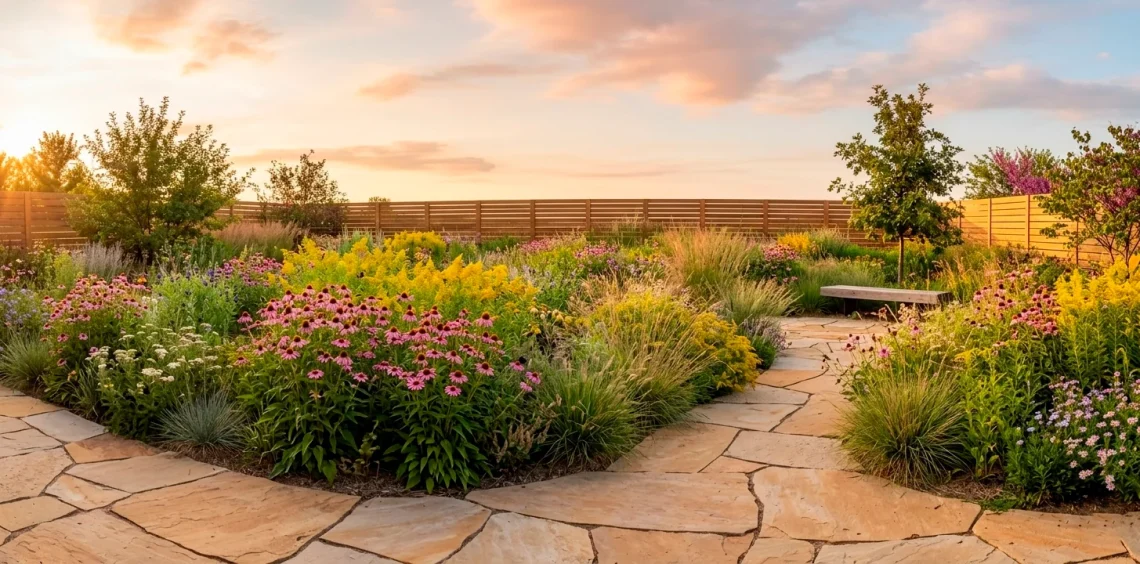
If you want less work, you need less dirt to plant in. Simple math, right? By adding paths, patios, or even a small fire pit area, you significantly reduce the square footage that needs weeding.
I love using permeable materials like gravel or flagstone.
- Flagstone for a high-end look.
- Pea gravel for a budget-friendly vibe.
- Recycled wood chips for a woodland feel.
These elements provide structure and make the native plantings look intentional rather than overgrown. If you’re looking for more ways to relax in your new space, you might want to check out these boho daybeds for a backyard sanctuary.

The Death of the Lawn
Can we all agree that mowing is the worst? Replacing a thirsty, boring lawn with a native meadow or groundcover is the ultimate power move. Imagine a yard that blooms in waves of color instead of a flat green carpet that demands a haircut every seven days. You save water, electricity, and your own sanity. Plus, a native meadow looks way more sophisticated and high-end than a generic patch of grass that everyone else on the block has. It’s like wearing a custom suit versus a plain white tee.

Mulch Like Your Life Depends On It
Mulch is the unsung hero of the low-maintenance world. Seriously.
It keeps the moisture in the ground where it belongs.
It smothers those pesky weeds that try to ruin your vibe.
A thick layer of cedar mulch smells amazing and looks clean. I usually go for about three inches of the stuff to ensure nothing unwanted pokes through. It’s the easiest way to finish a bed and make it look like a professional did the job.

Hosting a Pollinator Party
When you plant native, you aren’t just decorating; you are building a buffet for bees and butterflies. Watching a monarch butterfly land on your milkweed is a million times more rewarding than looking at a sterile, chemical-soaked lawn. Pollinators do the heavy lifting of keeping your garden healthy and vibrant. It is a symbiotic relationship where they get food and you get a yard full of life. If you enjoy the sensory experience of a living garden, you’ll love these fragrant plants for evening relaxation.

Embrace the Seasons
Native plants don’t just look good in June. They offer year-round interest if you pick the right ones.
Think about these elements:
- Seed heads that look like tiny sculptures in the frost.
- Shrubs with bright red stems in the winter.
- Grasses that turn a beautiful copper color in the fall.
Don’t be too quick to cut everything back in the autumn. Leaving those stems provides homes for beneficial insects and gives you something beautiful to look at when the snow hits. It’s the ‘set it and forget it’ approach to winter aesthetics. Why work harder to clean up when the ‘mess’ actually looks cool?

Smart Watering Solutions
Native plants are tough, but even they need a drink when they are young. Once they are established, you can basically toss your hose in the shed. For the first year, though, I highly recommend a simple drip irrigation system. It delivers water directly to the roots without wasting a drop to evaporation. Or, go old school and use a rain barrel to catch the free stuff from the sky. Saving money on your water bill is a nice little bonus for being eco-friendly. Isn’t it great when being lazy actually saves you cash?

Layering for Privacy
Who needs a plastic fence when you can have a living wall of native shrubs? Layering your plants by height creates a natural screen that blocks out the neighbors and dampens street noise. I like to put taller trees in the back, medium shrubs in the middle, and shorter perennials up front. This ‘staircase’ of greenery looks much more natural and provides way more privacy than a single row of identical bushes. It creates a secluded sanctuary where you can actually relax without feeling like the whole world is watching you eat your grilled cheese sandwich.

The Non-Existent Maintenance Routine
The best part about this whole setup? Your ‘maintenance’ routine mostly involves walking around with a coffee and looking at how cool everything looks. Sure, you might need to pull a stray weed once a month or trim a branch here and there, but the days of back-breaking labor are over. Native plants are self-sufficient by design. Once you get them through their first year, they are the ‘independent adults’ of the plant world. Just sit back, relax, and let nature do what it does best while you take all the credit for having a stunning yard.

Conclusion
Switching to native plants is easily the best decision I ever made for my backyard. It’s cheaper, it’s easier, and it actually looks like it belongs in the landscape. You get to keep your weekends, save some bees, and look like a gardening genius all at the same time. So, are you ready to finally kill that boring lawn? Let me know in the comments which native plants you are planning to grab first!