Tired of staring at a desk that looks like a chaotic explosion of papers and half-empty coffee mugs? I feel you. Transitioning to a Japandi setup saved my sanity and my productivity during those long work-from-home stretches. This vibe blends the cozy warmth of Scandi hygge with the stark, intentional peace of Japanese Zen. Ready to turn your workspace into a serene sanctuary? Let’s get into it.
The Magic of the Hybrid Aesthetic
Japandi fuses the best of both worlds. You get Scandi comfort without the cluttered ‘knick-knack’ energy. You also get Japanese minimalism without the cold, clinical feel of a hospital lobby. Ever wondered why this combo works so well? It respects nature while embracing functionality. I call it the ‘grown-up’ version of interior design.
IMO, it makes me feel like I actually have my life together even when my inbox is a dumpster fire. It prioritizes quality over quantity. You don’t need fifty pens; you need one great pen and a clear space to think. This aesthetic creates a visual ‘deep breath’ every time you walk into the room.

Furniture That Speaks Softly
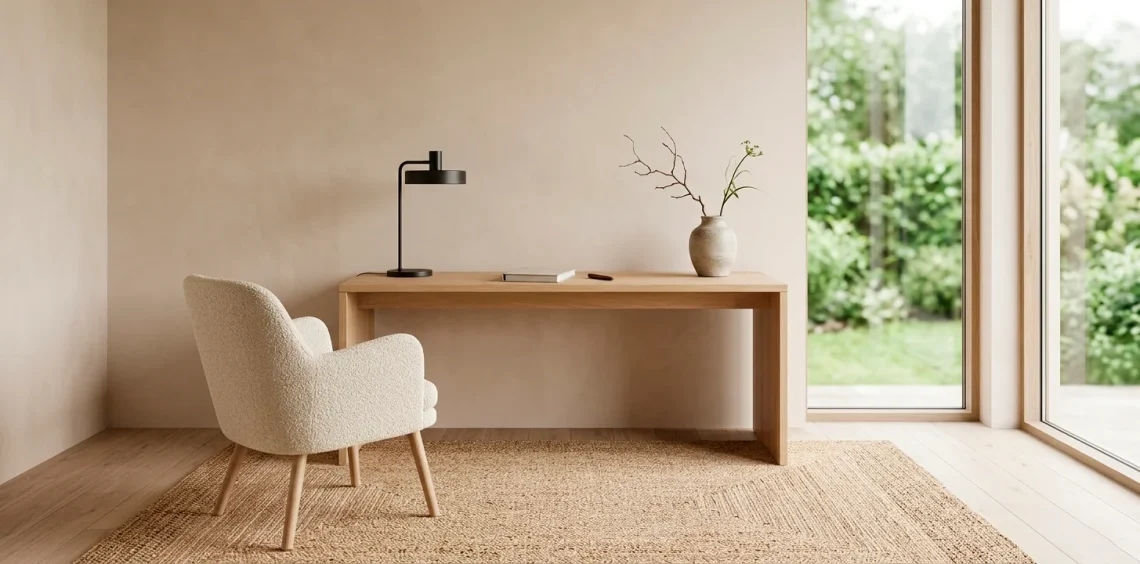
Solid wood anchors the entire room. Forget those flashy, plastic-heavy gaming chairs that look like they belong in a spaceship. Instead, pick a desk with clean lines and a natural finish like light oak or ash. I prefer pieces that show the wood grain because it adds a touch of the outdoors. It looks intentional and grounded. Check out these mastering minimalist living room cozy tips for more furniture inspo.

Lighting: The Secret to Zen Productivity
Natural light transforms everything. If you can, place your desk near a window. Sunlight improves your mood and keeps you from feeling like a cave-dwelling troll.
What about after sunset? Use warm, diffused light.
I suggest paper lanterns or lamps with linen shades. They soften the glare and create a cozy glow that keeps stress at bay.
Avoid those harsh, blue-toned office bulbs. Nobody wants to work in a setting that feels like a 24-hour convenience store. FYI, warm light helps your brain transition out of ‘work mode’ easier later on.

Organization Without the Eyesore
Mess kills focus, but ‘organized’ doesn’t have to mean ‘boring plastic bins.’ Hide your ugly chargers and cables. I use woven baskets and sleek wooden boxes to keep my tech out of sight.
Storage should feel like a part of the decor, not an afterthought. When you hide the clutter, you open up space for actual thinking. Because nothing says ‘I have my life together’ like a desk that doesn’t have a tangled nest of wires under it.

Texture: The Scandi Warmth Factor
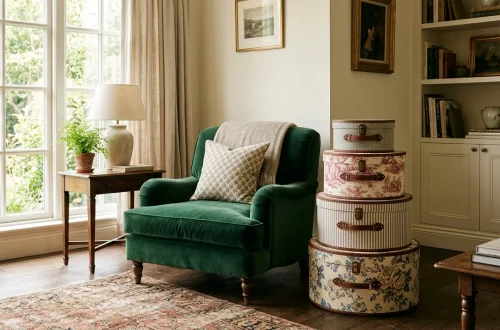
Japanese Zen provides the structure, but Scandi texture provides the soul. Add a rug! I love a thick, chunky wool rug or a jute mat to ground the space.
Design elements for texture:
- Chunky wool throws
- Linen curtains
- Jute or sisal rugs
- Handcrafted ceramics
These layers prevent the room from feeling too sterile. If you want to carry this vibe to the bedroom, see this ultimate hygge-inspired neutral bedroom decor guide.

Bringing the Outside In
Plants are mandatory. They breathe life into the room and soften all those straight lines. I suggest a tall Fiddle Leaf Fig or a delicate Bonsai tree. Don’t go overboard and turn it into a jungle; just one or two ‘statement’ plants will do the trick. Just try to keep them alive, okay? A dead plant is definitely not very ‘Zen.’ Nature connects us to the passing seasons, which is a huge part of the Japanese philosophy of Wabi-Sabi.

A Palette That Calms the Mind
Stick to earth tones. Think beige, sand, taupe, and charcoal grey. These colors don’t fight for your attention, which helps you stay focused on your actual work.
I like to use black as an accent color. A black lamp or a black metal chair frame adds a ‘graphic’ punch to the room. It stops the beige from looking like a bowl of plain oatmeal. Ever noticed how a single black frame makes everything else look more expensive? It’s a classic Japandi trick.

Conclusion
Creating a Japandi home office provides more than just a pretty Zoom background. It builds a foundation for focus and calm in a world that usually feels like a loud, neon-lit supermarket. Start with one wooden element or a single ceramic vase. You’ll be surprised how much better you feel when your space finally stops shouting at you. Which of these design tweaks will you try first? Let me know in the comments!