I absolutely love the serene magic that happens when you combine two of the world’s most calming design philosophies. Welcome to the wonderful world of Japandi design. If your current washroom looks like a chaotic explosion of half-empty bottles and outdated tiles, you need this upgrade. Ready to build your personal zen retreat right at home?
The Core of Japandi Design
You probably hear the word Japandi thrown around constantly on design blogs lately. It perfectly marries the functional, cozy vibe of Scandinavian design with the elegant, intentional minimalism of traditional Japanese aesthetics. Think clean lines meets warm textures. I consider it the ultimate antidote to our chaotic modern lives.
Why force yourself to choose just one style when they complement each other flawlessly? Scandi brings the practical comfort, while the Japanese influence adds a sophisticated layer of zen. You get a space that works hard but feels incredibly relaxing. IMO, that makes it the holy grail of bathroom renovations.

Selecting Your Calming Color Palette
Ditch those loud, aggressive colors immediately. A true Japandi space relies on a muted, earthy foundation to keep your heart rate down while you get ready for work. I always start with a base of warm off-whites, soft stones, and gentle taupes. From there, you can ground the room using deeper accents like charcoal or dark walnut. Your primary goal involves mimicking the natural world as closely as possible. Check out these foundational colors for your base palette:
- Warm oatmeal and beige
- Soft, stormy gray
- Muted sage green
- Deep, rich espresso

Bringing in Natural Woods
Wood plays a massive role in both of these design worlds.
Scandinavians love their pale, unfinished oaks and ashes, which reflect light and make tiny spaces feel huge. Japanese interiors often incorporate slightly darker, richer woods like walnut or cedar.
How do you mix them? Use a light oak vanity, but add a dark bamboo bath mat or a walnut stool for contrast.
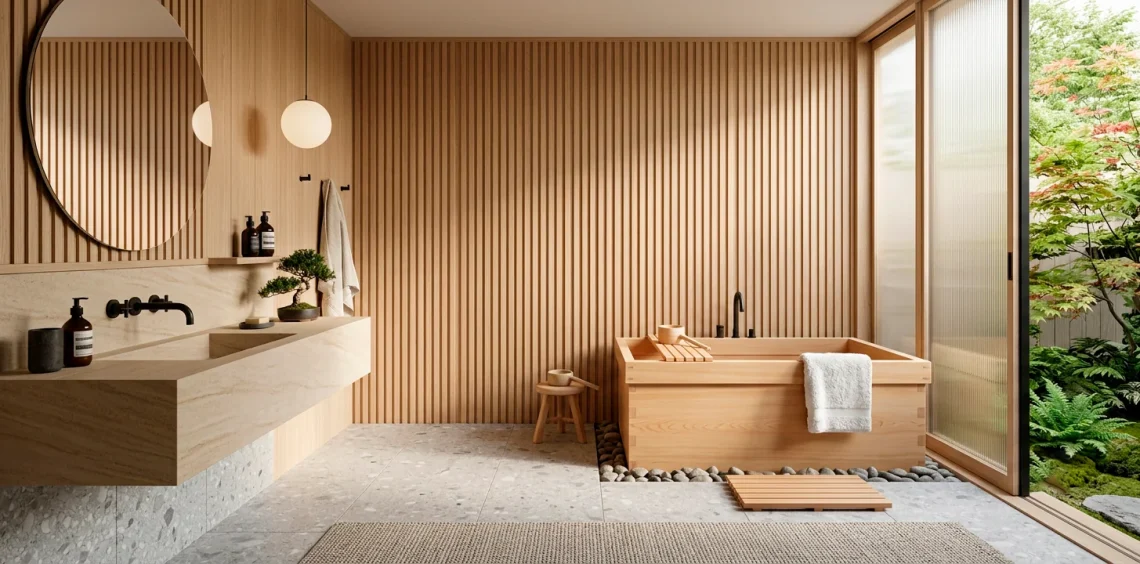
I highly recommend playing with slatted wood details, too. Wood slats instantly scream “expensive spa” while maintaining that essential clean-lined look. If you love this rich wood aesthetic, you can steal some great crossover concepts from this warm walnut Japandi kitchen zen space ideas guide.

The Art of the Japanese Soaking Tub
If you have the space and budget, you absolutely must install a deep soaking tub. Traditional Japanese ofuro tubs focus on depth rather than length, encouraging you to sit upright and submerge yourself to the chin. I find them incredibly space-efficient for smaller layouts. Pair this traditional concept with a sleek, minimalist Scandi profile—think a smooth, matte white resin finish instead of traditional cedar. You get the ergonomic benefits of an eastern soak with the crisp aesthetic of a Nordic spa. Say goodbye to shallow, uncomfortable baths forever.

Ruthless Minimalism and Smart Storage
Let me guess: you have about fifty different half-empty shampoo bottles teetering on the edge of your current bathtub. We all do it, but Japandi design absolutely forbids this level of visual clutter.
Both cultures prioritize intent and purpose. If you don’t use it daily, hide it. You need clever, built-in storage solutions that keep surfaces completely clear. I love using floating vanities with deep, hidden drawers to stash the mess.
Keep only your most beautiful items on display. A gorgeous ceramic soap dispenser? Yes. Your neon pink loofah? Definitely not.

Prioritizing Texture Over Wild Patterns
Since you keep the color palette muted, you must inject visual interest through texture. Otherwise, your stunning new bathroom might just look like a sterile hospital room. Nobody wants that vibe while trying to relax.
I suggest mixing smooth stone with rough-hewn ceramics. Use fluted glass for your shower enclosure to diffuse light beautifully while adding a tactile element. You can even bring in natural stone floors for an earthy, grounded feel. If you need some solid inspiration for hard surfaces, check out this ultimate guide to styling terrazzo in a small bathroom to see how varied textures elevate tight areas.

Mastering Soft, Diffused Lighting
Harsh, aggressive overhead lighting ruins the zen illusion instantly.
You need layers of soft, warm light to mimic the gentle glow of a paper lantern. I always install dimmer switches on every single fixture.
Hang a minimalist, Scandi-style pendant light near the mirror for functional task lighting. Then, hide LED strip lights under your floating vanity or behind your mirror to create a subtle, floating effect.
The right lighting transforms an ordinary room into a sanctuary. Ever notice how luxury spas always keep their lighting incredibly low? Do that.

Bringing Subtle Nature Indoors
You cannot create a true Japandi space without honoring nature. However, you shouldn’t turn your bathroom into a jungle, either. Leave the massive monstera plants for your living room. Instead, choose one or two sculptural, intentional plants. A single branch of eucalyptus in a wabi-sabi ceramic vase looks breathtaking. I also love placing a small, perfectly pruned bonsai tree near the window. These sparse natural elements breathe life into the room without overwhelming the minimalist architecture. Keep it simple, green, and deliberate. 🌿

Mixing Metals and Finishes
Choosing the right hardware often stumps people during a remodel. For a Japandi look, you want finishes that feel organic and understated rather than shiny and glamorous.
I completely avoid polished chrome. Instead, grab matte black fixtures for a striking, high-contrast Japanese edge. If you prefer a softer, warmer Nordic feel, brushed brass or aged bronze works beautifully.
The key involves keeping all your hardware consistent. Don’t mix brass faucets with black drawer pulls here; harmony rules the Japandi aesthetic.

Curating the Final Zen Touches
The final accessories make or break your carefully crafted design. I always recommend investing in high-quality, organic textiles. Swap out your ratty old towels for plush, waffle-knit linen ones in earthy tones.
Add a small wooden stool next to the tub to hold a candle or your favorite book. Pour your hand soap into a heavy, unglazed ceramic dispenser. These tiny, tactile moments elevate your daily routine from a mundane chore to a mindful ritual. Now, go run a hot bath and enjoy your masterpiece!

Conclusion
You made it! Combining Japanese elegance with Scandinavian comfort creates the ultimate bathroom sanctuary. I hope these tips help you strip away the daily visual clutter and build a space that truly lets you breathe. Which earthy detail are you adding to your vanity first? Let me know in the comments below!