Is your TV currently floating on a vast, lonely ocean of white drywall? That sterile look is killing your cozy vibes. I transformed my own den last year with some weathered timber, and the difference is honestly night and day. If you want a space that feels like a high-end retreat rather than a doctor’s waiting room, you need to embrace the grain. Ready to build something beautiful?
The Soul of Reclaimed Timber
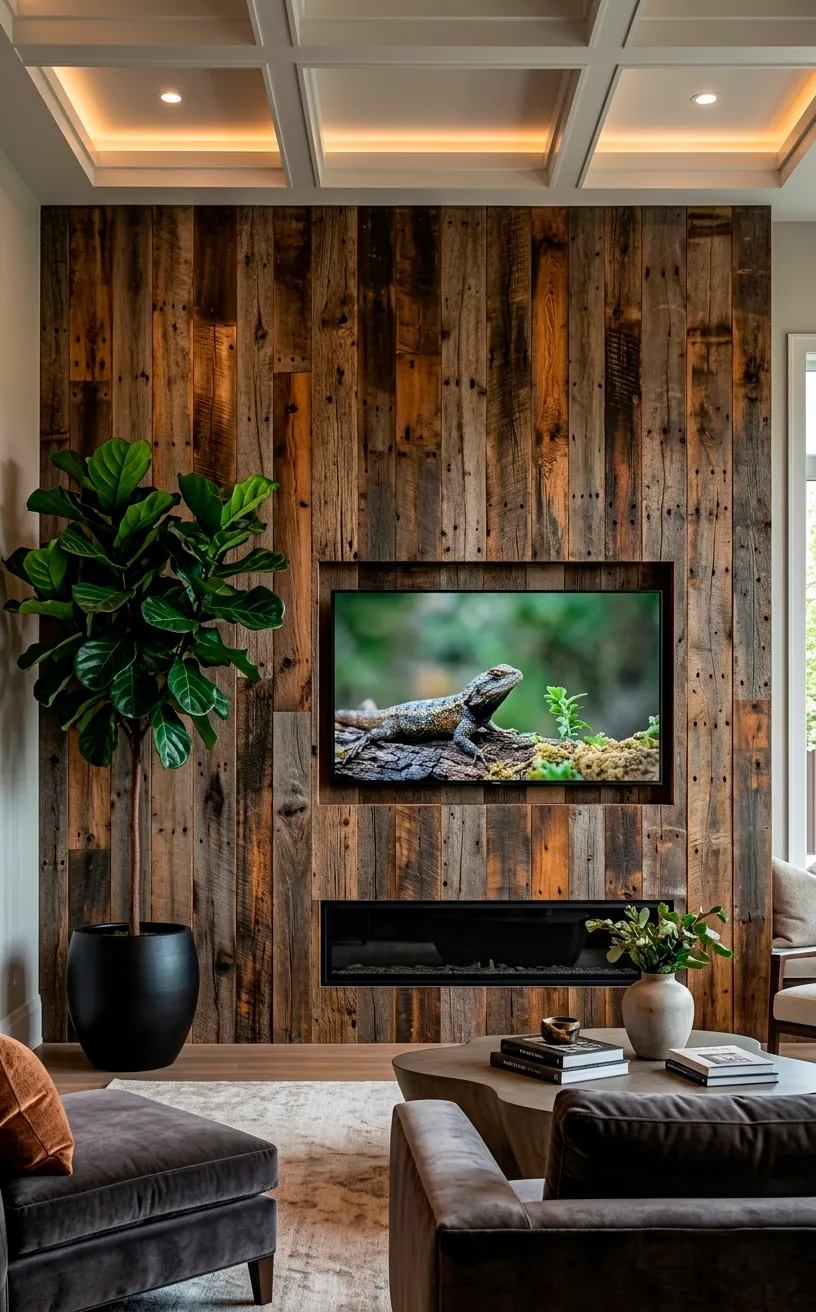
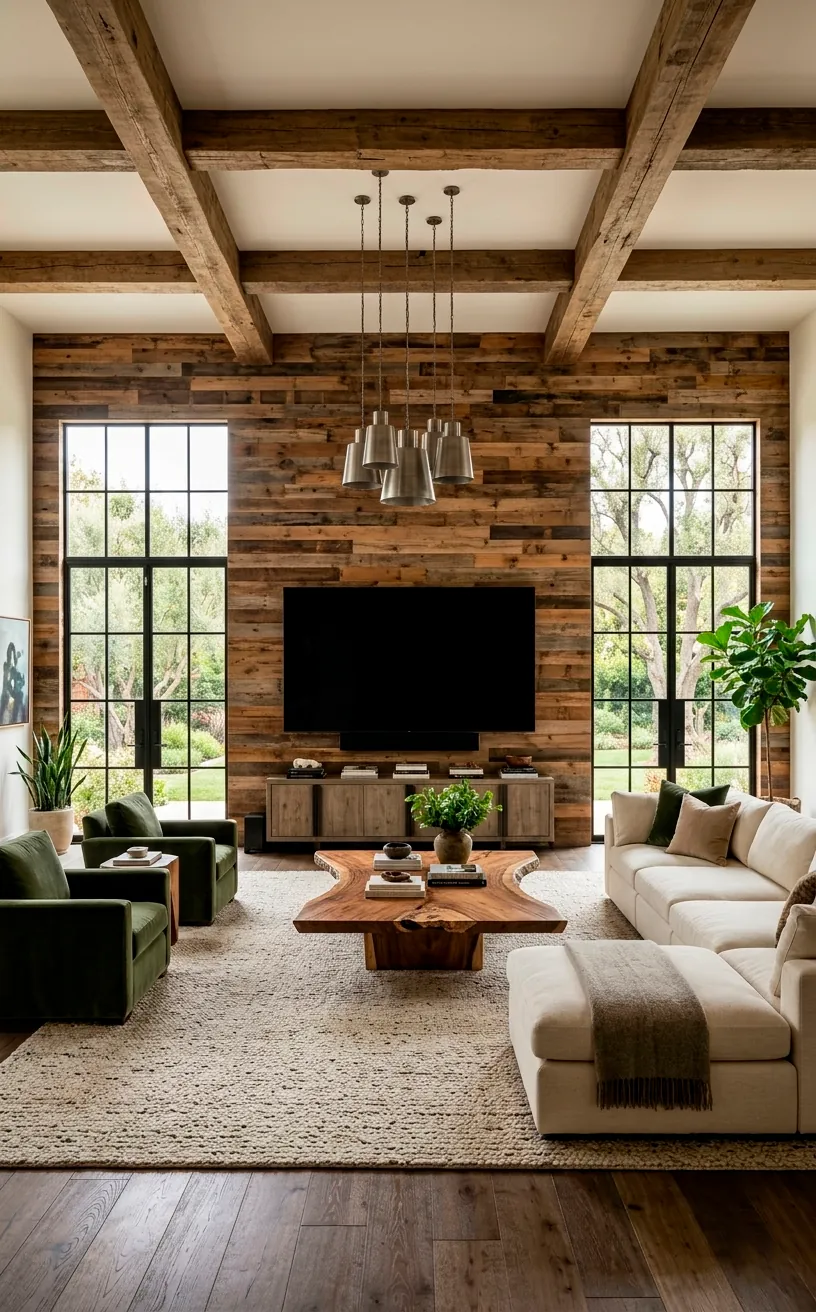
Texture is the secret sauce here. Why settle for flat, manufactured boards when you can use wood that actually has a history? Reclaimed barn wood or weathered fence planks offer deep grooves and color variations that no factory can replicate. I love how every knot and nail hole tells a unique story. You want those imperfections because they break up the sleek, cold surface of the TV screen.
Does it take more work to sand and prep old wood? Absolutely. But the visual payoff is massive. You aren’t just building a wall; you’re creating a focal point that demands attention the moment someone walks in. Just make sure you treat the wood properly so you don’t invite any unwanted six-legged guests into your living room. 😉
Modern Magic with Vertical Slats
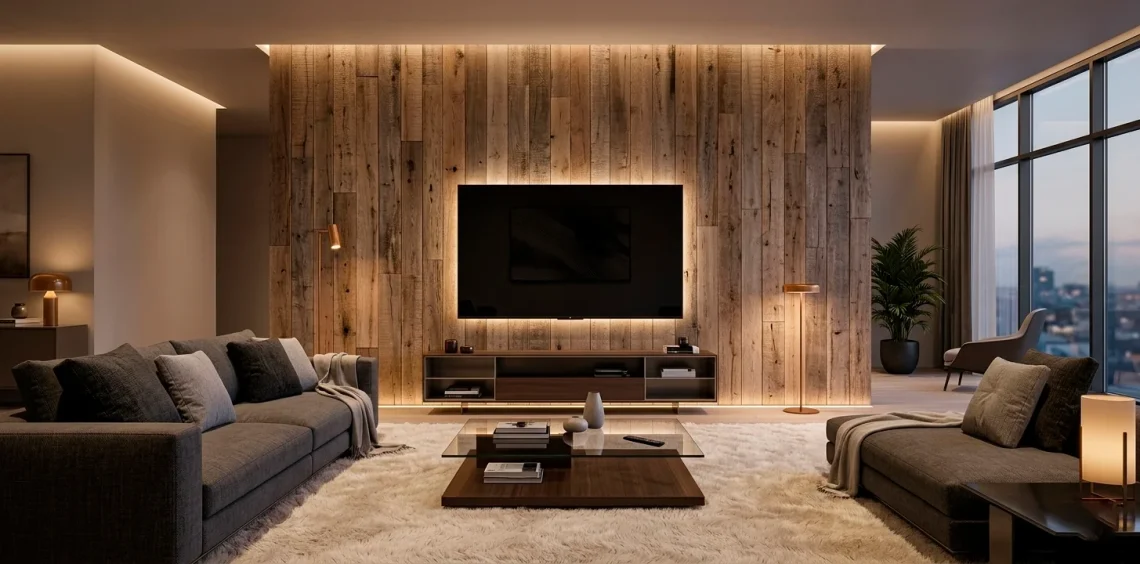
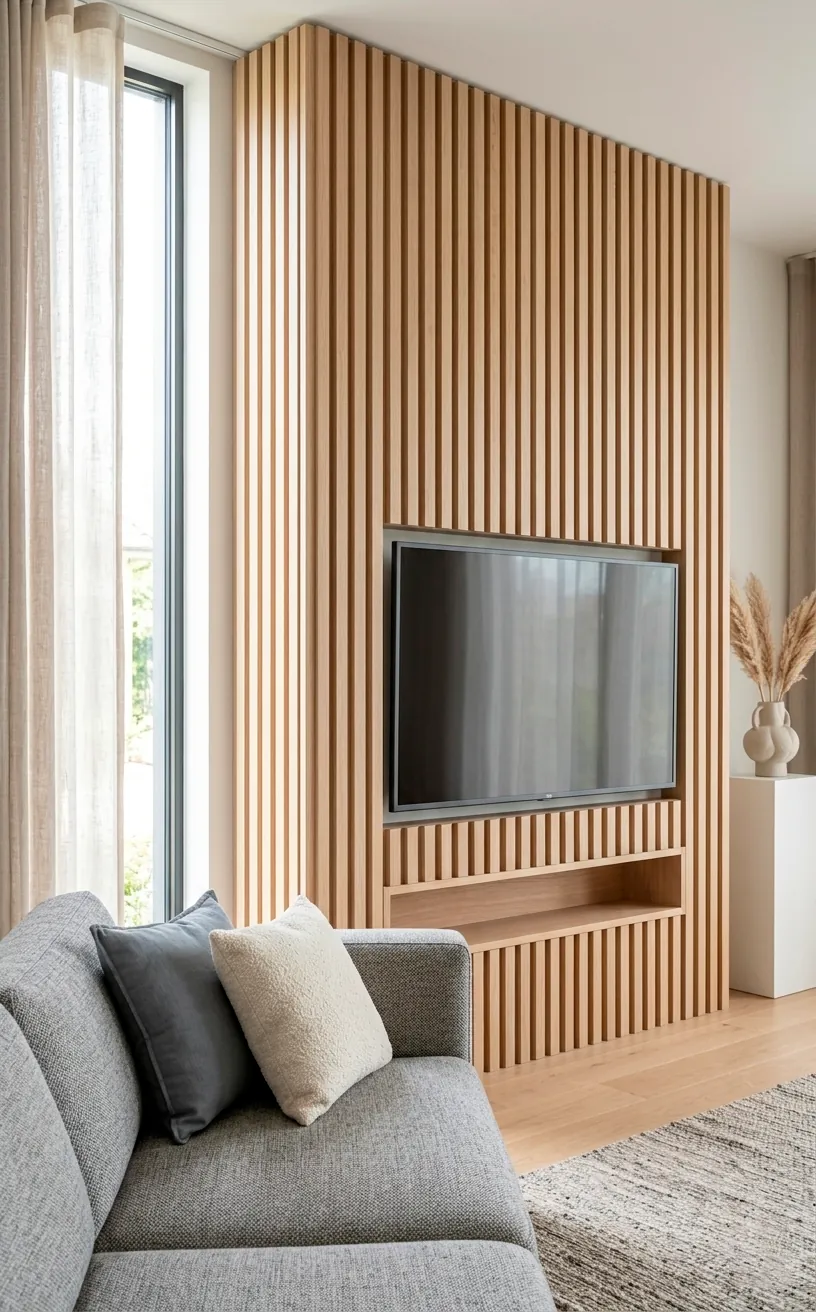
If barn wood feels a bit too ‘country cabin’ for your taste, vertical slats are your best friend. This style leans into that Japandi aesthetic we all keep seeing on Pinterest. I find that thin, narrow strips of white oak or walnut create a rhythmic, orderly look that still feels incredibly organic.
You get all the warmth of natural wood without the heavy, rustic bulk. Plus, the vertical lines trick the eye into thinking your ceiling is much higher than it actually is. It’s a total win-win for smaller apartments or rooms with low clearance. Check out this guide on mastering Zen Japandi TV walls for a deeper dive into this specific slatted style.
The Raw Edge Advantage
Ever considered a live-edge shelf instead of a full wall of wood?
Sometimes, less is more.
I often suggest using a single, massive slab of live-edge wood as a floating console or a chunky shelf right below the TV.
This keeps the organic feel front and center without overwhelming the space with too much brown. The irregular, natural edge of the wood contrasts perfectly with the sharp, geometric lines of your tech. It adds a touch of high-end craftsmanship that feels expensive and curated. If you find a slab with a particularly wild grain, let it be the star of the show. Don’t go crazy with decor around it—just let the wood breathe.

Picking the Right Shade
The color of your wood determines the temperature of the entire room. Darker stains like espresso or deep walnut bring a moody, sophisticated vibe that I absolutely adore. They make the room feel grounded and expensive. On the flip side, lighter tones like honey or natural maple keep things airy and casual.
What’s your current furniture like? IMO, you should avoid matching your wood wall perfectly to your floor. If they match too closely, your TV wall will just disappear into the background. Aim for a bit of contrast. If you have light oak floors, go for a mid-tone teak or a darker reclaimed pine to make that feature wall pop. It’s all about balance, not perfect symmetry.

Lighting for Texture
If you install a beautiful wood wall and don’t light it properly, you’re doing it wrong. Hard truth, I know. But the whole point of rustic wood is the texture, right? You need shadows to make those grooves and knots stand out.
I highly recommend installing LED backlighting behind the TV or slim spotlights on the ceiling. This creates a soft ‘halo’ effect that makes the wood look three-dimensional at night. It transforms the wall from a flat surface into a dramatic piece of art. For more ideas on how to keep things clean around your screen, take a look at this minimalist mantle decor guide. Proper lighting is the easiest way to make a DIY project look like a professional installation.

The Great Cable Disappearing Act
Wires are the enemy of aesthetic.
Nothing ruins a gorgeous organic wood wall faster than a tangled mess of black cables hanging down like tech-spawned vines.
When you’re installing your wood planks, leave a small gap or a dedicated channel behind them. This is the perfect time to hide all those HDMI and power cords. I’ve seen people spend days on their woodwork only to leave the wires visible, and it breaks my heart every time. Don’t be that person.
If you can’t go behind the wall, use low-profile cable covers that you can paint or stain to match your wood. It’s a tiny detail that makes a massive difference in the final look. Trust me, your future self will thank you for the clean setup.

The Floating Console Move
Floor space is precious. Why waste it with a clunky, heavy TV stand? I’m a huge fan of the floating console. It keeps the floor clear, which makes your room feel larger and more open.
You can actually build the console out of the same wood as your wall for a seamless, ‘built-in’ appearance. This creates a cohesive look that feels deliberate and custom. It also provides a perfect spot for your soundbar and a few curated decor pieces without the clutter. FYI, if you choose this route, make sure your mounting brackets are rated for the weight. Nobody wants their beautiful console—and their expensive tech—crashing to the floor in the middle of the night.

Mixing Stone and Wood
Who says you only have to use wood? I love the ‘modern mountain’ look where you mix rustic timber with cold stone. Imagine a wood-slatted wall with a slate or marble base—it’s pure luxury. The contrast between the warm, soft grain of the wood and the hard, cool texture of the stone creates a visual tension that is incredibly satisfying. It’s like a hug for your eyes. You don’t need to do a 50/50 split; even a small stone accent or a marble-topped console can elevate the entire design. It keeps the room from feeling too one-dimensional and adds that ‘designer’ touch that most DIY projects lack.

Scale and Proportions
Size definitely matters here.
I see people make this mistake all the time: they build a tiny little wood patch that is barely larger than the TV itself.
It looks like a postage stamp on a giant envelope.
If you’re going to do a wood wall, go big. Go floor-to-ceiling or cover the entire width of the section. You want the TV to feel like it belongs within the wood, not like it’s fighting for space. If your TV is 65 inches, your wood feature should be at least double that width to feel balanced. It’s all about creating a sense of scale. A large wood feature anchors the room and makes the TV feel like an intentional part of the decor rather than just an appliance we’re forced to look at.
Styling the Final Look
The wood wall is done, the TV is up, and the wires are hidden. Now for the fun part: styling.
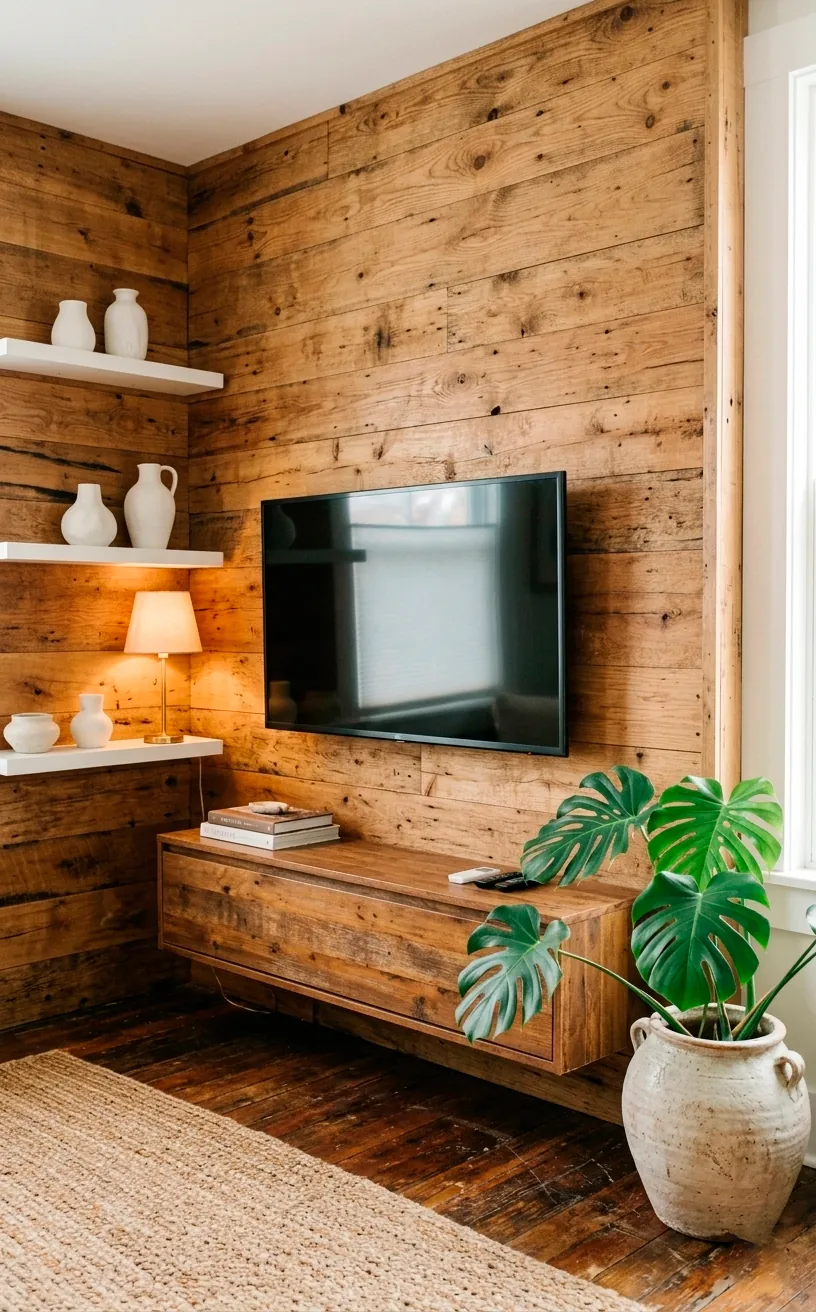
Keep it simple. You don’t want to clutter up that beautiful wood grain you just worked so hard on. I find that a few green plants and some matte black accents work best. The green of the leaves pops beautifully against the brown wood, and the black tech ties everything together.
Avoid shiny or neon colors; they clash with the organic vibe. Think earthy, think natural. A few ceramic pots, a stack of linen-bound books, or a simple brass lamp will do the trick. You’ve built a masterpiece, so let the wood do the heavy lifting while your decor plays a supporting role.
Conclusion
You’ve got the plan, so stop overthinking it. Your TV deserves better than a naked wall, and your home deserves that organic warmth. Whether you go for reclaimed planks or sleek slats, adding wood is the fastest way to turn a boring room into a cozy sanctuary. Trust me, you won’t regret the upgrade once you’re curled up on the sofa with a movie. Which wood style are you grabbing first? Let me know in the comments!