Ever walked into a restaurant kitchen and felt a weird surge of jealousy over their stainless steel counters? I totally get it. Industrial kitchens aren’t just for Michelin chefs anymore; they are a whole vibe for those of us who actually love to cook. I’m showing you how to turn that cold, raw aesthetic into a warm, functional masterpiece. Let’s build your dream space.
Heavy Metal and Raw Concrete
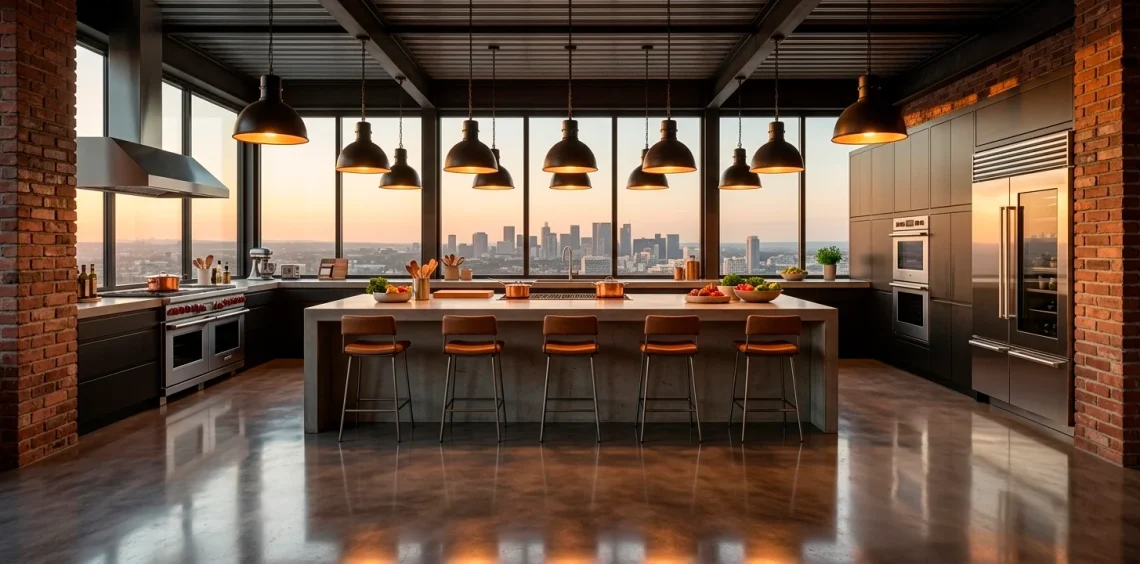
I honestly believe concrete is the unsung hero of the modern home. It is durable, messy-cool, and handles a screaming hot pan like a total champ. Plus, it looks better as it ages. Why settle for boring laminate when you can have a slab that feels like it has a soul?
Pair those slabs with brushed steel. I mean, if it doesn’t look like it could withstand a minor explosion, is it even industrial? Skip the shiny chrome; we want grit and character. Have you seen how amazing charcoal grey kitchen elements look against raw textures? It’s a total game-changer for the urban look.

Zoning for Culinary Chaos
You need to think about workflow, not just where the fridge fits. Professional kitchens use “zones” for prep, cooking, and cleaning to keep things moving. I swear by the work triangle, but I add a “landing zone” for groceries and cocktails because, let’s be real, you need a drink while the sauce simmers. Keep your most-used tools within arm’s reach on magnetic strips. Why walk across the room for a spatula when you could just grab it like a pro? This layout keeps the chaos contained and makes you feel like a legit chef even if you’re just boiling boxed pasta. It’s all about that efficiency flex.

Open Shelving and Storage Racks
Hide your mismatched Tupperware, please. Your plastic containers are crying for help, and they don’t belong in this design. Industrial style thrives on open storage that puts your gorgeous cast iron and heavy glassware on display.
I love a ceiling-mounted pot rack. It frees up cabinet space and adds that “busy kitchen” energy I crave. Just make sure you actually dust the things occasionally. FYI, dust bunnies aren’t a recognized design element in most circles.
Use wire baskets for produce. They look cool and keep your onions from rotting in a dark corner. Who knew organization could look so edgy? It really turns your pantry staples into a mood.

The Glow of the Underground
Lighting sets the entire tone for your space. I suggest avoiding those generic boob-lights at all costs. You want oversized metal pendants or track lighting that looks like it came out of a 1920s warehouse.
Go for Edison bulbs with that warm, amber filament. They provide a glow that hides the fact that you haven’t mopped the floor in a week. It’s functional art, really. Ever noticed how a single light fixture can change the entire room? It is the easiest way to add drama without tearing down a wall.

The Iron Heart of the Kitchen
You cannot call it an industrial kitchen without a powerhouse stove. I recommend a heavy-duty gas range with at least six burners.
Look for chunky knobs and cast-iron grates. They scream “I know what I’m doing” even if you’re just heating up yesterday’s pizza.
Pair it with a massive stainless steel hood. It keeps your house from smelling like fried garlic for three days straight, which your guests will appreciate.
I think a high-arc faucet with a spring-spout completes the look. It is basically the jewelry of the sink area. It makes doing the dishes feel like a high-stakes mission instead of a chore.

Warming Up the Cold Steel
Industrial design can feel like a lonely warehouse if you aren’t careful. I suggest adding reclaimed wood accents or leather bar stools to soften those sharp edges. You want “urban chic,” not “abandoned factory.” Adding a few potted herbs on the windowsill also brings some life to the party. Do you think a pop of color would ruin the vibe? IMO, a few industrial red brick accents make the whole room feel authentic and grounded. It balances the metal and concrete perfectly.

Conclusion
Designing an industrial kitchen is all about embracing the raw and the real. You don’t need a massive budget, just a commitment to materials that tell a story. Focus on those big metal accents and warm lighting to create a space that feels both tough and inviting. Which feature are you adding to your renovation list first? Let me know in the comments!