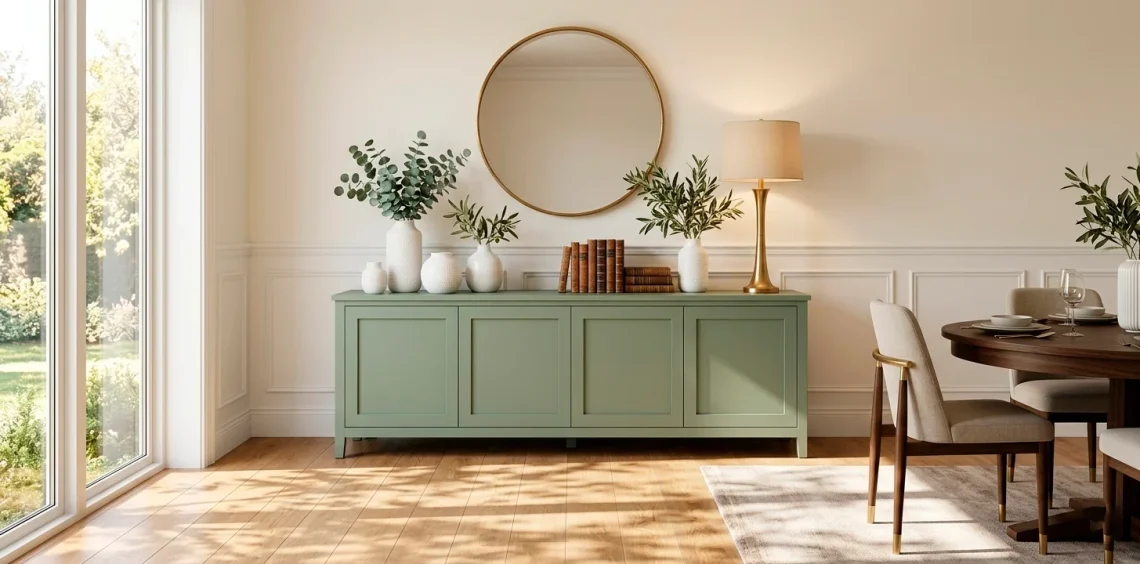
Forget that beige nightmare in the corner. Your dining room is screaming for a personality transplant, and honestly, a coat of sage green paint acts as the cheapest therapy you will ever find. Sage is the ultimate neutral because it remains calming, classy, and hides a suspicious amount of dust. I have rounded up 20 ideas to turn that clunky old wood buffet into a total showstopper. Ready to finally love your space again?
Matte Sage with Brushed Gold Hardware
I absolutely adore the combination of a flat, matte finish paired with shimmering gold. It takes a piece from ‘grandma’s attic’ to ‘high-end boutique’ in just a few hours. Have you noticed how matte paint hides those annoying scratches better than gloss? It creates such a soft, velvety texture that invites everyone to reach out and touch it.
I replaced the old, tarnished knobs with heavy brushed brass pulls to ground the look. This simple swap adds a layer of sophistication that makes the whole room feel expensive. FYI, the matte finish absorbs light rather than reflecting it, which makes the sage color look deeper and much more expensive than it actually is. ✨

Distressed Farmhouse Sage Style
If you want a look that says ‘I found this in a French countryside market’ rather than ‘I bought this at a big-box store,’ go for a distressed finish. I used a sanding block on the edges and corners to reveal bits of the original dark wood underneath. This technique gives the buffet an instant history and a relaxed vibe that works perfectly in a cozy family dining area. It is basically the interior design version of your favorite pair of worn-in jeans—effortlessly cool and totally unpretentious.

Moody Deep Sage with Black Accents
I think people often play it too safe with light greens, but a dark, moody sage brings incredible drama. I paired this deep forest-adjacent shade with matte black hardware for a modern, slightly masculine edge. It grounds the dining room and makes white walls pop like crazy. Ever wondered why some rooms just feel more ‘finished’ than others? It is usually because they embrace high-contrast elements like this.
Essential hardware upgrades:
- Matte black cup pulls
- Black metal hairpin legs
- Dark charcoal decorative hinges
I find that this darker palette works best when you keep the styling on top minimal. A single large piece of art or a sculptural black lamp completes the look perfectly. If you love this vibe, you should check out these sophisticated sage green TV wall ideas to carry the color throughout your home.

Two-Tone Sage and Natural Wood
I cannot get enough of the two-tone look right now. I kept the top surface of the buffet in its natural oak state and painted only the body and doors in a soft sage. This creates a beautiful bridge between your existing wood furniture and your new color palette.
It feels balanced and intentional. I protected the wood top with a clear satin sealer to ensure those wine spills don’t ruin the party. IMO, this is the best way to update a piece while still respecting its original craftsmanship.

Sage with Rattan or Cane Inlays
Talk about a texture explosion! I took an old buffet with recessed door panels and swapped the wood centers for natural cane webbing. The contrast between the organic tan color of the rattan and the cool sage green paint looks incredible. It gives off major coastal-meets-boho vibes that feel fresh and airy.
This project requires a bit more effort, but the payoff is huge. I used a heavy-duty stapler to secure the cane and finished the edges with a thin wood trim.
Why go for this look:
- Adds visual lightness to a heavy piece
- Introduces natural textures to the dining room
- Creates a unique, custom-made designer aesthetic
- Matches perfectly with indoor plants and greenery
I love how the sage green makes the rattan ‘glow’ in a way white paint never could. It is the perfect weekend DIY for anyone who wants to feel like a professional furniture flipper.

Pale Minty Sage for Small Spaces
If your dining room is the size of a postage stamp, avoid dark colors. I opted for a very pale, almost minty sage for a small sideboard to keep things feeling open and bright. It adds color without weighing down the room visually. I think this shade works wonders when you want a hint of ‘cottagecore’ without going full-blown granny-chic. It feels youthful, energetic, and perfectly sweet for a morning coffee nook. 🌿

Sage Buffet with a Black Marble Top
I decided to get a little fancy with this one. I painted the buffet in a muted olive-sage and topped it with a custom-cut piece of black marble. The dark stone against the earthy green looks insanely luxurious. If real marble isn’t in the budget, I have seen some incredible contact papers that look just as good for a fraction of the cost.
I used gold accents to tie it all together. This combination works perfectly for a formal dining room where you want to impress guests during holiday dinners. It just oozes elegance and maturity.

Vintage Mid-Century Modern Sage
I took a classic mid-century sideboard with those iconic tapered legs and gave it a sage green makeover. I left the legs in their original walnut finish to maintain that MCM soul. I find that sage green updates the retro shape without making it look like a cartoon. It’s a great way to save a piece that has a lot of surface damage but great ‘bones’.
I used a high-quality enamel paint for this project to ensure a smooth, professional-grade finish.
Key MCM styling elements:
- Tapered walnut legs
- Integrated finger pulls instead of knobs
- Low, long horizontal profile
- Asymmetrical decor on top
Does anything look cooler than a vintage record player sitting on a sage green credenza? I highly doubt it.

Subtle Stenciled Details in Sage
I think solid colors can sometimes feel a bit flat if the piece lacks architectural detail. I added a subtle tone-on-tone stencil pattern to the door fronts of this buffet. I used a shade of sage just one notch lighter than the base coat. It creates a ‘ghost’ pattern that only reveals itself when the light hits it just right.
It is the ultimate ‘secret’ design detail. I recommend using a dense foam roller and very little paint to keep the lines crisp. This keeps the buffet looking custom and expensive rather than like a DIY disaster. Patience is key here, but the results are so worth the extra hour of work.

Muted Gray-Sage for Modern Minimalists
Sometimes I want a color that refuses to commit. This gray-sage hybrid is the perfect ‘chameleon’ shade. In the morning light, it looks crisp and green; in the evening, it softens into a warm gray. I kept the styling extremely minimal with just a few white ceramics. This look fits perfectly in a home that prioritizes calm and order over clutter. It is sophisticated without trying too hard.

Elevated Sage with Modern Brass Legs
I took a heavy, floor-sitting buffet and literally lifted it up. I removed the clunky base and installed tall, slim brass legs. Painting the body in a rich sage green and adding that gold height completely transformed the silhouette.
I love how this makes the room feel larger because you can see more of the floor.
Benefits of adding legs:
- Makes cleaning underneath a breeze
- Creates a more modern, airy aesthetic
- Allows the piece to work in smaller rooms without feeling heavy
I matched the new legs with matching brass bar pulls. It looks like a custom piece from a high-end furniture gallery now, but I did it for under fifty bucks.

High-Gloss Lacquered Sage
I decided to go bold with a high-gloss finish. I used a sprayer to get a mirror-like shine on this sage green buffet. It feels very ‘Hollywood Regency’ and adds a massive amount of light to a darker dining room. I find that glossy finishes make the color look more vibrant and playful.
Warning: glossy paint shows every single bump, so I spent a lot of time on prep. I sanded the wood until it was as smooth as glass before I even opened the paint can. It is definitely more work, but the glam factor is off the charts.

Sage with Botanical Decoupage
I wanted to lean into the nature theme of the color. I painted the frame sage green but applied a botanical floral wallpaper to the door panels using decoupage glue. I chose a print with muted greens and creams to keep it cohesive.
I protected the paper with several coats of clear polycrylic to make sure it stays durable. It is a fantastic way to introduce a pattern without committing to a whole wall of wallpaper.
Materials needed:
- Sage green paint
- Botanical wallpaper or gift wrap
- Mod Podge or decoupage glue
- Sharp utility knife for trimming
- Clear topcoat sealer
Every time I look at this piece, it feels like I have a little piece of a garden right in my dining room.

Traditional Shabby Chic Sage
I think the shabby chic trend is making a more refined comeback. I used a sage green milk paint for this buffet because it naturally flakes and chips in a way that looks authentic. I didn’t want it to look ‘perfect.’ I finished it with a dark wax in the crevices to give it that aged, ‘found’ look that enthusiasts love. It looks like it has been in the family for generations, even though I just finished it yesterday. It brings a sense of warmth and history to the room that brand-new furniture just cannot match.

Deep Earthy Olive-Sage
I went with a much warmer, olive-toned sage for this project. This color has more yellow in it, which makes it feel incredibly earthy and grounded. I paired it with warm wood accents and copper hardware. I find that this specific shade of green looks amazing when you have a lot of indoor plants nearby. It creates a seamless transition between your decor and nature. This is my go-to recommendation for anyone who wants their home to feel like a cozy retreat from the world.

Sage Buffet with Glass Doors
I love using sage green on buffets that have glass display doors. I painted the exterior sage but kept the interior of the cabinet a bright, crisp white. This makes your dishes and glassware really stand out against the background.
I added internal LED puck lights to highlight my favorite pieces at night.
Why this works:
- Shows off your heirloom china
- The green frame acts like a picture frame for your dishes
- Bright interior prevents the cabinet from looking like a ‘black hole’
It turns your storage into a curated gallery. Plus, it gives me a great excuse to finally organize my mismatched mugs and hide the ugly ones in the bottom drawers.

Dark Sage with Copper Hardware
I think copper is the most underrated metal for sage green. While everyone goes for gold or black, copper adds a warmth that is completely unique. I used a dark, forest-leaning sage and added oversized copper pulls. The orange tones in the copper perfectly complement the green. It feels rustic but incredibly polished at the same time. I find that this combo looks best under warm-toned light bulbs to really make that copper glow in the evening.

Sage with Scalloped Trim Details
I added a DIY scalloped trim to the bottom of a very plain sage green buffet. This small addition gave it a whimsical, custom feel that looks so much more expensive than it was. I used a pre-cut wood trim from the hardware store and glued it straight onto the base. Then, I painted everything in a uniform sage green to make it look like one seamless piece. It is a great way to add a bit of ‘softness’ to a room that has a lot of hard, straight lines.

Modern Minimalist Sage Credenza
I kept this one ultra-simple. No hardware, no trim, just a perfectly smooth sage green finish on a sleek, long credenza. I used a high-quality furniture wax to give it a low-sheen, durable finish. I think this look is perfect for people who hate visual clutter. I styled it with just one single, oversized piece of driftwood on top. It feels very ‘zen’ and peaceful. Sometimes, the best way to make a statement is to whisper rather than scream, don’t you think?

Sage with Geometric Wood Trim
I wanted to give a flat-door buffet some 3D texture. I glued thin wood lath strips in a herringbone pattern onto the doors before painting everything in a sophisticated sage green. The shadows created by the raised wood give the piece so much depth.
I paired this with sleek gold finger pulls. This is my absolute favorite way to make a cheap, flat-pack buffet look like a thousand-dollar designer find. If you are looking to finish the rest of the room with this level of style, take a look at these 10 elegant dining room ideas to elevate your space. It is all about those small, intentional details that make a house feel like a home.

Conclusion
You now have 20 fresh ways to transform that old wood beast into a sage masterpiece. Whether you go matte, glossy, or distressed, this color never fails to deliver a high-end look on a DIY budget. It is finally time to pick up a brush and make your dining room look like you actually have your life together. Which style are you tackling first this weekend? Let me know in the comments!