Think monochrome means a sad, grey void? Think again. I used to assume a one-color room would feel like living in a 1920s film—cool for five minutes, but ultimately depressing. Then I saw a pitch-black dining room that absolutely redefined luxury for me. A single palette forces you to play with texture and light in ways a rainbow-colored room never could. Ready to transform your space into a high-end masterpiece without the color-clashing headaches?
Embrace the Drama of Pitch Black
Most people run for the hills when someone suggests black walls. They worry the room will feel like a literal cave, but I promise you it does the exact opposite. Dark walls push boundaries outward and make the furniture pop like a gallery exhibit. You just need to commit to the bit.
I personally love how a matte black finish hides imperfections while looking incredibly expensive. Pair it with a matching black table to create a seamless, infinite vibe. Ever felt like your dining room lacked a soul? This moody approach fixes that instantly by creating an intimate atmosphere that demands long, wine-heavy conversations. Just keep your lighting intentional so guests can actually see their steak.

The Ethereal All-White Sanctuary
If the dark side scares you, go the complete opposite direction. An all-white dining room feels like eating inside a cloud, which is surprisingly therapeutic after a chaotic workday. You must mix your whites, though—use cream, eggshell, and stark white to avoid that ‘hospital waiting room’ energy. Ever noticed how light bounces around a bright room? It makes even the tiniest apartment feel like a sprawling penthouse. I suggest adding a white shaggy rug under the table to ground the space. This look screams sophistication and stays timeless regardless of what the current trends dictate. IMO, it is the ultimate flex for anyone who can keep a white room clean. 🥂

Layered Charcoal Textures
Charcoal is the middle child of the monochrome world, and it deserves more respect. It provides the depth of black without the heavy commitment. I find that charcoal works best when you layer different materials to keep the eye moving.
Consider these texture-heavy elements:
- Charcoal grasscloth wallpaper for the walls.
- A slate grey dining table with a visible grain.
- Soft velvet chairs in a deep smoke hue.
Does a flat grey room sound boring? Probably. But a room with three different shades of charcoal and five different textures feels like a designer masterpiece. It hides pet hair better than black or white too, which is a major win for us dog owners. The subtle shift in tones creates a sophisticated ‘shadow’ effect that feels incredibly modern.

High-Contrast Architectural Trim
Sometimes you want the monochrome look without losing the architectural details of your home. I love using a ‘tuxedo’ approach here. Paint your walls a crisp white but hit the crown molding, baseboards, and window frames with a bold matte black. This outlines the room like a drawing and makes every window look like a framed piece of art. It’s a bit punchy, but isn’t that the point? This style works exceptionally well in older homes with great bones. You respect the history while dragging the aesthetic firmly into the 21st century. It creates a rhythm that guides the eye around the space effortlessly.

Statement Lighting as the Focal Point
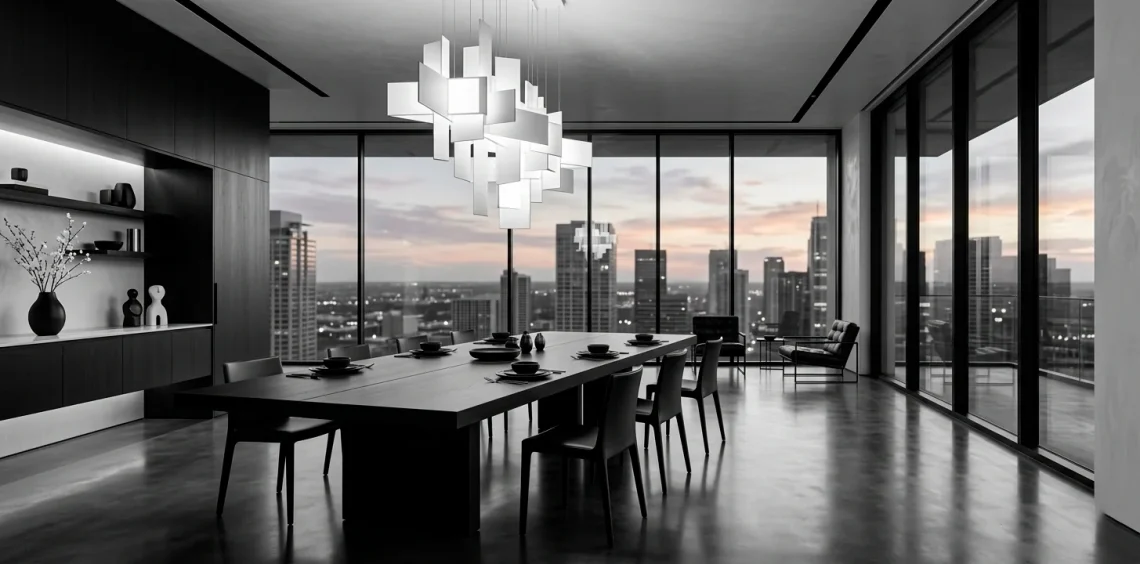
In a monochrome room, your light fixture isn’t just a lamp; it’s the lead actor. Since you aren’t using color to grab attention, you need a silhouette that does the heavy lifting. I always go for something oversized and sculptural.
A massive white chandelier against a black ceiling creates a ‘wow’ factor that color simply can’t match. Or perhaps a series of low-hanging black pendants over a long white table? The contrast defines the dining zone in an open-concept house. You want guests to walk in and immediately ask where you found that light.
Remember, lighting sets the mood. If you want that cozy, lived-in feel, check out this guide on hygge-inspired home lighting to balance your bold monochrome choices.

Monolithic Marble Tables
Nothing says ‘I have my life together’ like a massive slab of stone in the center of the room. A white Carrara marble table with grey veining is the ultimate monochrome anchor. It brings in natural patterns that keep the room from looking too sterile.
I’ve found that stone tables also add a sense of permanence and weight. If you go for a black Nero Marquina marble, you get those stunning white lightning-bolt veins that look incredible under candlelight. It’s a luxury investment, but it’s basically a functional sculpture. To keep the look cohesive, stick to chairs that match the primary color of the stone. This creates a monolithic ‘block’ of style in the center of your space. Why settle for wood when you can have a mountain in your dining room?

Industrial Concrete Brutalism
Concrete isn’t just for sidewalks anymore. Raw concrete walls or floors provide a perfect ‘urban grey’ base for a monochrome dining area. It adds a rugged, tactile element that balances out sleek furniture. I love the ‘perfectly imperfect’ vibe of concrete—the little bubbles and color variations give the room character.
If you can’t commit to real concrete, use a high-quality lime wash paint to get that mottled, stone-like texture. It feels grounded and honest. Just add some soft elements, like wool chair pads, so the room doesn’t feel too cold. Who knew grey-on-grey could look so tough yet inviting?

Playing with High Gloss Finishes
Texture is the secret sauce, but finish is the spice. In an all-black or all-grey room, mixing matte and high-gloss surfaces creates a visual playground. Imagine a high-gloss black lacquer table reflecting a matte black ceiling. It creates a sense of infinite depth that is honestly a bit trippy but totally cool. I find that glossy surfaces make dark rooms feel brighter because they act like mirrors for whatever light is available. It’s a very ‘penthouse chic’ look that feels incredibly intentional. Just keep a microfiber cloth handy because fingerprints are the enemy of this aesthetic.

Shadow Play and Mood Lighting
When you strip away color, you start to notice how shadows paint the room. I recommend using directional lighting to create drama. A spotlight hitting a centerpiece can cast long, moody shadows across a dark table, making every dinner feel like a scene from a noir film.
Use these lighting layers:
- Recessed ceiling spots for general brightness.
- LED strips under a sideboard for a soft floor glow.
- Dimmable pendants to control the ‘intensity’ of the monochrome.
Ever noticed how a room changes as the sun goes down? In a monochrome space, this transformation is even more dramatic. It’s all about the ‘vibe,’ and light is your primary tool to control it. Don’t be afraid to keep things a little dark; it adds to the mystery.

Matte Black Hardware and Details
It is all in the details, people! Even if your dining room is mostly white or grey, adding matte black hardware can tie the whole look together. I’m talking about door handles, cabinet pulls, and even the hinges on your doors.
Consistency is key:
- Choose one finish (like matte black) and stick to it.
- Apply it to picture frames and curtain rods.
- Ensure your cutlery matches the hardware for a pro look.
This creates a ‘red thread’ that runs through the room. It’s subtle, but your brain picks up on that harmony. When everything from the light switch to the salt shaker matches, the room feels professionally designed. It’s the easiest way to upgrade a basic room without a full renovation. Plus, matte black hardware is remarkably easy to find these days. FYI, it also hides water spots better than chrome! ✌️

Tonal Rugs for Comfort
A monochrome room can feel a bit cold if you have hard floors. I always suggest a large tonal rug to soften the acoustics and the vibe. If you have a grey room, go for a rug that is two shades darker than your floor. This adds layers without breaking the color rule. I personally love a low-pile wool rug because it’s durable and adds a natural texture that breaks up the ‘flatness’ of a modern room. It’s like a hug for your feet. Does a rug make that much of a difference? Absolutely. It defines the ‘island’ where the dining happens and makes the whole setup look anchored and intentional.

Art Deco Inspired Monochrome
You can go monochrome and still be a little ‘extra.’ Art Deco styles love high contrast and geometric patterns. Think black lacquer chairs with white velvet cushions or a sunburst mirror in a matte silver finish. This approach adds a bit of glamour to the minimalism. I love how Art Deco elements make a room feel like a high-end hotel lounge.
It’s about being bold but disciplined. Use repetitive patterns on the walls or in the flooring to create that Gatsby-esque energy. If you love a bit of drama and romance in your decor, you’ll probably enjoy these dark academia tablescapes for more moody inspiration. It’s all about creating an environment that feels like an escape from the ordinary.

Translucent Chairs for Airy Vibes
Want a monochrome look that doesn’t take up visual space? Ghost chairs are your best friend. In an all-white or light grey room, clear acrylic chairs disappear, making the table the star.
Why I recommend them:
- They make small rooms feel significantly larger.
- They add a modern, almost futuristic edge.
- You can clean them with a simple wipe—no fabric stains!
I’ve used these in tiny apartments, and they are total game-changers. They catch the light beautifully and prevent the room from feeling ‘cluttered’ with chair legs. It’s a clever way to maintain the monochrome palette without adding more solid blocks of color. Plus, they’re surprisingly comfortable for long dinner parties.

Mixed Metals in Monochrome
Wait, are metals allowed in monochrome? IMO, absolutely. Silver, chrome, and brushed nickel are just ‘shiny grey.’ I like to mix these into a monochrome room to add a bit of sparkle. A chrome-legged table or a brushed steel sideboard adds a professional, high-tech feel to the space. It breaks up the monotony of matte surfaces and adds a layer of ‘expensive’ light reflection. I suggest keeping your metals in the ‘cool’ family to stay true to the monochrome vibe. Avoid gold or brass here, as they bring in warmth that might break the ‘one-color’ spell. Think of it as jewelry for your room.

The Power of Slate Floors
If you are building or renovating, consider dark slate tile for the dining room floor. It provides a natural, charcoal-toned foundation that is practically indestructible. I love the organic texture of slate; it feels cool underfoot in the summer and looks incredibly ‘custom.’
When you pair dark floors with lighter grey walls, you create a grounded feeling that makes the furniture feel secure. It’s a very high-end look that you’ll see in a lot of architectural magazines. Does it show some dust? Sure. But the aesthetic payoff is 100% worth the extra vacuuming. It’s the ultimate way to finish a bold, modern monochrome transformation.

Ready to Pick a Side?
So, are you going for the moody ‘bat-cave’ black or the ‘heavenly’ all-white sanctuary? Monochrome dining rooms prove that you don’t need a rainbow to make a statement. By focusing on textures, lighting, and bold silhouettes, you create a space that feels curated and cohesive. I promise you won’t miss the bright colors once you see how sleek your home looks. Which idea are you grabbing first? Let me know in the comments, and go get your monochrome on!