Skip to content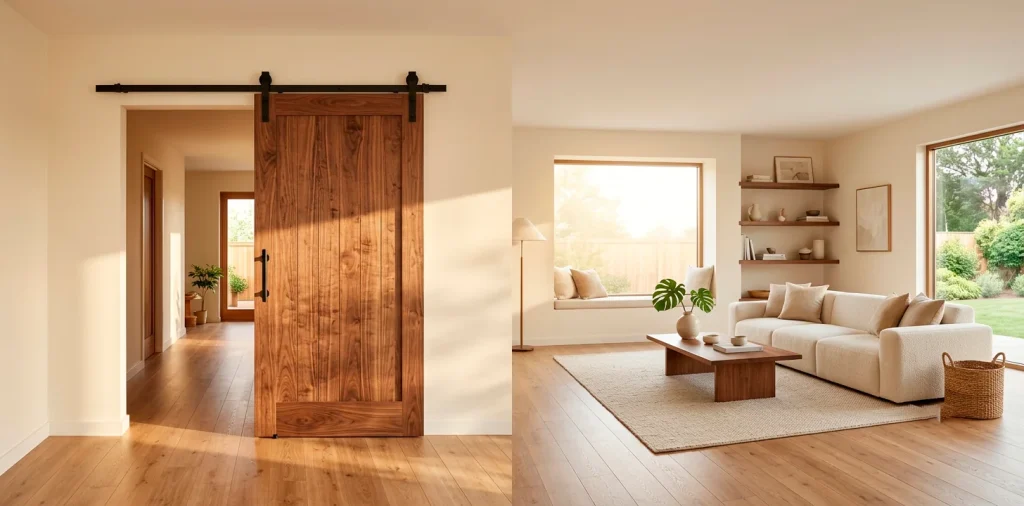
Ever stared at a boring hallway and thought it needed some serious flavor? I swapped my generic primary bath door for a sliding masterpiece last year, and it completely transformed the space. Barn doors aren’t just a farmhouse fad; they’re practical space-savers. Let’s figure out exactly how to pick the perfect sliding door for your home.
Do You Even Need a Barn Door?
Honestly, swinging doors waste so much valuable floor space. If you constantly bump your hip on a half-open door, a sliding mechanism solves that instantly. They hug the wall, stay completely out of your way, and act as a massive piece of moving wall art. I love how they instantly upgrade a basic room into something spectacular.
But wait, they aren’t perfect for every single room. Since they hover slightly off the frame, they don’t seal completely tight. Keep that in mind before you stick one on a high-traffic guest bathroom! 😉

The Art of Measuring (Don’t Mess This Up)
Grab your tape measure because winging this part guarantees a disaster. You need enough adjacent wall space for the door to slide completely open without blocking a light switch or an electrical outlet. Always order a door that is a few inches wider and taller than your actual opening. This overlap creates a better visual frame and boosts your privacy level. Forget exact measurements; you want that generous coverage to hide the frame gaps perfectly. Seriously, a door that barely covers the hole looks ridiculously cheap, IMO.
A useful little gift for your home
🎁 Free Plant Finder Tool
Filter 250+ houseplants by style, size, and care level to find your perfect green companion in seconds.
We’ll email you the link. Plus, you’ll join our newsletter for fresh home inspiration.

Decoding Styles and Materials
Wood remains the undisputed king of sliding doors. Solid pine brings that classic knotty look, while white oak offers a sleek, high-end vibe.
Want something unexpected? Glass paneled doors absolutely rule for home offices. They let the light flow beautifully while deadening annoying background noise.
Of course, heavy solid core doors feel incredible but require serious muscle to move. Hollow core options exist, though I highly recommend skipping them if you want real durability.
Just keep your existing interior design theme in mind. If you love that rustic charm, you might want to check out this guide to using beaded board paneling for cottage texture.

Hardware: The Unsung Hero
Your door is only as good as the track it rolls on. Cheap hardware sounds like a freight train rolling through your hallway at 2 AM. Invest in heavy-duty carbon steel or commercial-grade aluminum tracks with nylon-coated wheels. These wheels glide silently and won’t drive your family crazy. Also, pay close attention to the handle style! A massive industrial pull handle totally changes the vibe compared to a sleek, flush finger pull. Pick hardware that matches your hinges and faucets for a cohesive look.

Structural Support (No Sagging Allowed)
Do you have a header board? You probably need one. Most folks think they can just drill the heavy metal track straight into their drywall. Spoiler alert: you will rip your wall apart.
Always anchor your track into wall studs or install a sturdy wood header board first. This board acts as a solid bridge across your studs, giving the heavy track a bulletproof mounting surface.
Plus, a matching wood header adds a fantastic architectural detail to the setup. Paint it to match your trim, or simply stain it to match the sliding door!

Single vs. Double Doors
A single massive door makes a bold, dramatic statement and requires wall space on just one side. I used a giant single slider for my pantry, and it totally anchors the kitchen space visually.
However, double sliding doors look ridiculously elegant for wide openings like dining rooms or master suites. They split the weight, making them easier to open, and they demand less wall space on each side. Double doors basically give you that grand, sweeping entrance feel every time you walk through.

The Privacy Dilemma Solved
Let’s tackle the elephant in the room: privacy. Standard sliding setups leave a small gap between the door and the wall.
If you put this on a bathroom, people will absolutely hear things. But don’t panic, you can easily fix this design flaw.
Top privacy solutions:
- Install a teardrop lock mechanism on the door jamb.
- Add weatherstripping brushes along the inner door edges.
- Overlap the door by at least two inches on all sides.
These simple tweaks dramatically reduce sound transmission and annoying light leaks. You get the gorgeous aesthetic without sacrificing your personal space!

Modern Alternatives to Farmhouse
Sick of the rustic farmhouse look? Me too, sometimes. The sliding door concept easily adapts to ultra-modern aesthetics. Think completely flat, slab-style doors painted in moody, matte charcoal, or mirrored doors that make a tiny bedroom look twice its size. Mid-century modern homes look incredible with rich, horizontal wood grains sliding on concealed tracks. You do not have to live in a barn to rock a sliding door. For more modern inspiration, check out this practical guide to maintaining a minimalist living room.

Floor Guides Are Mandatory
Ever see a door swing out at the bottom and smack the baseboard? That happens when people skip the crucial floor guide.
A floor guide keeps the door traveling in a perfectly straight line. You can choose a hidden T-guide that fits into a groove routed under the door, or wall-mounted rollers that hug the sides.
I strongly prefer the wall-mounted rollers because you don’t have to drill into your expensive hardwood floors. They just screw right into the baseboard and hold everything securely in place.

Final Pre-Installation Checklist
Before you add anything to your cart, check your ceiling height. You need a minimum of six inches between the top of the door frame and the ceiling to fit the hardware track properly.
FYI, also look out for light switches, vents, or thermostats that the door might cover when open. Relocating a light switch costs money and time, so map out the door’s exact path beforehand. Taking ten minutes to double-check these details saves you massive headaches during installation!

A useful little gift for your home
🎁 Free Plant Finder Tool
Filter 250+ houseplants by style, size, and care level to find your perfect green companion in seconds.
We’ll email you the link. Plus, you’ll join our newsletter for fresh home inspiration.
Conclusion
Choosing the right barn door dramatically upgrades your home’s flow and aesthetic. From nailing the exact measurements to selecting whisper-quiet hardware, these details separate a clunky mistake from a sliding masterpiece. Grab that measuring tape and get creative with your textures. Which room are you transforming first? Let me know in the comments!