Skip to content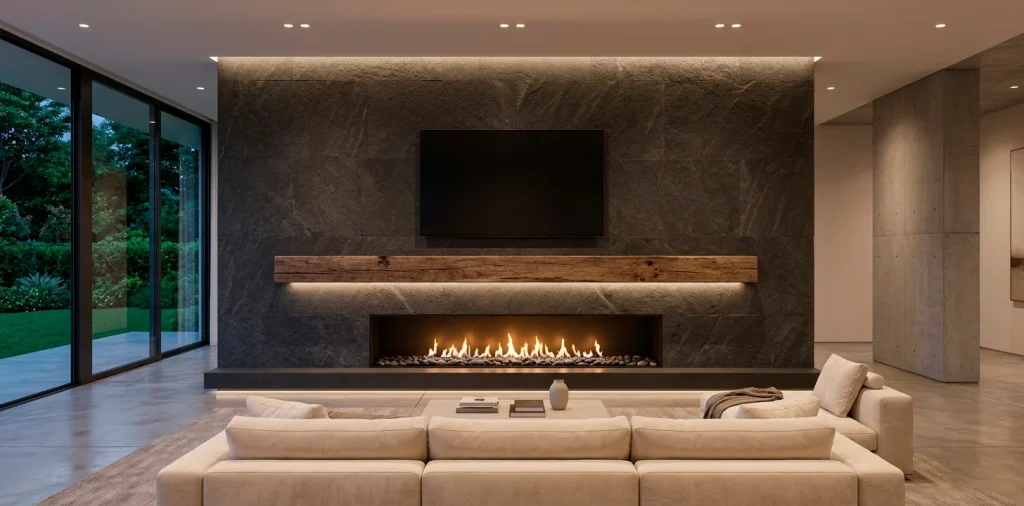
Stop! Before you drill that first hole into the drywall above your mantel, we need to talk. Putting a TV over a fireplace is the ultimate interior design vibe, but if you do it wrong, you’re basically slow-cooking your expensive tech. Ready to create a setup that looks amazing and won’t start a fire? Let’s get your living room sorted safely.
Calculating the Heat Clearance
Fireplaces send heat directly upward, which acts as a death sentence for delicate internal circuits. I always check the mantel’s depth before even unboxing the TV because that ledge serves as your first line of defense. Does your mantel stick out far enough to divert the rising heat away from the screen? If it doesn’t, you are playing a dangerous game with your warranty.
I recommend using an infrared thermometer to see exactly how hot that wall gets during a full burn. If the surface temperature exceeds 100 degrees Fahrenheit, you need to rethink your placement or install a deeper mantel. FYI, most manufacturers will void your warranty if they find out the TV lived above a scorching heat source. If you’re swapping tech for a classic look, check out our guide on styling ornate Victorian mirrors above fireplaces.

Structural Integrity and Stud Finding
You cannot trust simple drywall anchors to hold a sixty-pound piece of glass and metal over a heat source. I’ve seen way too many “fail videos” where the whole setup comes crashing down during a cozy movie night. I suggest using a high-quality stud finder to locate the exact center of your timber or steel studs before you start drilling. If you miss the mark, you risk the TV sagging or, worse, falling directly into the fire. Always double-check your measurements and mark the wall clearly because you only get one shot at a clean, safe install. Drywall just doesn’t have the grit to handle the leverage of a TV mount on its own.
A useful little gift for your home
🎁 Free Plant Finder Tool
Filter 250+ houseplants by style, size, and care level to find your perfect green companion in seconds.
We’ll email you the link. Plus, you’ll join our newsletter for fresh home inspiration.

Saving Your Neck: The Ergonomics of Height
Nobody wants to feel like they are sitting in the front row of a cramped movie theater. Mounting a TV high up creates a constant “neck-tilt” that leads to massive headaches and strain. Have you ever considered the long-term impact on your spine?
IMO, pull-down mounts are the absolute MVP of fireplace setups. These clever brackets let you lower the screen to eye level when you’re actually watching a show, then you just tuck it back up for the “aesthetic” when the guests arrive.
You should measure the distance from your sofa to the wall to find the sweet spot. If you have to look up more than fifteen degrees, you’re doing it wrong. Why settle for a stiff neck when technology offers a better way to lounge?

Taming the Wire Jungle Safely
Dangling wires look messy and pose a significant fire hazard near a heat source. I never leave cables exposed because the rising heat can melt the insulation over time. You should use an in-wall cable management kit that is specifically rated for fire safety. Does your current setup have wires touching the back of the fireplace insert? If so, fix that immediately!
If you can’t go behind the wall, use high-quality external raceways that you can paint to match your wall color. This keeps things tidy and prevents your pets or kids from snagging a cord. Safe cable routing:
- Use CL2 or CL3 fire-rated HDMI cables.
- Keep power cords away from the hottest part of the chimney.
- Secure excess cable with heat-resistant zip ties.

The Magic of the Mantel Shield
Sometimes a standard wooden mantel just doesn’t offer enough protection for your screen. I recommend looking into mantel shields or heat deflectors if your fireplace burns particularly hot. These metal or stone inserts sit just below the TV and act like a physical barrier for the heat.
They push the hot air out into the room instead of letting it lick the bottom of your TV bezel. It’s a simple fix that saves you thousands in repairs.
You can find shields that blend perfectly with your decor.
Don’t let your TV become a $2,000 marshmallow.
Check your local building codes to ensure your shield meets the required distance from the firebox. Safety isn’t just about the mount; it’s about the environment around it.

Gas vs. Wood: Knowing Your Heat Source
Electric fireplaces are the easiest to work with because they usually vent heat out the front rather than the top. However, wood-burning stoves are a completely different beast that requires extreme caution. I’ve seen wood fires reach temperatures that would melt a plastic TV stand in minutes. Do you know the peak output of your specific fireplace model?
If you have a gas fireplace, check the manufacturer’s manual for “clearance to combustibles.” This rating tells you exactly how much space you need between the fire and your TV. I always err on the side of caution and add an extra six inches to whatever the manual suggests. Better safe than sorry when it comes to home fires! 🛠️

Choosing the Right Mount Hardware
Don’t grab the cheapest mount you find on a clearance rack. I look for VESA-compliant brackets that offer a wide wall plate to bridge multiple studs for maximum stability. A tilting mount is usually the best choice for fireplace installs because it allows you to angle the screen down toward your seating area. This reduces glare from windows and improves the color accuracy of your screen. Make sure the weight rating of the mount exceeds your TV’s weight by at least twenty percent. I always tug on the mount with some force before I ever let the TV go—if it moves, it’s not safe enough. IMO, spending an extra fifty bucks on a premium mount is the best insurance you can buy for your living room. 🔥

The Recessed Nook Solution
If you are starting a renovation from scratch, I highly suggest building a recessed nook for the TV. This pocket in the wall allows the screen to sit flush, which looks incredibly professional and high-end. More importantly, the surrounding wall structure helps block heat from reaching the sides and back of the television. It creates a natural thermal break that keeps your tech cool while looking like a million bucks. For a more built-in look, explore these walnut modern TV wall units for warm spaces.
You should leave at least two inches of space on all sides of the TV within the nook. This ensures that air can still circulate around the vents. Have you noticed how hot the back of a TV gets even without a fireplace? Airflow is your best friend in this scenario.

The Thermometer Test
Before you commit to the final mount, I have a little trick that saves lives—well, TV lives anyway. Tape a basic indoor thermometer to the spot where you want to mount the TV and let the fireplace run for two hours. If the temperature hits 90 degrees or higher, you are in the danger zone for long-term electronic health. Electronics hate heat because it degrades the solder joints and the delicate pixels in your panel.
I always perform this test during the coldest day of the year when the fire is roaring at its peak. If your thermometer stays cool, you have the green light to proceed with your installation. Does it seem like extra work? Sure, but so is filing an insurance claim for a house fire or a melted screen.

Ventilation and Airflow
Never smash your TV directly against the wall if you can help it. I prefer mounts that leave a bit of a gap for air to flow behind the unit.
TVs generate their own heat, and when you add a fireplace to the mix, things get spicy fast.
You should keep the bottom vents of the TV clear of any decorative garland or mantel clutter.
Air needs to move to keep those internal fans from spinning at max speed.
Check your vents every few months for dust buildup, especially if you use your fireplace often.
Soot and dust can clog the cooling system and lead to an early grave for your favorite 4K screen.

A useful little gift for your home
🎁 Free Plant Finder Tool
Filter 250+ houseplants by style, size, and care level to find your perfect green companion in seconds.
We’ll email you the link. Plus, you’ll join our newsletter for fresh home inspiration.
Conclusion
Mounting a TV over your fireplace doesn’t have to be a gamble. If you prioritize heat clearance, secure your studs, and manage your cables properly, you’ll have the best seat in the house. Just remember to test those temperatures before you drill! So, are you ready to finally upgrade your living room vibe? Let me know in the comments if you’ve tried a pull-down mount yet—they are total game changers!