Ever looked at your living room and wished it just magically extended into the backyard? That is the dream, my friends. I finally cracked the code on creating a flawless mid-century patio that blurs the line between inside and out. No more awkward transitions or mismatched folding chairs. We are building a cohesive, retro-inspired retreat together 🌿.
Blurring the Lines with Continuous Flooring
You cannot expect a smooth transition if your interior hardwood abruptly meets a slab of gray concrete. Matching your indoor and outdoor flooring is the ultimate cheat code for spatial flow. I used wood-look porcelain tiles on my patio to mimic my interior oak floors, and the visual trickery is absolutely insane.
The eye naturally follows the continued pattern, making both spaces feel massive. If identical materials are out of your budget, just match the color tones. A warm terracotta inside pairs beautifully with stained concrete outside. Want a quick fix? Throw down a massive outdoor rug that perfectly mirrors your living room carpet.

Embrace Floor-to-Ceiling Glass
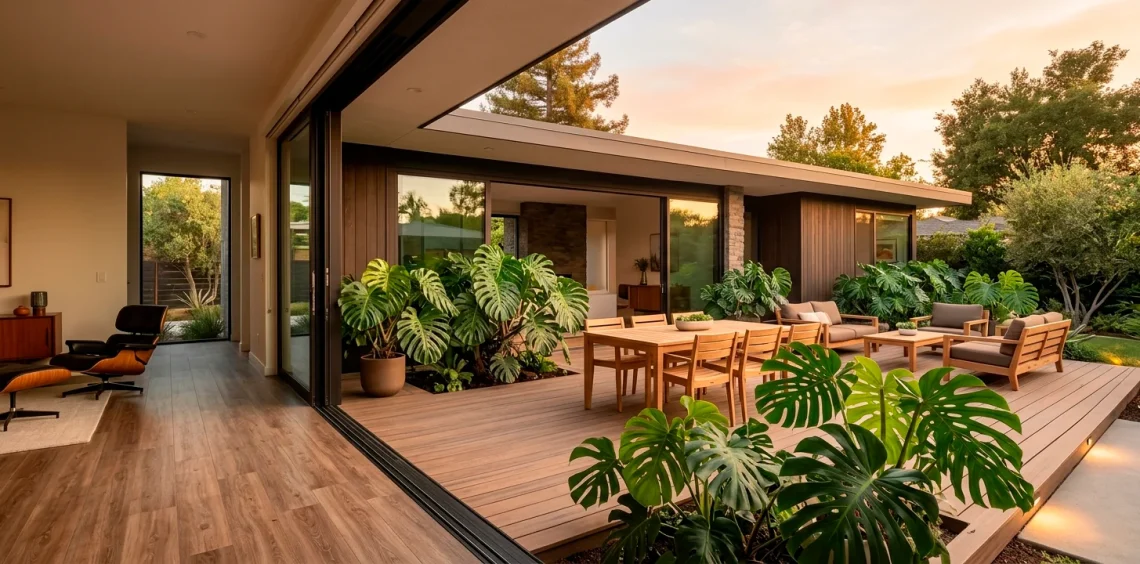
Remember those heavy, clunky patio doors from the 90s? Yeah, we are leaving those in the past. To achieve true mid-century indoor-outdoor harmony, you need vast expanses of glass. Wall-to-wall sliding doors completely dissolve the physical barrier between your house and the patio. When I finally upgraded to black-framed multislide doors, my living room instantly felt twice as large ✨. They flood your home with natural light and frame your backyard like a piece of living artwork. Just keep some glass cleaner handy, because the smudges are real. If you need more transition inspiration, check out these modern balcony transition ideas.

Harmonizing Your Retro Color Palette
Mid-century design thrives on a very specific color language. You want earthy neutrals anchored by vibrant, saturated pops of color.
But here is the secret: carry those exact same accent colors from your living room straight onto the patio. FYI, if you have a mustard yellow throw pillow on your indoor sofa, put a matching yellow glazed planter outside.
It sounds painfully simple, but this color-echoing technique subconsciously links the two zones. I stick to a base of warm teak, matte black, and olive green, then sprinkle in burnt orange for that classic 1960s flavor.
Essential retro palette colors:
- Matte black fixtures
- Warm teak wood
- Burnt orange accents

Adding Privacy with Breeze Blocks
Nothing screams “Palm Springs mid-century modern” quite like a breeze block wall. These architectural gems provide essential privacy without blocking the summer breeze or the sunlight. I built a short breeze block divider to hide my ugly pool equipment, and it instantly became the focal point of the whole yard. They cast the most incredible geometric shadows across the patio during golden hour. Plus, painting them a crisp, stark white creates a gorgeous contrast against the lush green landscaping. Trust me, your patio needs this retro texture.

Cross-Pollinating Your Plant Life
You cannot just dump all your plants outside and call it a day. The indoor-outdoor illusion requires a strategic blend of greenery on both sides of the glass.
Place a towering Bird of Paradise right inside the sliding doors, and position a similar tropical plant just outside on the patio. This creates a visual bridge that draws the eye outward effortlessly.
I literally treat my indoor plants and outdoor foliage as one giant, continuous garden. Keep the planters consistent, too. A sleek fiberglass bullet planter works flawlessly in both environments and nails that vintage aesthetic perfectly.

Selecting Low-Profile Patio Furniture
Heavy, overstuffed outdoor sofas completely ruin the sleek, airy vibe of mid-century design. You must prioritize low-profile furniture with clean, horizontal lines and tapered legs. Choosing pieces that sit closer to the ground makes your patio feel incredibly spacious and relaxed.
Look for materials like solid teak, woven rope, or powder-coated aluminum. I recently scored a vintage-inspired teak lounger, and it completely transformed my outdoor lounging experience. It looks identical to my indoor living room chairs, which is exactly the point. Keep it minimal, keep it sleek.

Seamless Lighting Transitions
Bad lighting destroys good design. IMO, it is just a fact.
If your patio is pitch black at night, the sliding glass acts like a giant mirror, bouncing your interior reflection back at you and totally killing the flow. You absolutely need layered outdoor lighting to draw you outside after sunset.
Install warm, low-wattage wall sconces that match your interior fixtures. A classic matte black hourglass sconce works wonders here.
Effective lighting elements:
- Hourglass wall sconces
- Warm white LED string lights
- Low-voltage landscape spotlights

Extending the Roofline
If you want the ultimate architectural flex, extend your interior ceiling directly out over the patio. A continuous roofline or a sleek pergola instantly transforms an exposed slab of concrete into an outdoor living room. I paneled my patio ceiling with tongue-and-groove cedar to match my interior living room ceiling, and the result is mind-blowing. This overhead continuity tricks your brain into thinking the patio is just another room in the house. It also protects your precious vintage patio furniture from sudden summer downpours and harsh midday sun.

Connecting Through Geometric Patterns
Mid-century design is heavily obsessed with geometry. From atomic starbursts to sharp chevrons, these shapes define the era.
You can easily weave these patterns through both spaces to strengthen the visual connection. If you have a geometric rug anchoring your indoor sofa, mirror that aesthetic with patterned outdoor throw pillows on the patio chairs.
Even the subtle lines of a slatted wood coffee table or a wire-frame chair can echo the geometry of your interior space. It is all about creating a cohesive visual language that speaks to both environments simultaneously. If you want more inspiration for tighter outdoor spaces, see these small patio neutral ideas.

Anchoring the Space with Fire
Every great patio needs a focal point, and a mid-century fire pit is the perfect gathering spot. Forget the chunky stone fire rings; we want sleek, low-slung concrete bowls or retro conical fireplaces 🔥.
A well-placed fire feature acts as the outdoor equivalent of your living room hearth. I installed a low concrete gas fire bowl, and it instantly became the hangout zone for every party. It provides warmth, ambient lighting, and an undeniable cool factor. Grab a glass of wine, sink into a comfortable lounge chair, and enjoy your flawlessly designed indoor-outdoor retreat.

Conclusion
Creating a seamless mid-century patio is all about blurring the boundaries between inside and out. By matching your flooring, utilizing expansive glass doors, and carrying your color palette across the threshold, you craft a cohesive, breathable sanctuary. It takes a little planning, but stepping out into a perfectly harmonized backyard is worth every effort. Which retro design element are you grabbing first? Let me know in the comments!