Skip to content
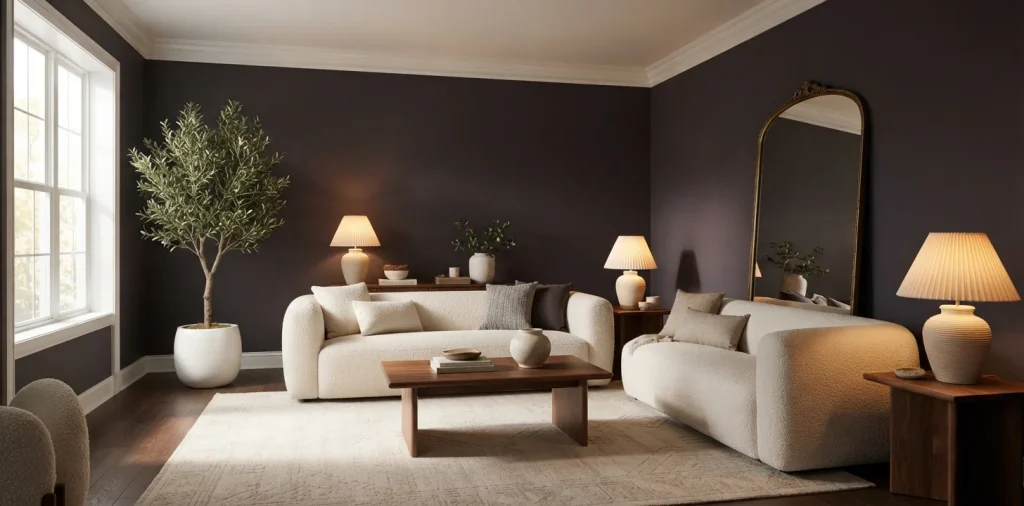
Dark paint looks incredible on Instagram, until you roll charcoal onto your own walls and accidentally create a bat cave. Trust me, I learned that lesson the hard way in my first apartment. Fortunately, moody living rooms thrive on smart contrast, not total darkness. You can keep that rich, dramatic vibe while letting fresh light breathe life into every corner.
Choose Dark Paint With Warm Undertones
Not all dark paints behave the same way when the sun goes down. Some flat grays turn cold and gloomy fast, making your sofa look like it sits inside a rainy Tuesday.
Always test warm undertones like deep espresso, forest green, or plum-charcoal on large poster boards before you commit. Watch how morning and evening light shift each shade across different walls. Flat matte finishes drink up glare, whereas eggshell paint gently bounces soft light back into the space. Ever noticed how a subtle sheen instantly wakes up a shadowy corner? IMO, skipping sample swatches leads straight to weekend repainting regret.

Layer Multiple Warm Light Sources
Kill the “big light” right now. Overhead ceiling fixtures flatten a dark room and cast harsh, unflattering shadows everywhere.
Instead, build a cozy glow at eye level and below. A mix of table lamps, wall sconces, and a tall floor lamp pulls brightness into dark zones without washing out your moody palette.
A useful little gift for your home
🎁 Free Plant Finder Tool
Filter 250+ houseplants by 6 smart criteria to find your perfect green companion.
We’ll email you the link. Plus, you’ll join our newsletter!
Swap cold blue-white bulbs for 2700K warm LEDs to give dark paint a rich, amber kiss.
My favorite lighting setup combines these easy staples:
- Pleated linen table lamps for diffused warmth
- Brass swing-arm sconces beside your reading chair
- Dimmable floor lamps standing behind corner plants

Anchor Dark Walls With Warm Wood
Dark paint craves organic warmth, or the whole space starts feeling like a sterile luxury hotel lobby. Warm wood tones like honey oak, walnut, and weathered teak bridge the gap between shadowy walls and bright daylight. Picture a rich charcoal backdrop behind a mid-century walnut credenza or an oak coffee table with visible wood grain. Those earthy honey and amber hues stop deep colors from feeling icy or flat. Even wooden picture frames or floating shelves break up heavy dark surfaces effortlessly. Want more inspiration for pairing timber with moody shades? Check out these warm wood tones that balance cold dark colors.

Bounce Natural Light Using Mirrors
Think of mirrors as secret extra windows for your living room. Hanging a large statement mirror directly across from a window doubles your natural daylight in seconds.
You do not need giant mirrors everywhere, either. Glass coffee tables, glossy ceramic vases, and lacquered trays also catch stray beams and scatter them across dark corners.
I placed an antique brass mirror opposite my tiny north-facing window last fall, and the room instantly felt twice as wide ✨. For more clever tricks to brighten gloomy spaces, read this guide to reflective surfaces for dim rooms.

Frame the Room With Crisp Trim
Do you love dark walls, or do you want color drenching from baseboard to ceiling? Leaving trim, crown molding, or window frames in creamy off-white creates sharp architectural contrast that keeps a moody room airy and intentional.
Skip stark hospital white because it clashes harshly with deep charcoal or navy. Warm whites like alabaster or ivory soften the transition and make the dark paint look richer. When you keep the ceiling light, the eye travels upward instead of feeling boxed in. Plus, light linen curtains hanging high near the ceiling frame your windows like bright exclamation points.

Soften Heavy Shades With Light Textiles
Heavy dark colors need touchable, breezy fabrics to keep things inviting. Otherwise, your living room looks more like a boardroom than a Sunday nap zone.
Drape an oatmeal bouclé throw over a dark velvet sofa, or toss chunky cream knit pillows onto a charcoal sectional. Those bright, tactile layers break up vast stretches of dark upholstery right away.
Sheer linen curtains also work magic by filtering harsh midday glare into a gentle, glowing haze.
Mixing smooth leather or dark matte walls with nubby, light-colored textiles gives your eyes plenty of cozy texture to enjoy.

Sprinkle In Warm Metallic Finishes
Cold chrome disappears against dark walls, so reach for metals with real warmth and personality instead. Brushed brass, aged bronze, and soft champagne gold act like tiny jewelry pieces against deep navy or forest green paint. Swap basic cabinet pulls for brass hardware, display a sculptural gold candleholder on your mantel, or choose a copper-toned floor lamp. Whenever lamplight hits these warm metallic edges, tiny glints of brightness dance across the room. Just avoid matching every single metal finish, because a slightly mixed look feels effortless and personal rather than showroom-stiff.

Brighten the Floor With Pale Rugs
Dark walls plus dark hardwood floors can swallow light faster than a black hole. Grounding your seating area with a pale area rug instantly lifts the whole room.
Choose forgiving textures that hide real-life living:
- Cream Moroccan wool rugs with subtle dark geometric lines
- Natural jute rugs sitting beneath softer ivory weaves
- Soft vintage-style rugs with oatmeal and terracotta tones
FYI, low-contrast patterns keep light rugs looking fresh even if you regularly spill coffee near the couch. Make sure the front legs of every sofa and accent chair rest squarely on the rug to tie the bright zone together.

Add Lush Greenery for Living Contrast
Nothing snaps a moody room back to life faster than vibrant green leaves. Place a tall indoor olive tree or fiddle-leaf fig near a sunny window, and watch those lively shapes pop against charcoal or deep teal walls. Even hardy low-light champions like pothos and snake plants thrive in dimmer corners while softening sharp furniture edges.
Drop them inside white ceramic planters or woven seagrass baskets to sneak extra hits of brightness into shadowy floor space. Who knew a couple of leafy roommates could pull an entire moody color palette together so easily?

Curate Open Space Around Dark Pieces
Clutter ruins a moody aesthetic faster than bad lighting. Dark colors already carry serious visual weight, so cramming twenty knick-knacks onto every shelf makes the space feel heavy.
Give your eyes room to rest by embracing negative space around big dark furniture. Leave blank wall space around bold white-matted artwork, and clear off coffee tables except for two or three standout objects.
Swap tiny trinkets for one sculptural travertine bowl or a stack of pale hardcover books. Breathing room lets both the shadows and the highlights shine without fighting for attention.

A useful little gift for your home
🎁 Free Plant Finder Tool
Filter 250+ houseplants by 6 smart criteria to find your perfect green companion.
We’ll email you the link. Plus, you’ll join our newsletter!
Conclusion
Creating moody living rooms comes down to balance: pair rich dark walls with warm wood, layered lamps, pale rugs, and reflective accents so the space feels cozy instead of cave-like. Start with one small swap today, like a bright throw or brass sconce. Which moody color are you brave enough to paint first—let me know in the comments! 🖤