Skip to content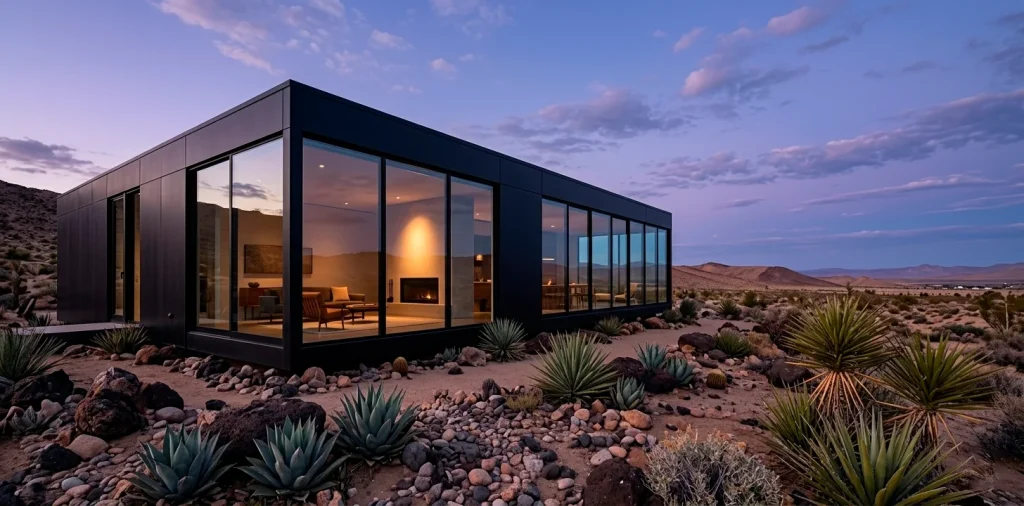
Forget those safe, boring beige boxes you see in every cookie-cutter suburb. I recently walked past a home wrapped entirely in matte black charred wood, and honestly, it stopped me in my tracks. A black facade isn’t just a color choice; it is a definitive statement of confidence. If you want your home to scream sophistication without saying a word, minimalist noir is your best friend. We are looking at why this dark aesthetic is winning the architectural game and how you can pull it off without making your house look like a villain’s lair.
The Psychological Power of the Dark Side
Why does a black building feel so much more intentional than a white one? When you strip away the bright colors, you force the eye to focus on form, shadow, and silhouette. I find that black facades create a sense of mystery and permanence that lighter shades just can’t touch. Most people worry that a dark house looks gloomy, but IMO, it actually provides the perfect canvas for the world around it. It feels anchored and solid, like it has been there for centuries even if the builders just left last week. Have you ever noticed how a black building seems to recede into the shadows while simultaneously demanding every ounce of your attention? It is a fascinating visual contradiction that makes minimalist architecture feel incredibly high-end 🖤.

Mastering Materials for a Matte Finish
You can’t just slap any black paint on a wall and call it a day. The material you choose dictates how the light hits the surface, and that changes everything. If you want that deep, rich look, you have to think about texture.
### The Allure of Shou Sugi Ban I am obsessed with Shou Sugi Ban, which is a traditional Japanese technique of charring cedar. It creates a naturally bug-resistant, fire-resistant, and drop-dead gorgeous black finish. The texture looks like alligator skin but way cooler.
A useful little gift for your home
🎁 Free Plant Finder Tool
Filter 250+ houseplants by style, size, and care level to find your perfect green companion in seconds.
We’ll email you the link. Plus, you’ll join our newsletter for fresh home inspiration.
Metal panels offer a totally different vibe. They give you those crisp, clean lines that define the industrial look. If you prefer something smoother, high-quality fiber cement or even black brick can do the trick. Just remember that the more matte the finish, the more ‘noir’ it feels. Shiny black can quickly go from ‘architectural masterpiece’ to ‘glossy piano,’ and nobody wants their house to look like a musical instrument.
Materials to consider for the dark look:
- Charred cedar (Shou Sugi Ban) for organic texture.
- Matte black standing seam metal for industrial sharp lines.
- Dark grey slate or stone for a natural, rugged feel.
- Blackened steel plates for a heavy, brutalist aesthetic.

The Art of Natural Contrast
A black facade is a drama queen, so it needs a good supporting cast. I love pairing dark exteriors with warm wood accents like cedar or oak around the entryway. This softens the blow and makes the home feel inviting rather than intimidating.
Nature also plays a huge role here. Greenery looks ten times more vibrant against a black backdrop. If you plant a Japanese Maple or some ornamental grasses in front of a black wall, those colors will pop like a neon sign. It’s all about balance, FYI. If you go 100% black without any organic contrast, you might end up with a black hole in the middle of your street. You can find more inspiration on balancing these sharp looks by checking out this guide on high-contrast black and white back porch ideas.

Busting the Heat Absorption Myth
Okay, let’s address the elephant in the room. Everyone thinks a black house will turn into a giant oven the second the sun comes out. While it’s true that black absorbs more solar radiation, modern construction has basically solved this problem.
If you use a proper rainscreen system and high-quality insulation, the color of your siding barely affects the temperature inside. I’ve talked to architects who swear by rear-ventilated facades. These systems allow air to circulate behind the black panels, whisking the heat away before it ever reaches your living room.
Also, many modern paint manufacturers offer ‘cool’ pigments. These special coatings reflect infrared light even when the color looks jet black to our eyes. So, you can have your moody aesthetic and keep your AC bill under control at the same time.
Key ways to keep a black house cool:
- Rear-ventilated facade systems to move hot air away.
- Reflective ‘cool’ pigments in the exterior paint.
- High-R-value rigid foam insulation for a thermal break.
- Deep roof overhangs to shade the walls during peak sun.

Lighting: Your Facade’s Night Shift
When the sun goes down, a black house can literally disappear. This is where you get to play with architectural lighting. I recommend using warm LED strips tucked into the eaves or recessed ground lights that wash the walls in a soft glow.
You don’t want to flood the whole thing with light. The goal is to highlight the edges and textures. If you have a black charred wood wall, a grazing light from below will make those scales and ridges look absolutely incredible. It’s like your house is putting on a tuxedo for the evening. Ever wondered how a simple light bulb can turn a dark wall into a piece of art? It is all about the angles, my friend.

The Reality of Maintenance
I’ll be honest with you: black shows everything. Dust, pollen, and the occasional bird ‘gift’ stand out more on a dark surface than on a sandy beige one. However, don’t let that scare you off. A quick spray with a garden hose usually handles the worst of it. If you choose a material like Shou Sugi Ban, the natural variation in the charring actually hides a lot of the imperfections. Think of it like owning a black car. It looks ten times better when it’s clean, and the effort you put into keeping it sharp pays off in pure street cred. Is it a bit of extra work? Maybe. Is it worth it for the most stylish house on the block? Absolutely.

Standing Out by Blending In
There is a strange magic to how black architecture interacts with its surroundings. In a rural setting, it mimics the deep shadows of the trees and looks like it belongs to the earth. In an urban environment, it stands out as a sharp, modern anomaly.
I’ve seen black houses in snowy climates that look like a million bucks. The contrast between the stark white snow and the deep black walls is pure visual poetry. It makes the house feel like a warm, protective cocoon.
Street appeal benefits of black:
- It creates an instant landmark for neighbors.
- It hides messy exterior plumbing or conduit lines.
- It makes the architectural silhouette look much sharper.

Choosing the Right Shade of ‘Noir’
Not all blacks are created equal. Some have blue undertones that feel cold and futuristic, while others have brown or red undertones that feel earthy and warm. I suggest grabbing a few samples and looking at them at different times of the day.
A ‘true black’ can sometimes look a bit flat under a bright midday sun. Many designers actually prefer a ‘near-black’ or ‘dark charcoal’ because it retains more depth and allows the shadows to do their job. Don’t be afraid to go dark, but definitely be picky about the tint. If you pick a blue-black, it might look like a giant navy blue block in certain lights, which might not be the vibe you’re after.

The Industrial Edge: Windows and Frames
To really nail the minimalist noir look, you have to commit to the details. I always say that if the walls are black, the window frames should be too. Black steel-frame windows are the gold standard for this style. They create these beautiful, thin lines that don’t distract from the view. It makes the glass look like it’s floating. If you mix white window frames with a black facade, you end up with a ‘checkered’ look that kills the minimalist flow. Stick to the monochromatic theme for maximum impact. You can even extend this industrial feel to your outdoor living space with these modern black metal dining sets for an industrial patio.

A Commitment to Bold Design
Choosing a black facade is about more than just aesthetics; it is about embracing a specific lifestyle. It tells the world that you aren’t afraid to be different. I think the fear of ‘resale value’ often stops people from making bold choices, but in today’s market, unique architectural homes are actually in high demand.
Minimalism is about removing the noise, and nothing removes noise like a solid, dark volume. It simplifies the visual landscape and creates a peaceful sanctuary.
Reasons to embrace the noir:
- It never goes out of style.
- It highlights architectural courage.
- It looks expensive even if the materials are simple.
- It provides a calming, solid presence.
Are you ready to join the dark side? It’s a bit intimidating at first, but once you see that black facade against a blue sky, you’ll never want to go back to beige. It’s a total game-changer for anyone who values design that actually says something. Trust me, your house will be the one everyone talks about—for all the right reasons.

A useful little gift for your home
🎁 Free Plant Finder Tool
Filter 250+ houseplants by style, size, and care level to find your perfect green companion in seconds.
We’ll email you the link. Plus, you’ll join our newsletter for fresh home inspiration.
Conclusion
The bold impact of a black architectural facade is undeniable. It transforms a simple structure into a minimalist masterpiece that feels both modern and timeless. By choosing the right materials, balancing with natural textures, and nailing the lighting, you create a home that stands out with quiet confidence. So, are you bold enough to paint it black? Let me know which material you’d choose in the comments!