Skip to content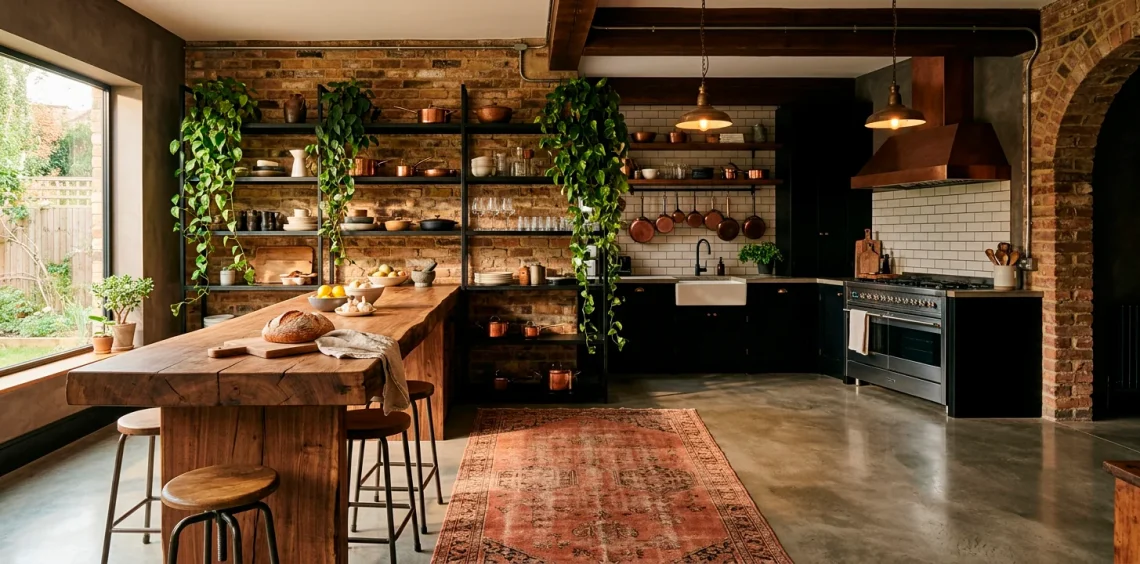
Ever walk into a sleek industrial kitchen and feel like you just stepped into a commercial meat locker? Yeah, me too. Stainless steel and raw concrete look undeniably cool, but they sometimes lack a heartbeat. Let me share how I warmed up my own hyper-modern cooking space. You can instantly cozy up those harsh edges without losing that edgy loft vibe.
Bring in the Natural Wood
Let’s talk about the ultimate antidote to cold steel: raw, beautiful wood. Industrial kitchens practically beg for natural timber to break up the endless seas of matte black and polished chrome. You need living materials to ground the space. I swapped my sterile metal bar stools for chunky walnut ones, and the transformation blew my mind. Suddenly, the kitchen felt like a place to hang out, rather than just a sterile prep zone. Think thick butcher block cutting boards, wooden fruit bowls, or even exposed ceiling beams if you have the budget. You just need to inject some organic life into the room.

Embrace Curved Furniture and Fixtures
Industrial design loves a sharp right angle. You see squares and rectangles everywhere, from the subway tile backsplash to the massive kitchen island.
You have to deliberately interrupt this geometry. Introduce circles and soft arches to give your eyes a much-needed break from the rigid grid. Think round pedestal tables, curved faucet spouts, or even a circular wall mirror reflecting the space.
A useful little gift for your home
🎁 Free Plant Finder Tool
Filter 250+ houseplants by style, size, and care level to find your perfect green companion in seconds.
We’ll email you the link. Plus, you’ll join our newsletter for fresh home inspiration.
FYI, it sounds crazy to put a mirror in the kitchen, but it genuinely softens the room. Even minor details like swapping square cabinet pulls for rounded knobs make a huge difference.

Warm Up Your Lighting Game
Harsh overhead lighting ruins even the coziest rooms. When you pair cool-toned bulbs with stainless steel appliances, you basically recreate an operating room. Ditch the bright daylight LEDs and install warm, amber-toned bulbs (around 2700K) to instantly cast a golden glow over your countertops.
You also need to layer your light sources. Add a cute little table lamp to your kitchen counter—yes, counter lamps are a thing, and they look incredibly chic. Throw in some soft ambient pendant lights over the island to anchor the space.

Textiles Are Your Best Friend
Nothing softens a hard surface quite like fabric.
Industrial kitchens usually lack upholstery. You need to actively add textiles to absorb sound and create visual warmth. Drape a linen runner across your island or hang some breezy café curtains over the sink window.
Even your dish towels play a role here. Toss those generic microfiber rags and upgrade to plush, waffle-knit cotton towels in earthy tones like terracotta or sage green.
You will notice the acoustic difference immediately. The fabric literally softens the echo of clinking pots and pans.

Hardware Swaps for the Win
Matte black hardware dominates the industrial trend, but it can look incredibly stark against white or gray cabinets. If you want a softer touch, swap those dark rigid handles for unlacquered brass or antique bronze. These warm metals develop a gorgeous patina over time, adding a lived-in character that shiny chrome entirely misses.
I did this in my last apartment and it took exactly thirty minutes. You grab a screwdriver, ditch the factory-standard pulls, and instantly upgrade the entire cabinet front. If you rent, just keep the old hardware in a ziplock bag for move-out day.

Bring the Outdoors Inside
Plants fix almost every design mistake IMO. An industrial kitchen provides the perfect high-contrast backdrop for lush, sprawling greenery. Trailing plants like pothos or string of pearls look incredible cascading off the edge of a cold, metal open shelf. The organic, unpredictable shapes of the leaves completely disrupt the strict lines of modern architecture. Do you have a sunny spot by the window? Stick a potted olive tree or a bushy fern right there. You breathe literal life into the room, and the vibrant green color perfectly offsets the gray concrete floors. 🌿

Style Your Open Shelving Intentionally
Industrial kitchens often feature open metal pipe shelving. While these shelves look cool, they quickly look cluttered or harsh if you just stack a bunch of stainless steel bowls on them.
Curating your shelf display requires a deliberate mix of materials. Stack your everyday plates, but lean a vintage wooden cutting board behind them. Add a handmade ceramic mug or a quirky thrifted vase to introduce some wobbly, imperfect shapes.
Design elements to soften the look:
- Hand-thrown pottery pieces in neutral tones
- Woven seagrass baskets to hide ugly plastic packaging
- Small, oddly shaped sculptural objects
- Trailing ivy in weathered pots

The Magic of Vintage Rugs
Concrete or dark tile floors scream industrial chic, but they absolutely punish your feet and look freezing cold. You must ground the space with a heavily textured, patterned rug. A vintage Persian or Turkish runner placed right between the island and the sink completely alters the room’s temperature.
The faded colors and intricate patterns contrast beautifully with the sleek, modern cabinetry. Plus, the rug catches those inevitable water splashes while you do the dishes! Just ensure you buy a washable option or throw down a solid rug pad so you don’t go sliding across the room holding a pot of boiling pasta.

A useful little gift for your home
🎁 Free Plant Finder Tool
Filter 250+ houseplants by style, size, and care level to find your perfect green companion in seconds.
We’ll email you the link. Plus, you’ll join our newsletter for fresh home inspiration.
Conclusion
So there you have it—you don’t have to sacrifice your cool industrial edge just to make your kitchen feel like home. By mixing in warm woods, embracing curved shapes, and tossing in a few vintage textiles, you easily bridge the gap between stark and snug. Which of these softening tricks are you grabbing first? Let me know in the comments below!