Skip to content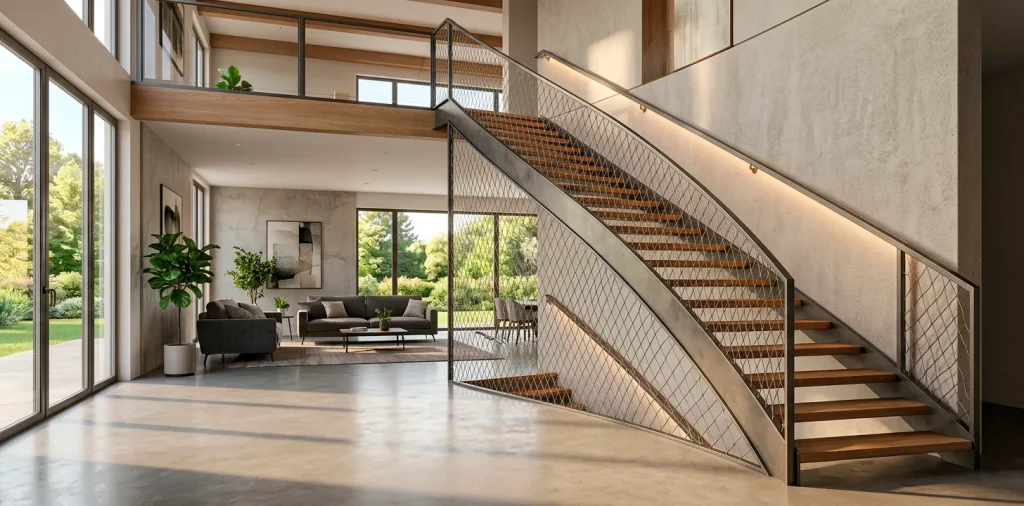
Are you tired of staring at the same old boring wooden staircase balusters? I totally get it. Upgrading to a mild steel railing with geometric woven wire instantly transforms your space from basic to breathtaking. Let me walk you through twenty absolute stunner ideas that bring serious industrial edge and modern elegance right into your home.
The Classic Diamond Mesh
Let’s start with a certified crowd-pleaser. The classic diamond mesh pattern gives your mild steel railing an instant industrial loft vibe without trying too hard. I actually installed something similar in my old studio, and it completely changed the room’s entire energy.
The diagonal lines naturally draw your eyes upward along the staircase, creating a beautiful illusion of height. Plus, this tight geometric weave adds a fantastic layer of safety if you have curious pets roaming around.

Hexagonal Honeycomb Heaven
Ever wondered why bees are such great architects? Hexagons naturally distribute weight and look visually stunning. Integrating a honeycomb woven wire design into your staircase railing screams modern chic. The six-sided geometric shapes cast the most amazing dynamic shadows on your walls when the afternoon sun hits them just right. I highly recommend pairing this bold structural look with warm wood stair treads to balance out that cool metal aesthetic.
A useful little gift for your home
🎁 Free Plant Finder Tool
Filter 250+ houseplants by 6 smart criteria to find your perfect green companion.
We’ll email you the link. Plus, you’ll join our newsletter!

Asymmetrical Zig-Zag Weave
If symmetry bores you to tears, you absolutely need the zig-zag weave in your life.
This erratic, lightning-bolt style wire pattern breaks all the traditional design rules. It gives your staircase a wild, kinetic energy that immediately serves as a massive architectural focal point.
Your guests will definitely stop and stare at this one. It honestly feels much more like a custom modern art installation than a standard functional home safety feature!

Square Grid Minimalism
Sometimes you just want clean, predictable lines. A precise square grid woven wire railing delivers ultimate minimalism. It frames the space perfectly without cluttering your visual field. I love using this design in ultra-modern homes where simplicity reigns supreme. The perpendicular steel wires create a tidy, uniform look that pairs beautifully with minimalist decor. For a flawlessly cohesive space, check out this guide on the best minimalist TV stands.

Diagonal Chevron Action
Chevron isn’t just for cozy living room throw rugs anymore, FYI. 😉
Flipping your woven wire on a sharp angle creates a striking, continuous V-shape pattern that literally points the way up your stairs.
This clever geometric trick forces an immediate sense of forward movement.
Design tips for chevron steel:
- Paint the outer frame matte black
- Use a heavy-gauge wire for stability
- Keep surrounding walls bright white

The Tight Micro-Weave
Want the visual texture of fabric but the undeniable strength of raw steel? The micro-weave packs tiny geometric squares so closely together that the railing almost looks completely solid from a distance.
Once you get up close, you finally notice the intricate, painstaking craftsmanship. This ultra-dense wire mesh offers supreme privacy for your staircase while still letting ambient light gently filter through the tiny metal gaps.

Wide-Open Rectangular Panels
On the flip side of the micro-weave, we have wide-open rectangles.
This design uses thick-gauge mild steel wire spaced far apart to create large, airy geometric blocks. It perfectly suits narrow staircases because it refuses to close off the space.
You get the necessary structural support without losing an ounce of visual flow. It keeps the hallway feeling massive and unrestrictive.

Layered Double-Wire Mesh
Why settle for one layer of wire when you can have two? Overlapping two distinct geometric mesh panels creates a hypnotic moiré effect as you walk past. The patterns shift and dance depending on your viewing angle. This interactive design element brings a completely unexpected wow factor to an otherwise standard MS staircase. I promise you’ll catch yourself walking up and down just to watch the optical illusion happen.

The Wavy Water-Like Weave
Geometric design doesn’t always have to rely on harsh, aggressive straight lines. Crimped wire woven into smooth, undulating waves completely softens the traditionally cold nature of mild steel.
These subtle metal curves reflect indoor lighting beautifully and bring an organic, flowing rhythm straight to your staircase. It creates a truly stunning juxtaposition against the rigid, heavy straight edges of your actual stair treads.

Stepped Tetris Grid
Let’s get a little playful with our angles.
The stepped grid pattern mimics the classic shape of falling Tetris blocks.
Instead of continuous lines, the wire intersects at staggered intervals, creating fascinating L-shapes and staggered boxes.
This layout works incredibly well if you want your staircase to serve as a quirky, modern focal point in an open-concept home.

Circular Overlapping Rings
Interlocking metal circles bring a bold retro-futuristic vibe to your railing. This geometric chainmail style uses heavy-duty mild steel rings welded into a continuous, breathable net. The circular motif perfectly breaks up the heavy linear geometry usually found in hallways and foyers. If you love Mid-Century modern or Art Deco aesthetics, this rounded wire pattern seamlessly bridges the gap between vintage glam and industrial grit.

Floating Triangle Sections
Triangles represent the absolute strongest geometric shape in structural construction. Weaving your mild steel wire into bold, isolated triangular pockets creates a fiercely modern aesthetic.
By leaving specific sections completely open and densely weaving others, you generate a very cool “floating” illusion. This clever use of negative space keeps the metal railing from feeling too heavy or overwhelming in smaller residential homes.

Woven Brass & Mild Steel Combo
Who says you have to stick to just one metal finish?
Interweaving bright brass wire directly through your dark mild steel grid creates a breathtaking two-tone geometric masterpiece. The warm gold tones cut through the industrial grey, adding a sudden splash of serious luxury.
I absolutely adore this mixed-metal approach for homes that want a slightly glamorous edge. It catches the eye instantly.

Thick-Gauge Industrial Lattice
Sometimes you just need to go big or go home. Using a super thick-gauge wire for a simple diamond lattice screams heavy-duty industrial chic. This chunky geometric pattern provides massive visual weight, anchoring a floating staircase perfectly. It looks incredibly rugged and purposeful. If your home features exposed brick walls or massive timber ceiling beams, this beefy woven wire design will fit right in like it always belonged there.

Abstract Starburst Wire
Ditch the standard uniform grid completely and try a highly dynamic starburst pattern. The steel wires radiate outward from central geometric hubs positioned along the railing, mimicking exploding stars or shattered glass.
This asymmetrical, high-tension look brings incredible architectural drama directly to the stairwell. It practically begs your guests to run their hands along the cool, intersecting steel lines as they climb up to the second floor.

The Gradiated Weave
Why keep your pattern strictly uniform top to bottom?
A gradiated weave starts tightly packed at the base of the railing and slowly opens up into larger geometric shapes near the handrail.
This fading effect looks incredibly sophisticated and custom-made.
It provides extra durability at the bottom where shoes might accidentally kick the steel, while keeping the top visually light and airy.

Folded Origami Wire Panels
Prepare to have your mind completely blown by actual 3D geometric design. Instead of keeping the wire mesh strictly flat, skilled fabricators can literally crease and fold the steel panels like giant pieces of metal origami.
These protruding geometric facets catch the ambient room light from wildly different angles throughout the day. It seamlessly transforms a basic safety barrier into a highly textured, sculptural masterpiece.

Frameless Woven Edges
Traditional MS railings lock the wire mesh inside heavy, thick metal borders. A frameless design lets the woven geometric edges stretch right to the handrail and floor mounts, hiding the structural supports entirely. This creates a beautifully continuous, uninterrupted pattern. It looks incredibly sleek and highly modern, pushing the boundaries of standard staircase design. For a similarly daring interior vibe, explore these high contrast living room color schemes.

The Gothic Pointed Arch Weave
Let’s inject a little historical drama directly into our modern metalwork.
Weaving the wire into repeating pointed arches brings a very subtle Gothic cathedral vibe right to your residential staircase. It perfectly merges old-world architectural shapes with raw, modern industrial materials.
This specific geometric arrangement looks exceptionally striking when painted in a deep, moody charcoal or a stark matte black finish.

Perforated Geometric Illusion
We finish strong with a clever optical illusion. Using tightly woven wire with varying wire thicknesses creates the visual effect of solid steel sheets perforated with geometric cutouts.
You get the bold, heavy look of laser-cut metal panels, but with the actual airflow and lightweight properties of woven wire. It perfectly caps off our list of brilliant staircase upgrades! IMO, it’s a total game-changer.

A useful little gift for your home
🎁 Free Plant Finder Tool
Filter 250+ houseplants by 6 smart criteria to find your perfect green companion.
We’ll email you the link. Plus, you’ll join our newsletter!
Conclusion
Upgrading your staircase with geometric woven wire completely revitalizes your home’s interior landscape. These striking mild steel designs offer unbeatable durability and serious architectural flair. Which of these twenty bold patterns are you grabbing first for your next big renovation project? Let me know in the comments below!