Skip to content
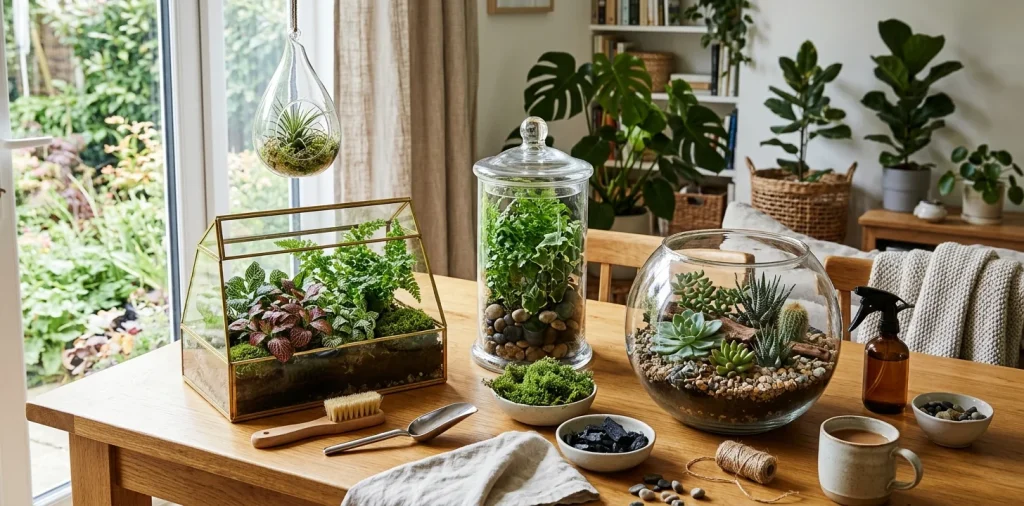
Winter grays and dry indoor air make my apartment feel like a cardboard box sometimes. Fortunately, DIY terrariums rescue bland rooms without demanding constant watering. I killed three ferns before discovering how glass enclosures trap moisture effortlessly. Ready to build tiny, thriving worlds on your coffee table? Grab some gravel and let’s get our hands dirty.
Geometric Brass Wardian Case for Moody Desks
Standard plastic pots ruin good desk vibes, IMO.
A geometric brass terrarium turns a cluttered workspace into an editorial moment. Layer coarse river pebbles, activated charcoal, and gritty cactus soil inside the hinged glass panels, then tuck in slow-growing fittonia or baby’s tears. Brass frames oxidize gently over time, giving your desk garden instant heirloom character. Plus, a hinged lid lets you mist the foliage without dismantling the whole setup. If you want more greenery alongside your monitor, explore these best desk plants for an urban jungle office.

Upside-Down Wine Glass Moss Cloche
Wait—why spend fifty bucks on boutique glassware when your kitchen cabinet already holds a sneaky solution? Flip a wide-bowl wine glass upside down over a small ceramic coaster or wooden slice, and boom, you own a miniature moss cloche. Cushion the base with damp sheet moss, add a tiny quartz crystal or smooth pebble, and drop the glass dome right on top. This zero-cost trick traps humidity like a pro while keeping fungus gnats out. Sure, your guests might wonder why a stemware glass sits in the middle of the bookshelf, but honestly, that just makes a fun conversation starter.
A useful little gift for your home
🎁 Free Plant Finder Tool
Filter 250+ houseplants by 6 smart criteria to find your perfect green companion.
We’ll email you the link. Plus, you’ll join our newsletter!

Apothecary Jar Fern Sanctuary for Steamy Bathrooms
Ferns hate dry living rooms, and they hold grudges.
Last winter, my Boston fern dropped half its fronds out of pure spite before I moved a baby button fern into a lidded apothecary jar. The sealed glass lid recycles water vapor continuously, creating a self-watering rainforest.
Pack pea gravel at the bottom for drainage, sprinkle horticultural charcoal over it, and add airy potting mix. Anchor tiny ferns and creeping fig inside, then seal the lid tight. 🌿
Pair this glass oasis with a few of these moody low-light bathroom plants.

Open Glass Bowl Succulent Desertscape
Not everyone wants a misty swamp on their nightstand, and succulent bowl terrariums skip the humidity altogether. Grab a wide, shallow glass bubble bowl so air circulates freely around your plants—never seal succulents inside a closed jar unless you enjoy mushy rot. Layer coarse sand, lava rock, and fast-draining cactus soil, then arrange petite haworthia, echeveria, and colorful river gravel across the surface. Good airflow and gritty soil keep desert plants plump instead of soggy.
Just drop one tablespoon of water near the roots every two weeks and walk away.

Vintage Coffee Carafe Ecosystem
Thrift stores practically beg you to rescue orphaned glass coffee pots, and honestly, they make killer planters.
A vintage glass carafe brings quirky retro charm to a sunny kitchen windowsill while giving slow-growing greenery plenty of room to breathe. The curved spout lets excess heat escape while holding onto steady moisture. Gather these essentials before you build:
- Lightweight LECA clay balls for the drainage base
- Long stainless tweezers to reach past the narrow neck
- Fresh pillow moss and miniature polka dot plant cuttings
- Activated carbon pellets to block funky odors

Hanging Teardrop Air Plant Globes
Zero soil, zero mess—hanging glass globes solve your windowsill shortage in five minutes flat. Suspend open-front teardrop glass orbs from curtain rods or ceiling hooks with braided jute twine, then nestle silvery tillandsia air plants on beds of dried reindeer moss and bleached driftwood. Because air plants absorb water through their leaves instead of roots, you skip the dirt layering ritual completely. Once a week, dunk the tillandsia in lukewarm tap water for twenty minutes and let them dry upside down before placing them back inside. FYI, soggy bases kill air plants faster than neglect.

Wide-Mouth Mason Jar Woodland Floor
Nothing beats a classic quart mason jar when you crave an easy weekend craft that costs pocket change. Last autumn, I raided my local park for fallen oak twigs and acorn caps to build a tiny forest scene right on my entryway console.
Keep your woodland jar thriving with these quick maintenance habits:
- Drop a sheet of window mesh between the pebbles and soil to prevent muddy layers.
- Mist the moss lightly only when the inner glass looks completely dry.
- Rotate the jar every Sunday so tiny ferns grow upright instead of leaning toward the sun.
- Remove yellowing leaves immediately with chopsticks to keep mold away.

Recycled Clear Olive Oil Bottle Micro-Garden
Ever tried threading delicate moss through a one-inch bottleneck? Prepare for a serious test of patience—and maybe a tiny victory dance when that final sprig lands upright.
Grab a tall, clear olive oil bottle after you scrub its label clean, roll a paper funnel to pour in fine aquarium gravel, charcoal, and sandy loam, and push baby tears or dwarf moss down with extra-long aquarium tweezers. Cork the top loosely after misting the glass walls once. Narrow-neck bottle gardens demand steady hands upfront, yet they often survive years without a single drop of extra water.

Shadowbox Glass Lantern Bog Display
Forget dainty succulents—some days call for carnivorous plants.
A black metal glass lantern makes an edgy home for a Venus flytrap or sparkling sundew, and watching them snack on stray fruit flies honestly beats reality TV, TBH. Keep the top vent cracked slightly for crisp airflow.
Skip regular potting soil because fertilizer burns bog roots fast. Build your miniature swamp with these specific materials:
- Unfertilized long-fiber sphagnum moss plus chunky perlite
- Distilled water or pure rainwater only (tap minerals kill bog plants)
- Bright south-facing window placement for six hours daily

Mini Candy Dish Pebble and Marimo Bowl
If you somehow manage to kill a cactus, meet your ultimate plant soulmate: marimo moss balls. Drop two velvety green aquatic algae spheres into a footed glass candy dish brimming with dechlorinated water and smooth white river stones, and you instantly create a serene tabletop pond. Unlike soil terrariums, marimo bowls need zero misting, zero drainage layers, and zero bright direct sunlight—just swirl the water gently once a week and swap it out every fortnight. These quirky fuzzy orbs thrive in shady corners where normal houseplants give up. Honestly, they make the easiest desk pet alive. ✨

A useful little gift for your home
🎁 Free Plant Finder Tool
Filter 250+ houseplants by 6 smart criteria to find your perfect green companion.
We’ll email you the link. Plus, you’ll join our newsletter!
Conclusion
Whether you flip an old wine glass or build a moody brass Wardian case, DIY terrariums bring instant calm and living texture indoors without wrecking your schedule. Start with one jar on your kitchen counter—just don’t blame me when every shelf in your house suddenly sprouts glass domes! Which tiny ecosystem will you build first? Let me know in the comments.