Skip to content
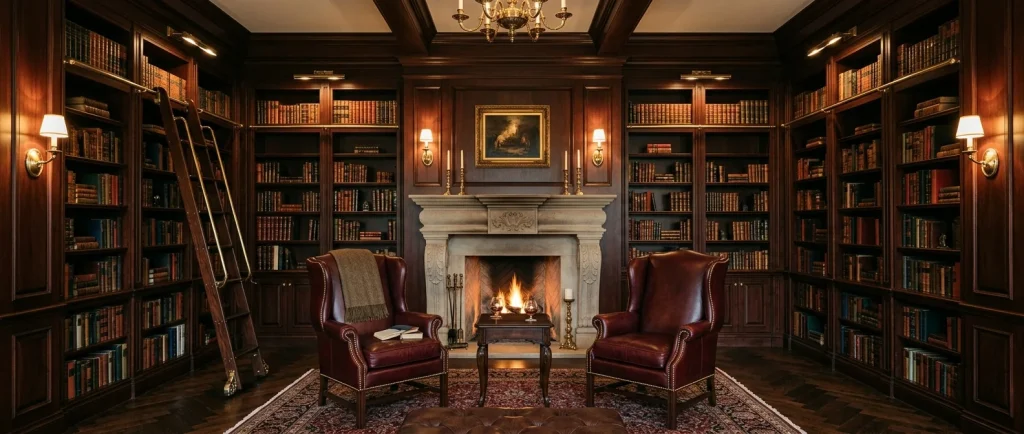
Ever stared at an empty room and thought, “This space needs to look like I read thick philosophy books for fun”? A formal home library adds an instant old-money vibe to your house. Designing symmetrical built-ins provides the ultimate cheat code for creating a perfectly balanced room. Symmetry changes everything, IMO. Let’s build your dream reading sanctuary!
The Magic of Perfect Balance
Symmetrical spaces calm the human brain. We naturally crave that visual order, especially in a formal room filled with hundreds of chaotic book spines. It just feels right, doesn’t it?
When you mirror your shelving on either side of a focal point, you anchor the entire space. This layout eliminates visual clutter, letting your collection shine. You don’t need a massive mansion to pull this off, either. Even a modest room looks incredibly grand when the walls match perfectly. Trust me, spending a little extra time measuring those gaps pays off big time.

Choosing Your Central Focal Point
Every symmetrical design demands a strong center. What are you anchoring these glorious shelves around? A grand fireplace serves as the classic choice, but a large window with a cozy window seat works wonders too. Never skip the focal point, or your room will just look like a warehouse. If your room lacks architectural features, use a striking piece of oversized art or a heavy desk placed dead center. It literally forces the eye to appreciate the balance you worked so hard to create. If you need some inspiration for that center art, check out this guide to choose art pieces 2026 decor trends.
A useful little gift for your home
🎁 Free Plant Finder Tool
Filter 250+ houseplants by 6 smart criteria to find your perfect green companion.
We’ll email you the link. Plus, you’ll join our newsletter!

Getting the Measurements Exactly Right
Measure twice, cut once. It sounds cliché because it is 100% true.
If your right shelf sits half an inch wider than the left one, it will haunt your dreams forever. 😅
Laser measurers are your best friend here. FYI, walls in older homes rarely stay perfectly straight. You must account for weird drywall bumps and sloping floors. I learned this the hard way when my perfectly square cabinet refused to slide into an un-square corner.
Always measure the ceiling height in at least three different spots across the wall. Use shims to level everything before securing it to the studs.

Cabinet Base vs. Floor-to-Ceiling Shelves
You basically have two main structural routes. Do you want continuous shelves from floor to ceiling, or do you prefer closed cabinets at the bottom? I highly vote for the cabinet base.
Base cabinets hide the ugly stuff. Think internet routers, ugly paperbacks you secretly love, and spare blankets. Adding doors at the bottom visually weights the unit, making the whole structure look grounded and expensive. Plus, that counter space above the base cabinets perfectly displays globes or leaning artwork. It completely transforms the room from a basic bookshelf into a bespoke piece of architecture.

Nailing the Lighting Setup
Lighting absolutely makes or breaks a formal library.
You want a layered approach. Ceiling spotlights wash the front of the shelves, while LED strip lights hidden under each shelf create a glowing, magical depth. Who wants to read in the dark anyway?
Don’t forget the sconces. Mounting matching picture lights directly onto the top wooden header of your built-ins acts as the ultimate designer flex. It highlights your symmetry brilliantly. Speaking of highlighting, you might want to look at the 15 best rechargeable picture lights gallery wall options to avoid hardwiring!

Arch Details and Crown Molding
Boxy squares work fine, but if you want that true old-world formal aesthetic, you need arches and molding. Adding an arched valance across the top of your shelving bays softens the rigid lines of the room. Crown molding remains strictly non-negotiable. Running thick, ornate crown molding across the top of the built-ins and continuing it around the entire room ties the whole design together. It bridges the gap between furniture and architecture. Without it, your shelves just look like big boxes shoved against a wall. Honestly, nothing screams ‘wealth and taste’ quite like perfectly mitered crown molding.

The Art of Shelf Styling
Now for the fun part: filling the things up!
Symmetry in the build doesn’t mean your styling has to look painfully mirrored. In fact, please don’t buy two identical statues and place them on opposite shelves. That looks super tacky.
Aim for visual weight symmetry instead. If you place a large, heavy art book on the left, balance it with a chunky ceramic vase on the right.
Essential styling items:
- Vintage hardcovers
- Metallic accents
- Framed family photos
- Abstract sculptures
Mixing horizontal and vertical book stacks keeps the eye moving gracefully.

Choosing the Right Color Palette
Are you Team Moody or Team Bright? Formal libraries typically lean dark. Colors like hunter green, deep burgundy, or classic charcoal gray scream sophistication. Dark colors make the edges of the room recede, creating a cozy, enveloping atmosphere that practically begs you to pour a glass of whiskey and read some Dickens.
If dark isn’t your vibe, warm neutrals dominate the design world right now. Think mushroom greys and creamy beiges. Whatever you pick, paint the built-ins, the walls, and the ceiling the exact same color. Color drenching acts as the secret sauce for a cohesive, modern-yet-classic look.

Incorporating a Rolling Ladder
Is it even a real library without a rolling ladder? I think not.
A brass or black iron rail running across the center of your built-ins instantly elevates the symmetry. It cuts a beautiful horizontal line right across the vertical shelves.
The ladder itself proves highly functional if you take your shelves all the way to a tall ceiling. Just ensure you anchor the rail securely into the wall studs, not just the cabinet facing. Nobody wants to pull a bookshelf down on themselves while trying to reach a dusty copy of Moby Dick! It adds a playful, interactive element to a very formal space.

Furniture Placement for Symmetry
Your built-ins boast flawless balance, so your furniture needs to respect that geometry. Place a plush rug dead center. If you use a desk, float it in the middle of the room facing the door, with the shelves proudly serving as your backdrop. Prefer a lounge setup? Flank the fireplace with two identical leather armchairs. Symmetry in the built-ins demands symmetry in the seating. It enforces the formal vibe and keeps the room’s energy grounded. Just avoid shoving all your furniture against the walls; let the room breathe and allow the architecture to speak for itself.

Hardware and Finishing Touches
The devil lives in the details, friends. The hardware you select for your lower cabinets acts like jewelry for the room.
Unlacquered brass stands as the top-tier choice for formal libraries. It develops a gorgeous patina over time that adds authentic age to brand-new built-ins. Make sure your hinges match your pulls, and tie that metal finish into your sconces and ladder rail. Consistency in these tiny details separates a DIY-looking project from a high-end, professional architectural masterpiece. Take your time sourcing these pieces; they really do matter.

A useful little gift for your home
🎁 Free Plant Finder Tool
Filter 250+ houseplants by 6 smart criteria to find your perfect green companion.
We’ll email you the link. Plus, you’ll join our newsletter!
Conclusion
Building symmetrical built-ins transforms a basic room into an extraordinary formal library. It takes precise measuring, a clear focal point, and thoughtful styling to nail the look. But once you load those shelves up with your favorite books and turn on those warm sconces, you’ll never want to leave. Which paint color are you choosing for your reading room? Let me know in the comments!