Skip to content
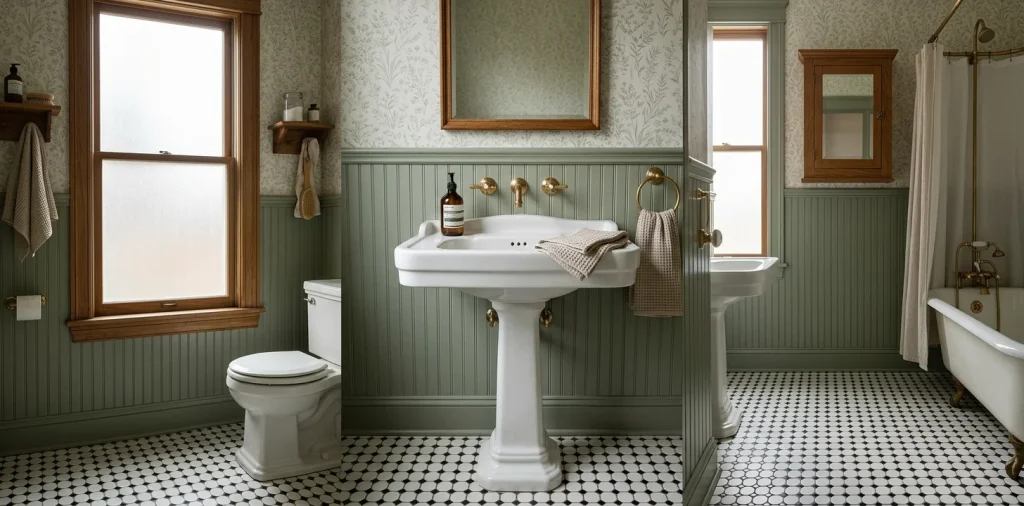
Bulky modern vanities ruin the soul of an older bathroom faster than cheap peel-and-stick tile. You crave an authentic pedestal sink for a vintage bathroom, yet one wrong measurement turns your dream remodel into a plumbing headache. Good news: I’ve rescued enough tight powder rooms to help you pick a timeless basin that fits your pipes and your vibe.
Match the Sink Era to Your Home’s Soul
Every decade flaunts its own silhouette, so match your basin to your home’s actual birthday. Victorian and Edwardian pedestal sinks show off curvy aprons, fluted columns, and tall backsplashes, whereas 1920s Art Deco designs deliver crisp octagonal bowls and sharp geometric lines.
Drop an ultra-frilly floral basin into a 1950s bungalow and your bathroom immediately argues with itself—and nobody wins that fight. Tapered, streamlined columns fit post-war spaces way better, IMO. Which era does your bathroom whisper to you?

Measure Twice Before You Fall in Love
Don’t buy a gorgeous basin on impulse before you grab a tape measure, unless you enjoy banging your elbows against drywall. Standard pedestal heights run between 32 and 36 inches, and tall folks definitely prefer that upper range to save their lower backs. Leave at least 21 inches of clear floor space in front of the rim and 4 inches on each side from walls or toilets. Also check your wall-mount bracket height so your contractor doesn’t curse your name during rough-in day. Need more layout tricks for tight footprints? Check out our tiny powder room renovation guide.
A useful little gift for your home
🎁 Free Plant Finder Tool
Filter 250+ houseplants by 6 smart criteria to find your perfect green companion.
We’ll email you the link. Plus, you’ll join our newsletter!

Pick Porcelain, Fireclay, or Cast Iron
Materials shape how your sink handles daily chaos, dropped perfume bottles, and scrubbing.
Vitreous china leads the pack for most vintage bath remodels because manufacturers glaze clay at blistering heat for a glossy, stain-proof finish. It resists scratches well and keeps prices sane.
Fireclay runs thicker, heavier, and tougher against heavy impacts, though your installer might pull a muscle lifting it.
Want authentic tank-like durability? Hunt down enameled cast iron—just inspect the glaze closely so rust spots don’t ambush your morning routine.

Count Those Faucet Holes Carefully
Buying a dream faucet before counting your sink’s pre-drilled holes triggers instant remodel regret. Vitreous china laughs at drill bits—you crack the whole basin if you try modifying it later.
Most vintage-style sinks follow three main faucet hole configurations:
- Single-hole: Fits one sleek mixer spout for tight retro builds.
- 4-inch centerset: Combines spout and twin handles on one compact baseplate.
- 8-inch widespread: Separates hot, cold, and spout for genuine antique drama.
Always measure center-to-center before clicking checkout! 😉

Exposed Plumbing Isn’t Always Pretty
Here’s the catch nobody mentions until the box arrives: pedestal columns don’t completely hide your pipes. From side angles, guests spot your P-trap, shutoff valves, and supply lines peeking out behind that slender porcelain leg. Swap ugly braided steel hoses and white PVC tubes for rigid brass or polished nickel supply kits with decorative bell flanges. Make sure your rough-in pipes center cleanly inside the column footprint, too—otherwise that sleek leg sits crooked like a bad haircut. Trust me, finishing those exposed bits turns an eyesore into pure jewelry.

Solve the Dreaded Storage Problem
Let’s face facts: pedestal sinks offer zero hidden cabinets for spare toilet paper, hair dryers, or ten half-empty serum bottles. Pick a model with a wide rear ledge or generous rim so hand soap and a toothbrush tumbler actually stay upright instead of diving onto the tile.
Then build upward and use smart vertical zones around the basin. Hang a glass apothecary shelf above the backsplash, tuck a slim brass basket beside the base, or mount hooks for plush hand towels. Want clever ways to reclaim vertical inches? Peek at these tiered corner shelves for small bathrooms.

Choose Classic White or Bold Color
Crisp alpine white works anywhere and matches existing tubs effortlessly.
Wait—don’t ignore warm bisque or ivory if your house rocks original 1930s cream subway tile. Bright stark white beside antique cream tile makes the tile look oddly dirty.
Feeling brave? Vintage mint jadeite, dusty shell pink, or soft sky blue basins transform a sleepy half-bath into an unforgettable time capsule that guests rave about for weeks.
Just keep surrounding walls calm and neutral when you pick a colored basin, FYI, so that retro glaze shines as the undisputed hero.

Scout Salvage Yards vs. New Reproductions
Last summer, I hauled a 1928 cast-iron beauty out of a dusty architectural salvage warehouse—and nearly blew out my knee loading it into my hatchback. Genuine antiques deliver unmatched patina and quirk, though you must inspect hairline crazing, chipped enamel, and odd non-standard drain sizes.
Modern vintage-inspired reproductions skip the rust drama completely, arrive with crisp warranties, and hook right up to standard drain kits without custom adapters. Decide whether authentic battle scars or stress-free Sunday installation wins your heart.

Check the Rim and Overflow Details
Tiny porcelain molding details separate a flat, forgettable knockoff from a jaw-dropping heirloom piece.
Look closely at molded soap recesses, raised anti-splash lips, and integrated backsplashes that shield vintage wallpaper from soapy water. Front-facing brass or chrome overflow rings also add subtle sparkle while preventing accidental floods when someone forgets the tap.
Even a compact sink prevents puddle disasters when manufacturers slope the inner basin floor steeply toward the drain—always inspect bowl depth in person before paying.

Pair It With Period-True Hardware
Slapping a futuristic gooseneck faucet onto an Edwardian pedestal feels like wearing neon sneakers with a tweed tuxedo. Finish your basin with porcelain cross handles, bridge mixers, or vintage lever faucets featuring classic serif ‘Hot’ and ‘Cold’ indices. Unlacquered brass develops rich, moody patina over the years, while polished nickel casts a warmer, softer glow than stark modern chrome. Match your pop-up drain, P-trap, and towel ring to that same metal, and your vintage bathroom instantly earns major architectural street cred. ✨

A useful little gift for your home
🎁 Free Plant Finder Tool
Filter 250+ houseplants by 6 smart criteria to find your perfect green companion.
We’ll email you the link. Plus, you’ll join our newsletter!
Conclusion
Picking the right pedestal sink for a vintage bathroom boils down to smart measurements, honest material choices, and hardware that respects your home’s era. Measure your plumbing first, embrace clever vertical storage, and refuse to settle for wobbly plastic pipes. Which sink style wins your heart—Victorian curves or crisp Art Deco lines? Let me know in the comments!