Skip to content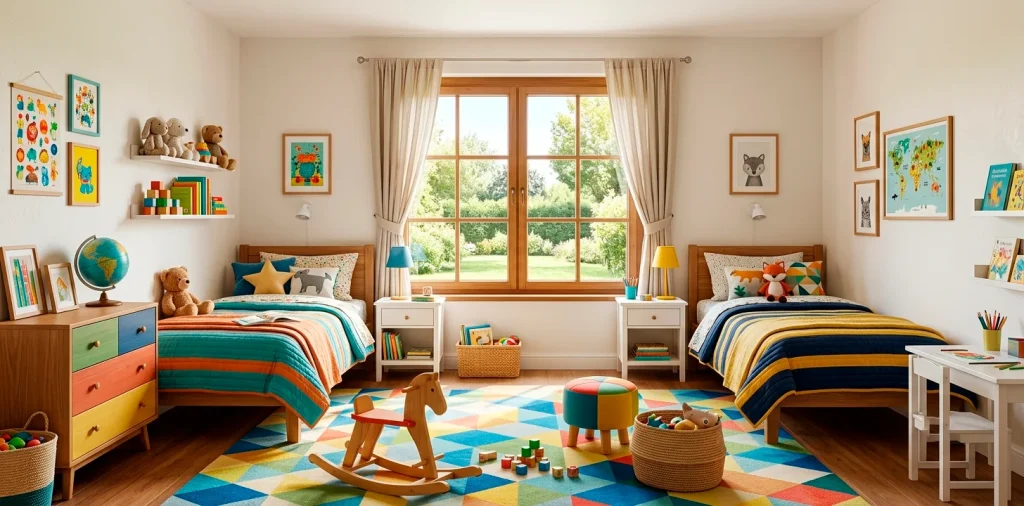
Welcome to the ultimate survival guide for sharing a kids’ room! If you are staring down an empty bedroom and wondering how to fit two distinct personalities into one space without starting a sibling war, I feel your pain. Designing for two is a puzzle. Grab your favorite coffee, take a deep breath, and let’s craft a room they both actually love.
Ditching the Perfect Symmetry Myth
We all see those glossy magazines showcasing perfectly mirrored beds with matching nightstands. Honestly, unless your kids are literal clones with identical tastes, that layout rarely works in the real world. You just end up fighting a losing battle against mismatched toys and contrasting favorite colors ruining the pristine vibe.
Embrace the organized chaos instead! I love giving each child their own distinct vibe within a cohesive theme. Give them the freedom to express themselves, and you bypass the daily arguments over whose side looks messier. It instantly takes the pressure off you as the parent!

The Great Bed Debate: Bunks or Twins?
Bunk beds save massive amounts of floor space, but they definitely spark the classic “who gets the top bunk” argument. IMO, if you have the square footage, twin beds anchor a room beautifully and give each kid clearly defined territory. I once tried forcing a bunk bed into a room with low ceilings, and changing those top sheets felt like an extreme Olympic sport! If you go the twin route, place a shared dresser right between them. It acts as a physical buffer zone and grounds the layout perfectly.
A useful little gift for your home
🎁 Free Plant Finder Tool
Filter 250+ houseplants by style, size, and care level to find your perfect green companion in seconds.
We’ll email you the link. Plus, you’ll join our newsletter for fresh home inspiration.

Carving Out Personal Zones
Every kid needs a spot to retreat, even in a shared space. You craft these micro-zones using clever visual cues rather than actual walls.
A simple area rug works wonders for defining boundaries. Throw a circular rug under one kid’s reading chair and a rectangular one near the other’s play corner. They instantly recognize their own turf.
You also need to think about physical dividers if the kids crave privacy. Design elements you can use:
- A tall, open bookshelf placed perpendicular to the wall
- Hanging curtains from the ceiling
- Floating acoustic panels

Conquering the Shared Storage Struggle
Kids accumulate an absurd amount of stuff. Double the kids means double the clutter 😅. You must maximize every single inch of vertical space to keep your sanity intact. I rely heavily on under-bed rolling drawers for bulky toys and seasonal clothes. Assign specific colors to their storage bins so nobody fights over missing Lego pieces. When you implement a strict color-coded system, they actually know exactly where their things belong. If space gets incredibly tight, you can even steal some ideas from smaller setups like this versatile daybed guide to maximize utility.

Mastering the Art of Color Coordination
FYI, picking a paint color for two opinionated tiny humans? Absolute nightmare.
You do not have to paint the entire room one single, boring neutral just to keep the peace.
Instead, select a unifying base color like a soft white or warm beige. Then, let each child choose their own bold accent color. You weave these accents through the room using bedding, curtains, and small decor items.
Need a pro tip? Find a patterned rug or a piece of wall art that incorporates both of their chosen colors. This magically ties the two sides together and makes the room look intentionally designed rather than randomly thrown together.

Layering the Right Lighting
One kid wants to read until midnight, while the other demands pitch-black darkness by 8 PM. We all know this struggle. You solve this by layering your lighting options rather than relying on one blinding overhead fixture that floods the entire bedroom.
Install individual wall sconces directly above each bed. Make sure you choose fixtures with adjustable arms and dimmers. This gives them total control over their immediate environment without disturbing their roommate. Add a soft nightlight near the door to prevent late-night toe-stubbing incidents! Trust me, your feet will thank you later.

Squeezing in Study Stations
Homework time brings enough tears; they do not need to fight over desk space, too.
If floor space permits, face two small desks away from each other. This prevents them from making silly faces when they should study math. I always recommend floating desks mounted directly to the wall because they keep the floor completely clear.
For really tight layouts, build one long continuous desktop along a single wall. Workspace essentials for two:
- Comfortable, adjustable ergonomic chairs
- Separate drawer pedestals for private storage
- Dual task lamps to eliminate harsh shadows

Keeping the Floor Plan Open
Cramming too much furniture into a shared room traps the energy and makes the space feel claustrophobic. You want a layout that allows them to wrestle, build forts, or race cars without smashing into sharp corners. Push the largest furniture pieces flat against the perimeter walls to leave a generous “no man’s land” right in the center. I always tell my friends to choose furniture with rounded edges. It saves you a trip to the emergency room and softens the overall look of the bedroom visually. Ever notice how quickly a clear floor becomes a Lego minefield?

Celebrating Two Personalities on the Walls
Blank walls offer prime real estate for self-expression. You should hang corkboards or pegboards above their respective beds so they can display their own artwork, medals, and photos.
It keeps the clutter off their desks and makes them feel proud of their specific corner. If they have wildly different tastes, unifying the frames (like using all black or all white wood) creates a cohesive look despite the chaotic art. For more inspiration on merging styles, check out these playful gallery wall ideas kids bedroom.

Future-Proofing the Shared Space
Kids grow up ridiculously fast. That adorable toddler theme feels incredibly embarrassing to them by age ten.
You save serious money by investing in high-quality, mature foundation furniture. Buy solid wood dressers and simple bed frames that transition easily through the teenage years. You update the room’s vibe by swapping out cheap accessories like throw pillows, posters, and area rugs as their tastes evolve.
Keep the permanent fixtures timeless. When they inevitably outgrow their current obsession, you just change the duvet covers instead of replacing the entire bedroom set. Smart design always anticipates the next phase!

A useful little gift for your home
🎁 Free Plant Finder Tool
Filter 250+ houseplants by style, size, and care level to find your perfect green companion in seconds.
We’ll email you the link. Plus, you’ll join our newsletter for fresh home inspiration.
Conclusion
Designing a shared bedroom tests your patience, but it also creates an amazing space where siblings build lifelong bonds. You mix a little creativity with smart storage to conquer the layout puzzle perfectly. Embrace the quirks and let their personalities shine! Which side of the room do you tackle first? Let me know in the comments!