Skip to content
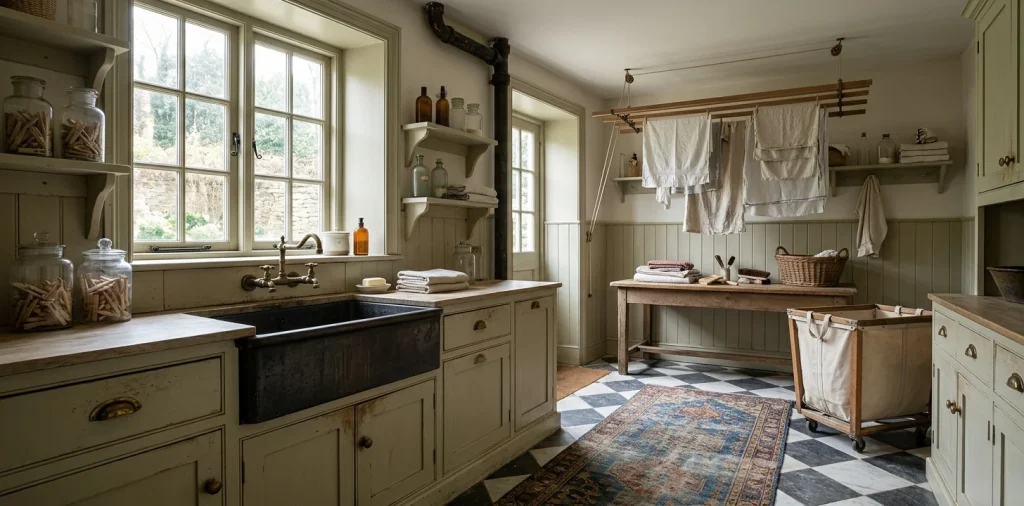
Nobody wakes up eager to sort damp socks inside a sterile drywall box. Yet modern builders keep churning out soulless utility closets with plastic tubs and buzzing fluorescent tubes. You deserve better than that! When you hunt down real antiques instead of glossy big-box replicas, laundry day suddenly feels a whole lot less like punishment.
Hunt Down Real Cast-Iron Utility Sinks
Every unforgettable utility space starts with a heavy cast-iron or soapstone sink that laughs at bleach and muddy boots. Skip the thin acrylic basins at mega-stores and hit local architectural salvage yards instead. Look for authentic 1920s porcelain enamel with minor crazing, solid rolled rims, and original wall-mount faucet holes.
Last spring, I hauled a 200-pound Kohler sink out of a dusty barn in Ohio, and my lower back still holds a grudge. Worth it? Absolutely. Run your fingers along the underside to feel thick iron ribbing, and carry a small flashlight to inspect for deep rust cracks around the drain before you hand over cash.

Swap Modern Hardware for Aged Brass and Glass
Builders love slapping chrome knobs onto every door like they got a bulk discount in 1998. Rip those off immediately and hunt for solid unlacquered brass bin pulls, cremorne bolts, or faceted milk glass knobs at flea markets. Real vintage hardware feels noticeably heavy in your palm because makers cast it from solid metal rather than hollow zinc. FYI, a quick soak in warm soapy water strips off decades of mystery grime without erasing that gorgeous honey patina. Want an easy shortcut for upgrading plain cabinetry? Check out these brass pulls that elevate basic furniture.
A useful little gift for your home
🎁 Free Plant Finder Tool
Filter 250+ houseplants by 6 smart criteria to find your perfect green companion.
We’ll email you the link. Plus, you’ll join our newsletter!

Track Down Genuine Antique Drying Racks
Plastic folding racks wobble, snap, and ruin the vibe before your jeans even dry.
Instead, track down wooden accordion wall racks or cast-iron ceiling pulley airers that turn damp laundry into sculptural charm. British-style overhead creels hoist wet sheets straight toward warm ceiling air while keeping your floor totally clear.
When you inspect an old wooden rack at an estate sale, flex the dowels gently and sniff for musty basement rot. Authentic pieces feature mortise-and-tenon joinery or chunky brass rivets instead of flimsy staples. Ever noticed how smoothly genuine beechwood ages under warm indoor light? That golden sheen beats sterile chrome every single day.

Source Vintage Enamelware and Galvanized Tubs
Nothing beats speckled enamelware and ribbed galvanized steel tubs for corralling wet delicates without looking like a dorm room. Still, scammers love passing off shiny new knockoffs as century-old farm relics.
Signs of authentic vintage tubs and enamelware:
- Thick rolled steel rims that resist flexing when you lift them
- Authentic cobalt or black edge trim with subtle porcelain chips
- Stamped manufacturer marks like Wheeling or Dover on the base
- Dull, chalky zinc oxidation rather than mirror-bright galvanizing
Use these battle-tested beauties for hand-soaking wool sweaters or corralling muddy gardening gear before it invades your washer.

Rescue Solid Wood Cabinets Over Particleboard
Cheap flat-pack particleboard swells into mush the second a washer hose burps.
Skip showroom staples and hunt for rescued Hoosier cabinets, old apothecary chests, or solid pine pantry cupboards at local auctions. Real dovetail drawers survive leaky basements and clumsy movers for generations.
A light sanding and fresh linseed oil wipe-down bring tired oak grain roaring back to life without erasing its honest history. IMO, a few dings just add street cred.
Check drawer bottoms for real tongue-and-groove planks and avoid anything smelling strongly of mildew. Need help picking the right wood species or finish for high-humidity utility zones? Read our guide on choosing laundry room cabinet materials.

Pick Period-Correct Lighting With Milk Glass
Bad overhead lighting turns the coziest utility room into an interrogation cell fast. Ditch that plastic boob light—yes, we all know the exact fixture—and hunt down antique milk glass schoolhouse pendants or brass gooseneck sconces from salvage dealers. Look for heavy spun-brass fitters, braided cloth wiring sleeves, and thick milk-glass globes that diffuse warm 2700K bulbs evenly. Always ask a licensed electrician to swap brittle cloth cords for modern braided wire before you flip the switch, because vintage charm never justifies burning down the house. 💡

Collect Vintage Glass Jars and Tin Canisters
Cardboard detergent boxes look awful on open shelves and inevitably dissolve into crusty blue confetti. Decant powders, wool dryer balls, and stain sticks into antique bail-lid Ball jars or lithographed soap tins.
Check estate sales for aqua-tinted Mason jars with zinc screw caps or thick French Le Parfait canisters with orange rubber seals. That subtle seafoam glass tint catches morning light while keeping humidity miles away from your baking soda.
If you score old embossed metal tins, line the inside with parchment paper so damp air never rusts the bottom out.

Find Authentic Wicker and Canvas Hampers
Nothing kills antique atmosphere faster than a neon-blue plastic basket with a cracked handle. Hunt instead for vintage steel-framed canvas laundry carts or tight-weave rattan hampers that once rolled through old hotels and bakeries. Real stitched duck canvas softens gracefully after years of hauling heavy denim.
I snagged a beat-up 1950s Steele canvas truck from a closing dry cleaner last fall, and it outlasted three flimsy wire baskets in my house. Inspect caster wheels carefully so hair and lint never jam the axles, and scrub stained wood rims with mild saddle soap to keep every fiber supple and clean.

Add Soul With Washboards and Cast-Iron Accents
Skip those cheesy cursive wooden signs yelling ‘Wash, Dry, Fold’ from craft aisle clearance bins.
Instead, hang authentic corrugated glass washboards, antique cast-iron sad irons, or salvaged brass coat hooks that celebrate real laundry history. Every piece actually worked hard once, and it shows.
Old zinc-and-maple washboards bring warm texture to blank drywall, while chunky flatirons anchor lightweight linen stacks on windy days when the window stands open.
Mount heavy cast-iron hooks straight into wall studs so wet winter coats never rip your vintage plaster loose.

Layer Heavyweight Vintage Textiles and Runners
Spinning dryers rattle relentlessly, and bare tile floors echo every single clank. Soften the racket by laying down a worn wool Persian runner or braided cotton rug across your walkway. Low-pile antique wool shrugs off damp footprints naturally and hides stray lint far better than stark white bath mats.
For your windows, stitch simple café curtains out of vintage French grain sacks or unbleached Belgian linen and thread them onto slim brass rods. Real heavyweight textiles filter harsh afternoon glare, disguise plastic detergent jugs underneath your sink, and wrap the entire room in effortless lived-in warmth.

A useful little gift for your home
🎁 Free Plant Finder Tool
Filter 250+ houseplants by 6 smart criteria to find your perfect green companion.
We’ll email you the link. Plus, you’ll join our newsletter!
Conclusion
Building a soulful vintage laundry room takes patience, dusty flea-market mornings, and a healthy disdain for plastic shortcuts. Pair one standout salvage sink with solid wood storage, warm brass hardware, and honest textiles, and chores feel almost civilized. Which antique piece are you hunting for first? Let me know in the comments—I love a good salvage brag!