Skip to content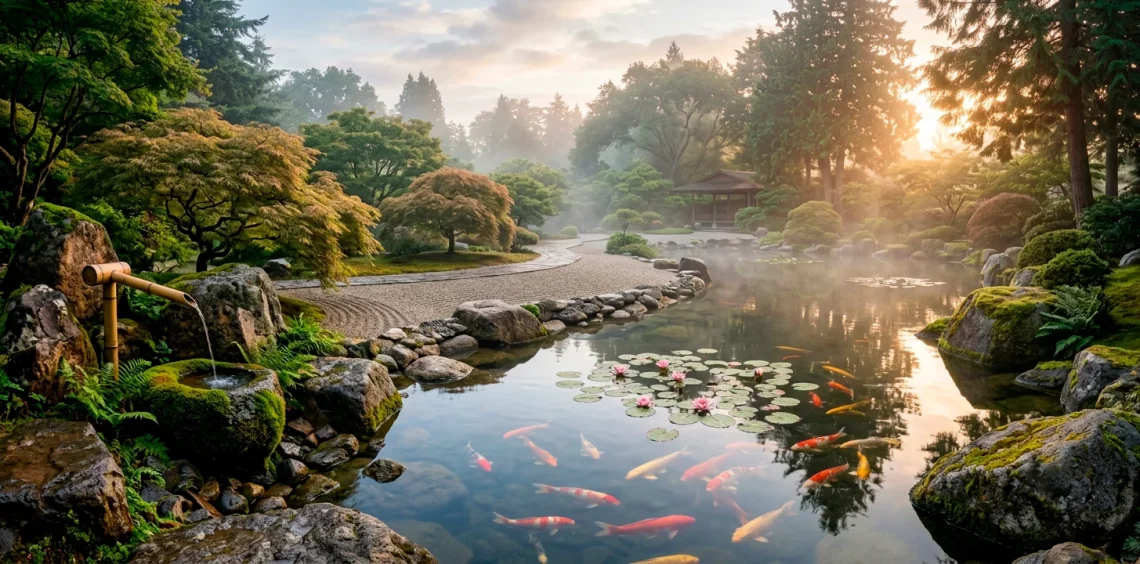
Your chaotic workday ends the second you step into your backyard, but right now, your yard looks more like an abandoned parking lot than a retreat. Building a Zen garden pond transforms that daily stress into instant calm. You do not need a massive budget or a degree in landscape architecture to pull this off. Let us design your ultimate water sanctuary step by step.
Choosing the Right Location for Calm
Where you place your pond determines whether you spend weekends relaxing or constantly pulling wet oak leaves out of the skimmer. You want a flat spot that gets partial shade—around four to six hours of sunlight daily keeps your water plants happy without turning your pond into pea soup. Avoid sitting directly under large deciduous trees unless you enjoy scooping decaying foliage every single afternoon. I made that rookie mistake with my first backyard project, and trust me, your back will thank you for picking an open, semi-shaded clearing instead.

Balancing the Water Element and Flow
Water represents life energy in traditional Zen design, so the direction of your stream matters more than you think.
Always direct your water flow toward your main viewing area or outdoor patio. Zen philosophy suggests that water flowing toward the home draws prosperity and calm inward, while water flowing away drains positive energy. IMO, even if you do not buy into ancient feng shui traditions, looking directly into the gentle ripple of incoming water feels infinitely more soothing than watching it trickle away behind a bush.
A useful little gift for your home
🎁 Free Plant Finder Tool
Filter 250+ houseplants by style, size, and care level to find your perfect green companion in seconds.
We’ll email you the link. Plus, you’ll join our newsletter for fresh home inspiration.
Make sure you select pumps that run quietly without drowning out ambient nature sounds. Essential water flow elements:
- Submersible quiet pumps for whisper-silent circulation
- Gentle spillway waterfalls to prevent splashing
- Variable speed flow controllers to adjust volume

Selecting Natural Stone and Rock Formations
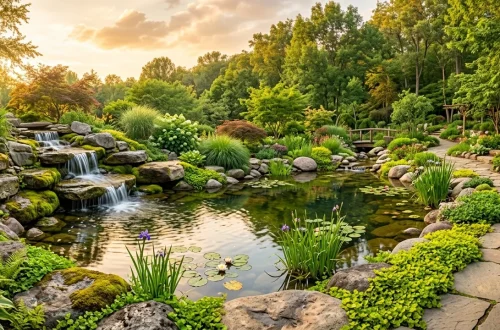
Dynamic stone placement forms the structural spine of every authentic Zen water feature. You want to group rocks in odd numbers—trios work best—to mimic natural mountain formations rather than lining up stones like a row of perfectly manicured teeth.
Combine flat slate ledges near the surface with rounded river rocks along the deep floor. Mix vertical guardian stones with flat resting rocks so your eye moves naturally across the water level. Remember to bury your foundation rocks at least one-third into the soil; floating stones on top of grass look cheap and unstable.

Incorporating Authentic Zen Plantings
Plants bring texture, softness, and seasonal color to hard stone edges.
Do not overplant your water surface. Leave at least sixty percent of the open water completely clear to reflect the open sky and surrounding foliage.
Blend marginal plants along the perimeter with deep-water flora. Zen plant choices:
- Japanese Iris for vertical elegance near edges
- Dwarf Horsetail Reed for structured architectural lines
- Hardy Water Lilies for shade and algae suppression
FYI, over-fertilizing your aquatic plants will cause a massive algae bloom faster than you can say green mess, so feed them sparingly! 🧘

Adding Aquatic Life for Movement and Harmony
Watching colorful fish glide effortlessly underwater lowers your heart rate faster than a meditation app. Fancy Koi bring classic Japanese heritage vibes, but they demand deep water and serious filtration systems.
If you want low-maintenance joy, choose sturdy Shubunkin or Sarasa Comet goldfish instead. These hardy swimmers handle colder weather with ease and offer vibrant orange and calico patterns without requiring a five-foot-deep pit. Just keep stocking density low so your biological filter keeps up easily.

Installing Subtle Water Sound Features
A peaceful Zen pond must sound as good as it looks. The hollow clack of a traditional bamboo shishi-odoshi creates an unmistakable rhythmic acoustic anchor that cuts through noisy neighborhood traffic. If you prefer continuous sound, craft a gentle bamboo fountain drop that produces a soft bubbling murmur rather than a roaring fire hose blast.

Illuminating Your Oasis with Soft Lighting
Nighttime transforms your Zen pond into an entirely new visual experience if you light it with care.
Blast your pond with harsh white floodlights and you will feel like you are standing under an interrogation lamp. Instead, place warm low-voltage LED spotlights underwater aimed up toward stone faces and overhanging foliage.
Subtle lighting elements to consider:
- Submersible warm white LEDs to illuminate underwater depth
- Path lights hidden in foliage to highlight gravel walkways
- Uplights behind Japanese maples for silhouette drama

Maintaining Crystal Clear Water Effortlessly
Nobody relaxes next to a swampy green pit that smells like rotting vegetation. Keep your maintenance routine simple by pairing a mechanical skimmer box with a quality ultraviolet clarifier.
Add beneficial bacteria monthly to digest organic sludge naturally before algae takes over. Spend five minutes every weekend skimming stray leaves, and your water will stay crystal clear all season long without harsh chemicals.

A useful little gift for your home
🎁 Free Plant Finder Tool
Filter 250+ houseplants by style, size, and care level to find your perfect green companion in seconds.
We’ll email you the link. Plus, you’ll join our newsletter for fresh home inspiration.
Conclusion
Designing a peaceful Zen garden pond does not require complex magic—just intention, natural materials, and patience. By combining natural stone formations, silent water flow, and subtle plantings, you create a private backyard refuge where daily stress instantly melts away. Which water feature or plant are you adding first? Let me know in the comments!