Skip to content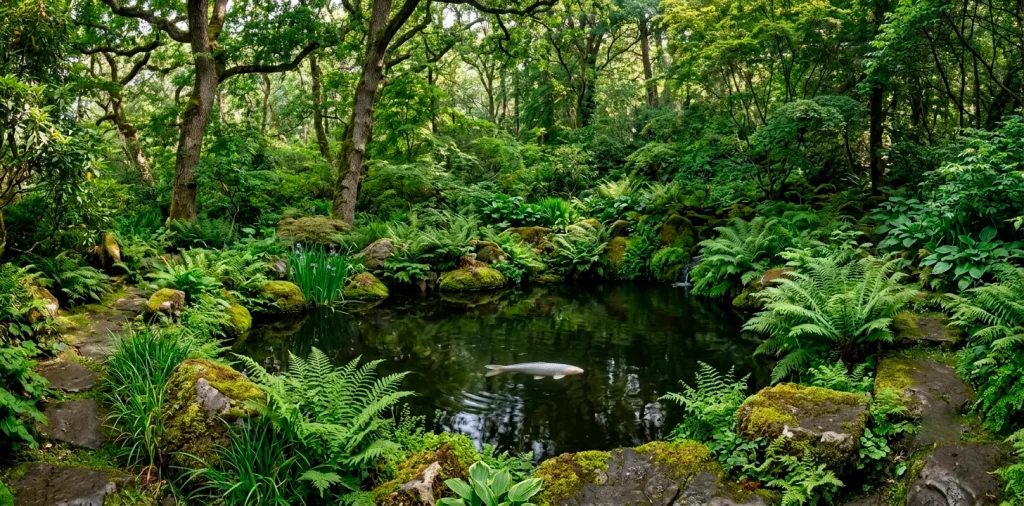
Let’s skip the generic landscaping advice and talk about something truly magical. A shady woodland fish pond filled with lush, deep fern greens isn’t just a water feature; it’s a living ecosystem right in your backyard. I built one last spring, and honestly, watching ghost koi glide through dark, still water is the ultimate stress relief. Ready to get your hands dirty?
The Magic of a Shady Woodland Pond
A woodland pond thrives on atmosphere. You want that moody, shaded look where sunlight just barely peeks through the canopy to hit the water. This isn’t a tropical oasis with blazing sun and brightly colored lilies. We are aiming for a rich, emerald sanctuary that feels ancient and undisturbed.
Ever noticed how a shaded forest feels ten degrees cooler? Your fish will absolutely appreciate that exact effect. Less sunlight means far less algae bloom, which IMO is the biggest win when you hate scrubbing pond liners. If you need more inspiration for water features in low light, check out these mini pond ideas for relaxing indoor sunrooms.

Picking the Perfect Spot
You can’t just drop a pond anywhere and call it a day. Find a spot under a large, mature tree where the ground already looks a bit natural and wild. Watch out for dropping leaves, though! You will definitely need a pond net in the fall unless you enjoy fishing out sludge every weekend. But the dramatic shadows cast by tree branches make the extra maintenance completely worth it. Avoid areas that flood during heavy rain, or your beautiful new koi will literally swim right out into your lawn. That is a mistake you only make once!
A useful little gift for your home
🎁 Free Plant Finder Tool
Filter 250+ houseplants by style, size, and care level to find your perfect green companion in seconds.
We’ll email you the link. Plus, you’ll join our newsletter for fresh home inspiration.

Digging Deep and Shaping the Dream
Get a good shovel.
Seriously, do not underestimate the sheer physical labor of digging a pond. I thought I could finish mine in a weekend. Three days later, I was covered in mud and questioning my life choices.
You need distinct planting shelves at different depths. Ferns and marginal plants love shallow water, while your fish need a deep zone to hide from predators.
Make the deepest part at least 24 inches down. Raccoons are remarkably clever, and you definitely don’t want to serve up an expensive sushi buffet to the local wildlife.

The Best Fish for the Shadows
Not all fish love the dark. Standard goldfish look great, but they can sometimes blend right into the black liner of a heavily shadowed pond. Ghost koi and platinum ogon koi are absolute showstoppers in a shaded setup. Their metallic scales catch whatever ambient light is available, making them look like glowing phantoms gliding beneath the fern fronds. It is mesmerizing to watch them weave through the roots. Keep the stocking levels light, though. A shady environment means fewer oxygenating plants, so give your aquatic buddies plenty of room to breathe.

Going Crazy with Ferns and Greens
Now for the fun part. Layering different textures of green creates that authentic woodland feel.
Mix Japanese painted ferns with giant ostrich ferns for dramatic height variations. Creeping Jenny makes a fantastic ground cover that spills beautifully over the rocky edges, hiding any ugly exposed pond liner.
FYI, hostas are also completely bomb-proof and look amazing nestled between mossy boulders. Just remember to plant them securely so they don’t slide into the water. Wondering how to balance all this greenery? Explore this sustainable modern water-wise garden guide.

Managing the Annoying Tree Debris
Let’s be brutally honest about trees. They are beautiful, but they drop an insane amount of garbage into your pristine water. Pine needles, oak leaves, and random twigs will constantly bombard your pond.
A heavy-duty skimmer is absolutely non-negotiable here. A skimmer pulls floating leaves off the surface before they sink and rot, saving you from a major water quality disaster. You should also consider stringing a fine mesh net over the water during autumn. It might ruin the aesthetic temporarily, but it saves your back and keeps your fish healthy.

Filtration That Actually Works
Filtration in a shaded pond operates a bit differently than out in full sun.
You won’t fight green pea-soup algae as much.
However, decaying organic matter is your main enemy. You need a biological filter that can handle high bio-loads. Hiding a pressurized filter behind a small waterfall is an excellent strategy.
The beneficial bacteria in the filter break down ammonia from fish waste and rotting leaves. Plus, the sound of trickling water echoing through the ferns adds an incredibly peaceful auditory element to your secret garden retreat.

Rockwork and Hiding the Liner
You really don’t want a perfectly symmetrical, formal stone border for this project. To nail the woodland aesthetic, use mismatched, weathered boulders and local fieldstone. I scoured local landscaping yards for mossy rocks to give my pond an instantly aged look. Stack them unevenly and let groundcovers weave through the cracks. The goal is to make it look like a glacier dropped these rocks here a thousand years ago, and a natural spring just happened to bubble up. Tuck small ferns right into the stone crevices for that perfect, untamed finishing touch.

Lighting It Up Like a Fairy Tale
You might think a shady pond doesn’t need lights. You would be dead wrong. Adding subtle, warm-white underwater LEDs completely transforms the space at night.
Point the lights upward to highlight the intricate undersides of your ferns and marginal plants. Keep it subtle! We want a mystical forest vibe, not a Vegas casino entrance. Two or three well-placed spotlights are plenty to create a glowing, ethereal focal point. It turns your garden into a midnight sanctuary where you can sit and watch the fish long after the sun goes down. 🌙

A useful little gift for your home
🎁 Free Plant Finder Tool
Filter 250+ houseplants by style, size, and care level to find your perfect green companion in seconds.
We’ll email you the link. Plus, you’ll join our newsletter for fresh home inspiration.
Conclusion
Building a shaded woodland fish pond takes some serious sweat equity, but the payoff is incredible. You get a private, moody retreat right in your backyard, filled with happy fish and gorgeous deep greens. Take your time with the digging, invest in a good skimmer, and go wild with the ferns. Which fish are you grabbing first? Let me know in the comments!