Skip to content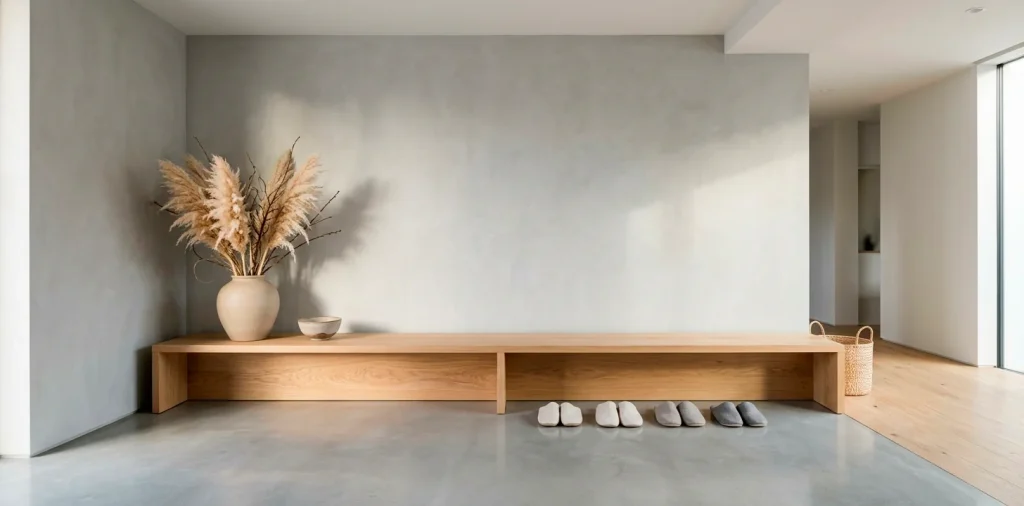
Ever walked into your home and instantly felt overwhelmed by the shoe chaos at the door? I used to trip over my own sneakers daily until I discovered the magic of Japandi design. A low-profile entryway bench instantly transforms that frantic drop zone into a peaceful, intentional space. Let’s look at how these sleek pieces bring calm to your daily routine.
Why Low-Profile Beats Bulky Furniture Every Time
You know that massive, heavy storage pew your aunt had in her hallway? Yeah, let’s leave that in the past. Bulky furniture eats up valuable floor space and makes a narrow foyer feel like a claustrophobic tunnel. Low-profile seating opens up the room instantly, letting light bounce around without obstruction.
When you keep the visual weight closer to the ground, your ceilings suddenly look taller and the whole entryway breathes. Plus, it gives you just enough room to sit and lace up your boots without turning your front door into an obstacle course.

The Core Elements of Japandi Bench Design
So, what actually makes a piece ‘Japandi’? It is the sweet spot where Scandi functionality meets Japanese rustic minimalism. We are talking clean, uncompromising horizontal lines paired with raw, natural materials. Imagine light white oak, matte black accents, and warm ash timber 🪵. The craftsmanship stands front and center here. You won’t find flashy chrome hardware or decorative carving on these benches. Instead, you get exposed joinery, smooth sanded edges, and an undeniable sense of purpose. IMO, it is the design equivalent of a deep exhale after a long workday.
A useful little gift for your home
🎁 Free Plant Finder Tool
Filter 250+ houseplants by style, size, and care level to find your perfect green companion in seconds.
We’ll email you the link. Plus, you’ll join our newsletter for fresh home inspiration.

Slatted Wood vs. Solid Planks
When you shop for low-profile seating, you generally choose between solid wood planks and slatted designs.
I personally adore slatted benches for one practical reason: airflow. If you shove damp running shoes underneath, slats let things breathe instead of trapping odors.
Design features to consider:
- Slatted Tops: Offer a lighter, airier architectural look that prevents dampness.
- Solid Planks: Provide a sturdy, seamless surface that highlights rich wood grain patterns.
- Rounded Edges: Save your shins from painful accidental bumps in tight spaces.

Incorporating Woven Paper Cord and Rattan
If solid wood feels a little too stark for your taste, bring in some woven textures. Danish paper cord and natural rattan bring instant warmth to a minimalist entryway ✨. These materials soften the rigid wooden frames while adding an authentic, tactile quality that screams craftsmanship.
I bought an oak bench with a woven paper cord seat last autumn, and it completely changed the vibe of my hallway. It easily holds up to daily use while looking like a high-end gallery piece. For more ways to integrate organic fabrics and materials into your home, check out our tips on mastering woven textures in guest rooms.

Smart Storage Without the Visual Clutter
Let’s be honest about entryway clutter. We all need a spot to stash dog leashes, reusable grocery bags, and stray umbrellas.
The beauty of Japandi design lies in concealed, intentional storage. You want to keep the mess completely out of sight to preserve that Zen atmosphere.
Look for benches with sliding slatted doors or shallow drop-down drawers. They maintain a clean exterior silhouette while secretly hiding your everyday chaos.
If you prefer an open-underneath style, simply slide two matching seagrass or felt baskets below the seat. It keeps everything corralled without adding visual bulk to the floor.

Perfect Proportions for Small Foyers
Scale is everything when you deal with tight entryways. You want a bench that sits roughly 16 to 18 inches off the floor, which is the ergonomic sweet spot for sliding shoes on and off comfortably. Depth matters just as much; a 14-inch depth is usually plenty for sitting without jutting out into your walkways. Before you hit checkout on that gorgeous piece, grab a tape measure and map it out on your floor with painter’s tape. Trust me, finding the right proportions prevents serious buyer’s remorse later.

Styling Your Bench: Less is Actually More
Once your bench sits in place, please resist the urge to bury it under decorative pillows. The whole point of Japandi centers on intentional simplicity.
I recommend styling the space with just three simple elements. Place a single textured linen cushion on one end for comfort. Next to it, drop a heavy ceramic vase holding a solitary dried branch or some green eucalyptus 🌿.
Keep the rest of the wood surface entirely bare. That negative space acts as a crucial design element itself! If you are craving more inspiration on merging these calming aesthetics throughout your home, dive into our guide on Japandi style fusion renovation ideas.

Maintenance: Keeping Natural Wood Looking Fresh
Natural, organic materials require a little bit of love to stay looking immaculate. Since entryways see high traffic and moisture from wet shoes, protecting the wood finish is essential.
Wipe down the surface weekly with a dry microfiber cloth to prevent grit from scratching the wood. If your bench features an oiled finish, reapply a quality Danish oil or linseed oil once a year to keep the timber hydrated and resilient. For paper cord seating, just vacuum it gently with a brush attachment and wipe away spills instantly before they soak into the paper fibers. It takes five minutes, FYI, but keeps your bench lasting decades.

Black Accents: The Secret to Visual Balance
A pure wood entryway sometimes looks a bit washed out, especially against white or beige walls. That is where high-contrast accents come into play. Incorporating matte black details anchors the entire arrangement, giving the eye a distinct place to rest. Look for a bench with black powder-coated steel legs, or simply hang a sleek black framed mirror directly above a natural oak seat. This subtle contrast nods directly to traditional Japanese architecture. It adds instant drama without disturbing the tranquil, minimalist vibe of your foyer.

Lighting Your Bench for Maximum Vibe
You didn’t spend hours hunting down the perfect entryway seating just to leave it in the dark, right?
Lighting plays a massive role in highlighting the natural grains and textures of Japandi furniture. Harsh ceiling downlights cast unflattering shadows that ruin the cozy hygge atmosphere we want to achieve.
Instead, try installing a low-voltage LED strip underneath the bench seat to create a floating, ethereal glow on your floor. Alternatively, place a small rechargeable rice-paper table lamp on one end of the bench. Soft warm lighting instantly creates a welcoming ambiance the second you step through the front door after a chaotic day out.

A useful little gift for your home
🎁 Free Plant Finder Tool
Filter 250+ houseplants by style, size, and care level to find your perfect green companion in seconds.
We’ll email you the link. Plus, you’ll join our newsletter for fresh home inspiration.
Conclusion
Upgrading your foyer with a low-profile Japandi bench offers the easiest way to inject daily serenity into your home. You get the perfect blend of Nordic warmth and Japanese simplicity right where you need it most. Which wood finish are you grabbing first for your space? Let me know in the comments below!