Listen, your laundry room deserves better than that flimsy plastic tub sitting in the corner. You spend way too much time in there anyway. Why not give that hardworking space a genuine farmhouse soul? A vintage utility sink brings incredible character and bulletproof durability to your chore zone. Grab your work gloves, and let’s bring an old sink back to life.
The Hunt for the Perfect Vintage Basin
Scouring flea markets and architectural salvage yards feels exactly like a treasure hunt. IMO, you want to look for authentic cast iron, raw concrete, or solid soapstone basins. I once dragged a hundred-pound concrete double-basin out of a muddy barn, and honestly, my lower back still complains about it sometimes. But the aesthetic payoff? Completely worth it.
Always check the structural integrity before handing over your cash. Surface rust looks scary but cleans up easily with the right tools. Deep structural cracks, however, mean you just bought an extremely heavy, overly expensive garden planter. Leave the cracked ones behind and hold out for a solid piece.

Assessing the Damage and Gathering Supplies
Once you drag your heavy prize home, you need to honestly evaluate the grime. Most old sinks just suffer from decades of paint splatters, hard water stains, and general neglect in a damp basement. Grab your restoration supplies. 🛠️
Essential cleaning tools:
- Heavy-duty liquid degreaser
- Stiff nylon and wire scrub brushes
- Fine grade steel wool
- High-quality porcelain repair kit
Ever wonder why they stopped making them like this? Because things that literally last forever simply do not generate repeat sales, obviously. Quality takes precedence here.

Scrubbing Away Decades of Grime
Start by attacking the surface dirt with a stiff nylon brush and a generous spray of degreaser. Watch the water turn a terrifying shade of gray as decades of basement grime literally wash away down the drain.
For stubborn rust stains around the drain hole, make a thick paste using baking soda and white vinegar. Smear it generously over the rusty spots, cover it tightly with plastic wrap, and let it sit overnight to work its chemical magic.
Do not use abrasive power tools on original enamel finishes. A wire wheel ruins that beautiful, glossy vintage finish faster than you can blink. Stick to manual elbow grease and very fine steel wool to protect the original patina.

Repairing Chips and Scratches
Enamel sinks always show their age with a few inevitable battle scars. You can fill small chips using a two-part epoxy porcelain repair kit found at any hardware store. Mix the compound thoroughly, dab it carefully into the chip with a toothpick, and feather the edges smooth. It takes a little patience, but the final result looks practically seamless. I completely botched my first attempt by slapping too much putty on, so take my advice: less is more, and work quickly before the epoxy sets permanently.

Tackling the Plumbing and Hardware
Here comes the tricky part. Antique plumbing rarely plays nice with modern PVC pipes.
FYI, you usually need a specialized adapter to connect that giant cast iron drain to your current house plumbing safely.
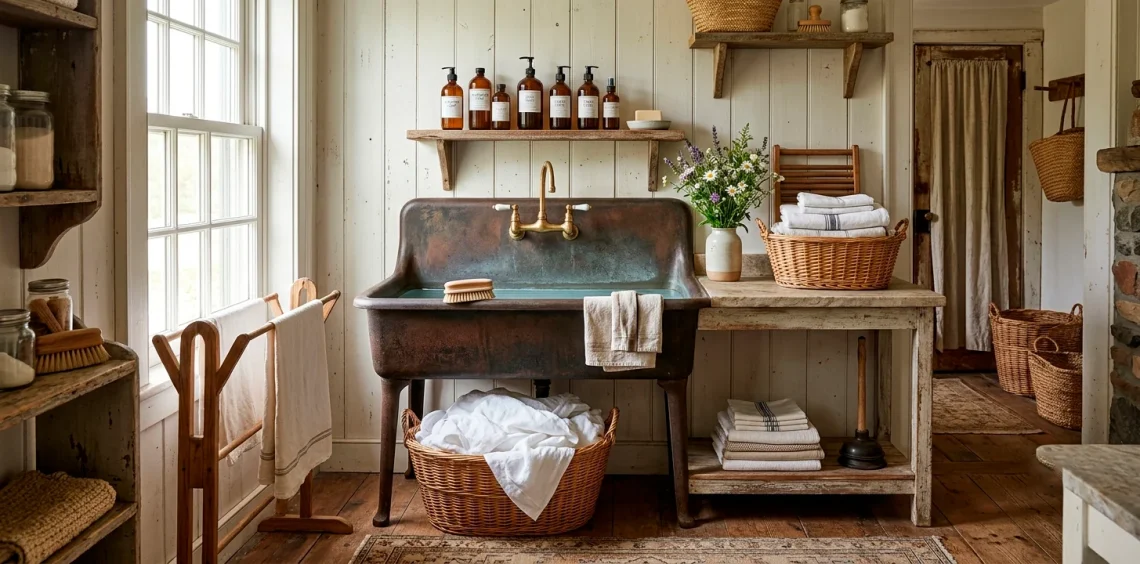
Upgrading your faucet completely transforms the entire setup. A heavy, wall-mounted unlacquered brass faucet pairs beautifully with a rugged, oversized basin.
You can also mix metals for a more collected, organic look. If you want more inspiration on blending different finishes seamlessly, check out these brass hardware moody bathroom ideas.

Building a Sturdy Base
Do not underestimate the sheer weight of these antique beasts. A standard particleboard cabinet collapses under a vintage soapstone sink the absolute second you fill it with water. You need a custom base built from solid hardwood or heavy-duty welded steel tubing.
I built a chunky reclaimed oak stand for my current setup, leaving the bottom open to store woven laundry baskets. This specific design choice keeps the room feeling airy while supporting roughly three hundred pounds of cast iron and soggy towels without breaking a sweat.

Sealing and Protecting Your Masterpiece
Concrete and soapstone sinks need a high-quality sealant to actively prevent stubborn water marks and soapy scum buildup. Penetrating stone sealers work best, creating an invisible, breathable barrier that powerfully repels moisture. Apply two thin, even coats with a clean microfiber cloth, allowing it to cure completely between layers. You just spent hours making this massive antique look undeniably beautiful, so do not skip the final protective step. Your future self will totally thank you on laundry day.

Styling Your New Farmhouse Laundry Room
Now that your sink looks incredible and functions flawlessly, frame it with the right decorative elements. Add a vintage wooden peg rail above the basin for hanging wooden scrub brushes, raw linen aprons, and fragrant drying bundles of lavender. ✨
Keep the surrounding elements highly functional but undeniably charming. Clear glass jars for powdered detergent and natural wood hangers complete the rustic aesthetic. If you love weaving in these types of authentic, cozy details, you might also enjoy adding some farmhouse kitchen decor small touches.

Conclusion
Restoring a vintage utility sink takes serious elbow grease, but the final result transforms a boring chore zone into a space you actually want to spend time in. You save a piece of history and gain a gorgeous, indestructible focal point for your home. Which style of vintage sink are you hunting for first? Let me know in the comments below!