Forget those sterile, bright white dining rooms that feel like a cold doctor’s office. You want drama, right? I’m talking about a space that feels like a warm hug or a secret jazz club where the cocktails stay stiff and the lighting stays perfect. Dark colors don’t make a room feel like a cave; they make it feel like pure luxury. I recently painted my own breakfast nook charcoal, and honestly, I’ve never felt cooler eating my morning cereal. Ready to embrace the dark side? Let’s turn that boring room into a moody sanctuary that makes every dinner feel like a high-stakes event.
Embrace the Power of Charcoal Walls
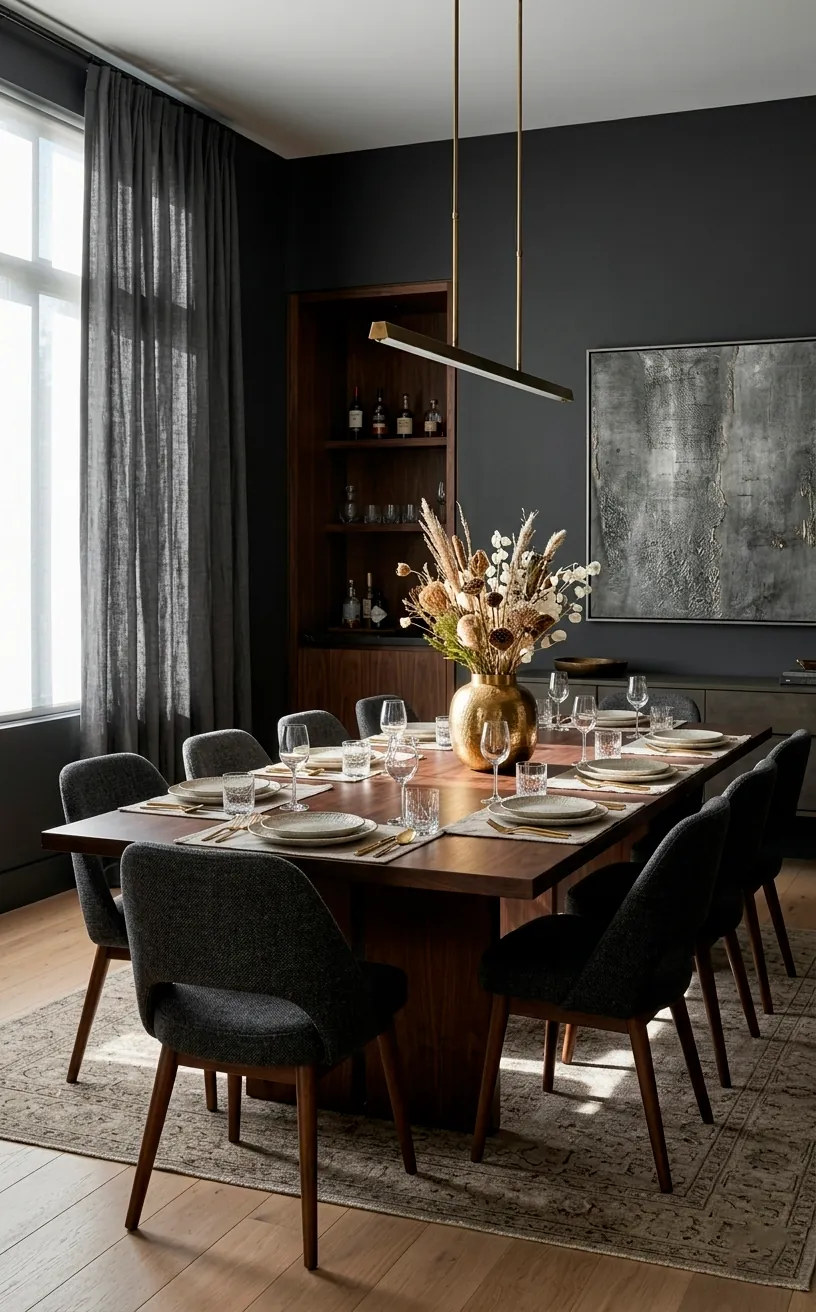
Deep, saturated wall colors provide the strongest foundation for a moody vibe. I personally prefer matte finishes because they absorb light instead of bouncing it around like a disco ball. When you choose a dark charcoal or navy, the walls seem to recede, which actually makes the space feel more expansive and intimate at the same time.
If you feel nervous about painting the whole room, you should definitely consider starting with a few moody accent walls to test the waters first.. This approach lets you see how the light interacts with the pigment without committing the entire floor plan. Pair these dark surfaces with warm wood tones or light-colored flooring to prevent the room from feeling completely blacked out. FYI, a single dark wall can change the entire energy of your home dinner parties. 🔥
Luxury Underfoot with Textured Rugs
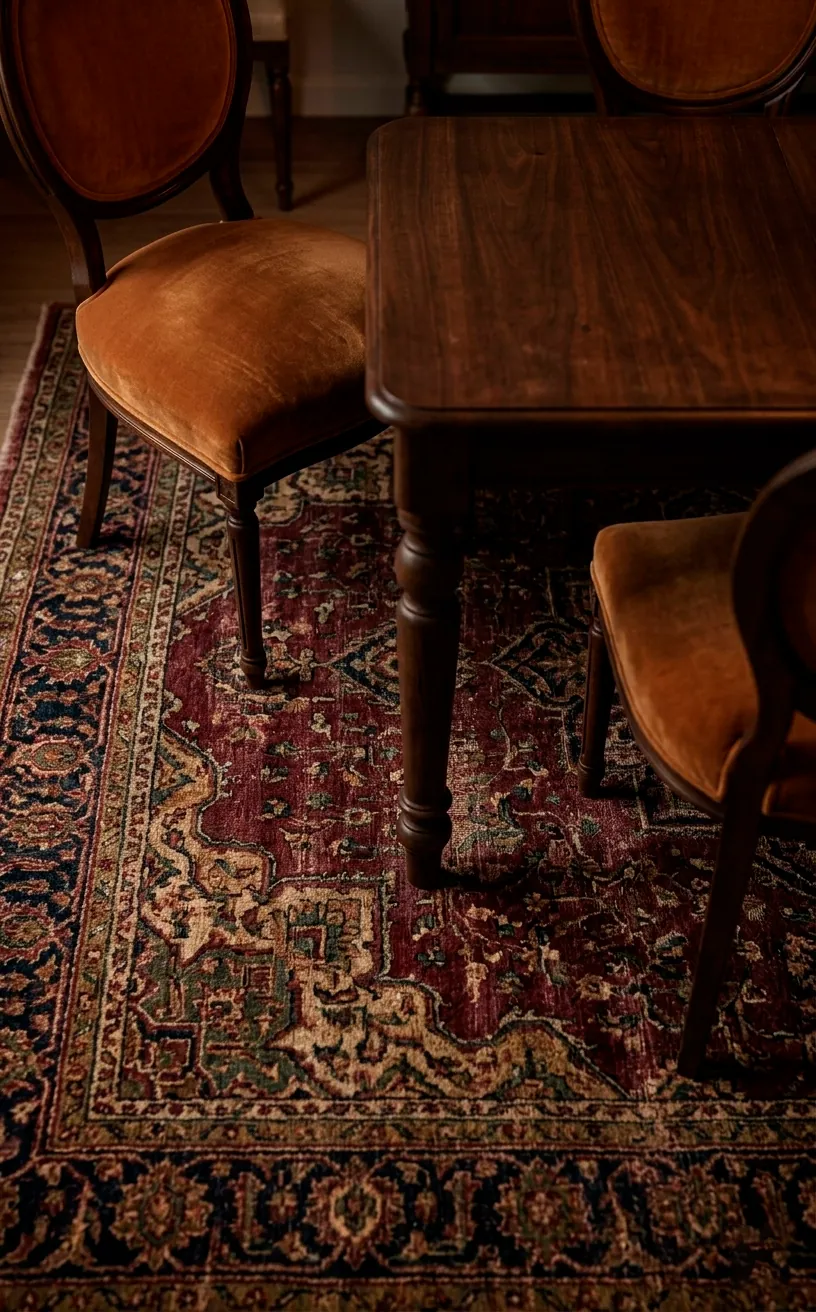
Never underestimate how much a rug anchors a dramatic room. I love using low-pile rugs with subtle, vintage-inspired patterns that incorporate deep reds or faded indigos. These textures add a layer of sophistication that prevents the room from looking too ‘flat.’ If you pick a rug with a slight sheen, it will catch the low light from your chandelier and add a touch of unexpected sparkle to your feet. A heavy, textured rug also dampens sound, making your late-night conversations feel much more private and cozy. Choosing the right rug means you value comfort just as much as you value high-end aesthetics.
The Magic of Statement Lighting
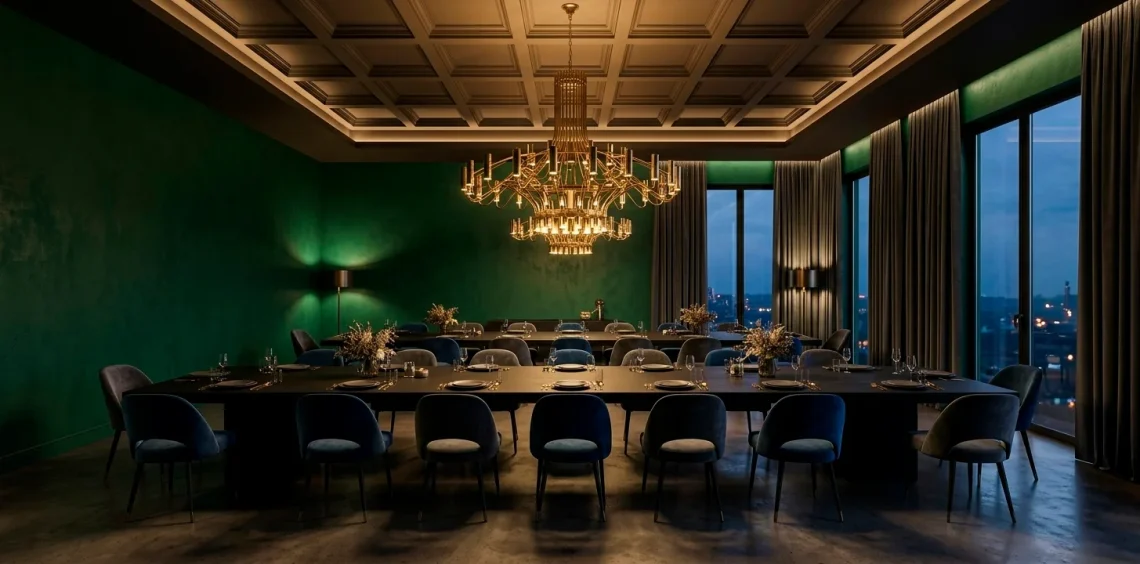
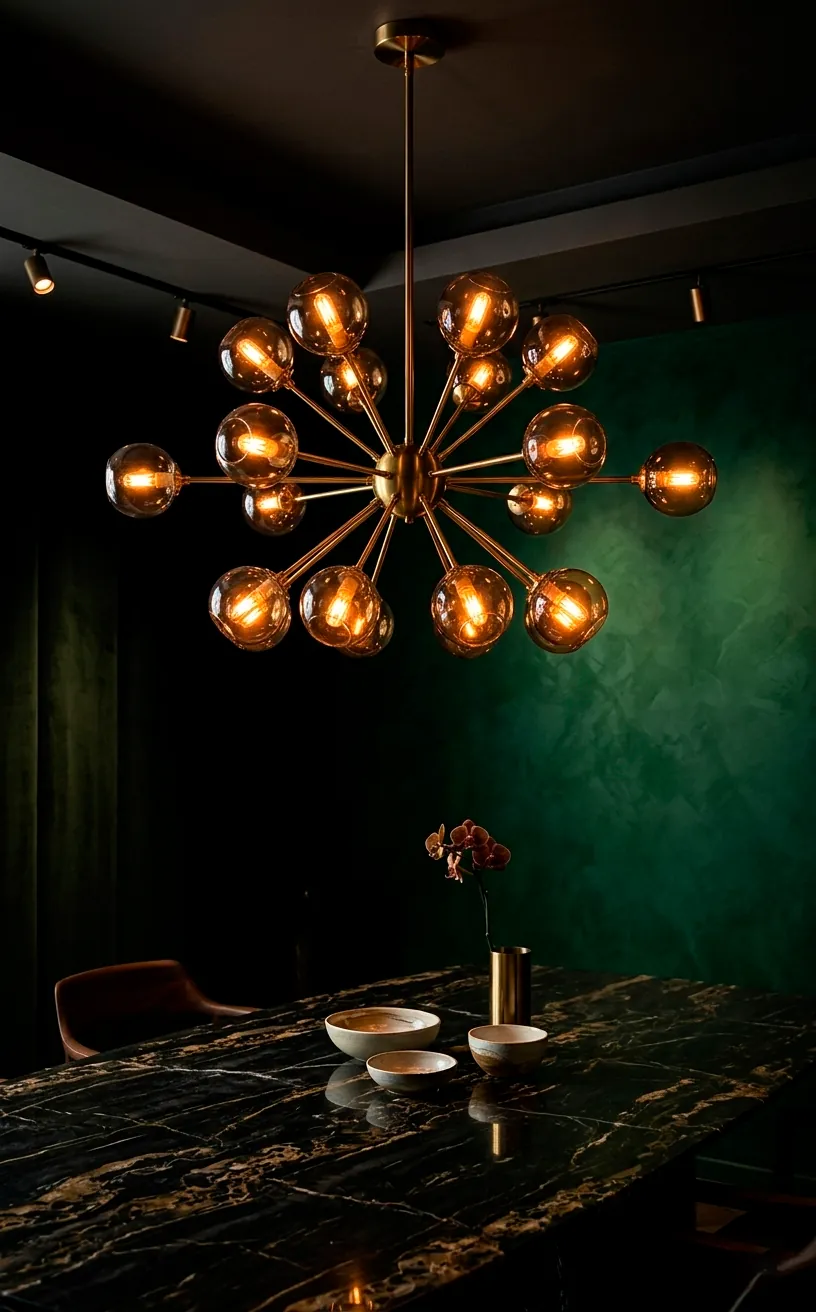
Lighting represents the make-or-break element in any moody design. You can’t just slap a basic flush-mount on the ceiling and call it a day! I recommend a large, sculptural chandelier that acts as the focal point of the entire room. Think brass arms, smoked glass globes, or even a vintage-inspired iron piece.
Always install a dimmer switch. Seriously, it’s non-negotiable. You want to control the ‘glow factor’ so you don’t feel like you’re under interrogation while eating your pasta.
Layer your light sources by adding small lamps on sideboards or even some floor candles. This creates pockets of light and shadow, which adds that ‘dramatic’ edge you’re looking for. Does anyone actually like eating under bright overhead lights? I certainly don’t! IMO, the darker the corners, the better the atmosphere.
Curation of a Dark Gallery Wall
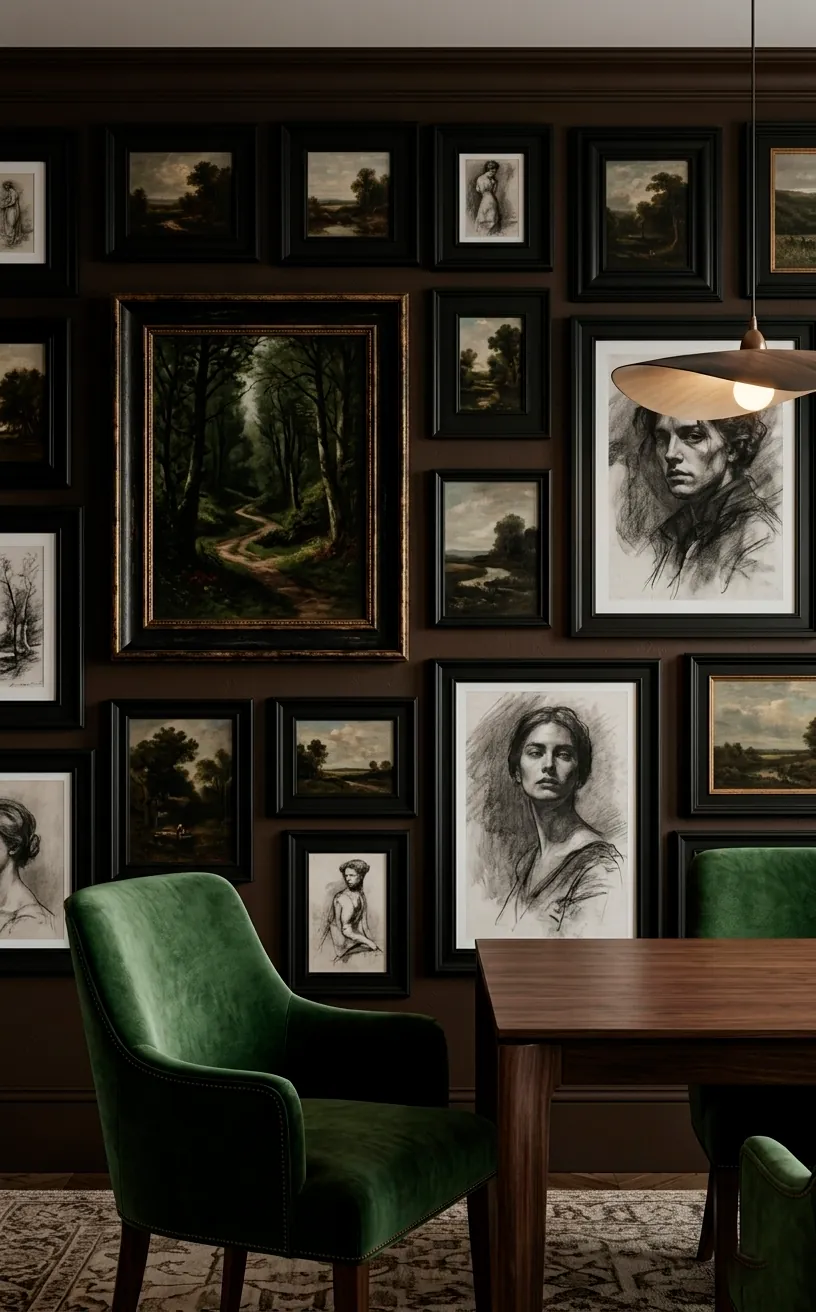
Empty walls kill a moody vibe faster than you can say ‘beige.’ I find that a tightly packed gallery wall with black or dark wood frames adds incredible depth. You don’t need expensive oil paintings; even simple sketches or moody landscape prints work wonders.
You can easily learn how to build a gallery wall on a budget to fill that awkward space. Mix and match your frame sizes, but keep the color palette consistent.
I suggest using art with dark backgrounds to let the subjects ‘pop’ out of the shadows. It creates a sense of mystery and history that a blank wall simply can’t provide.
Pro tip: Use an ‘art light’ above your favorite piece. It makes your dining room look like a high-end gallery in London or New York. Doesn’t that sound better than a wall of generic family photos?
Velvet Seating for Texture and Soul
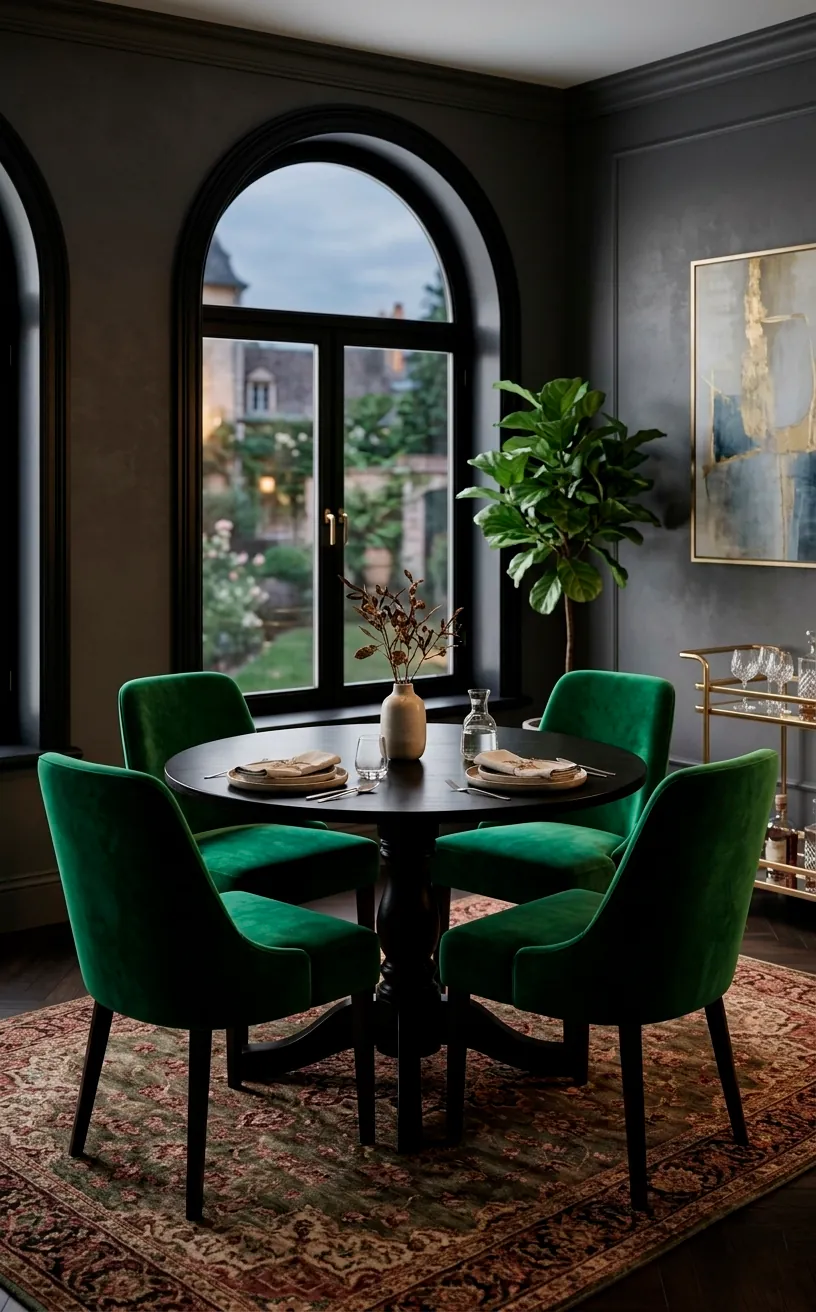
Hard wooden chairs feel a bit too ‘country kitchen’ for a dramatic room. I swear by velvet dining chairs in deep jewel tones like emerald, sapphire, or even a rich burnt orange. Velvet catches the light in such a unique way, adding a shimmering texture that breaks up the matte walls.
These chairs also feel incredibly comfortable for long evenings spent talking over wine. Plus, the contrast between soft fabric and a hard stone or wood table creates that high-end designer look everyone craves. Why settle for boring when you can sit on something that feels like a hug?
The Often-Ignored Fifth Wall
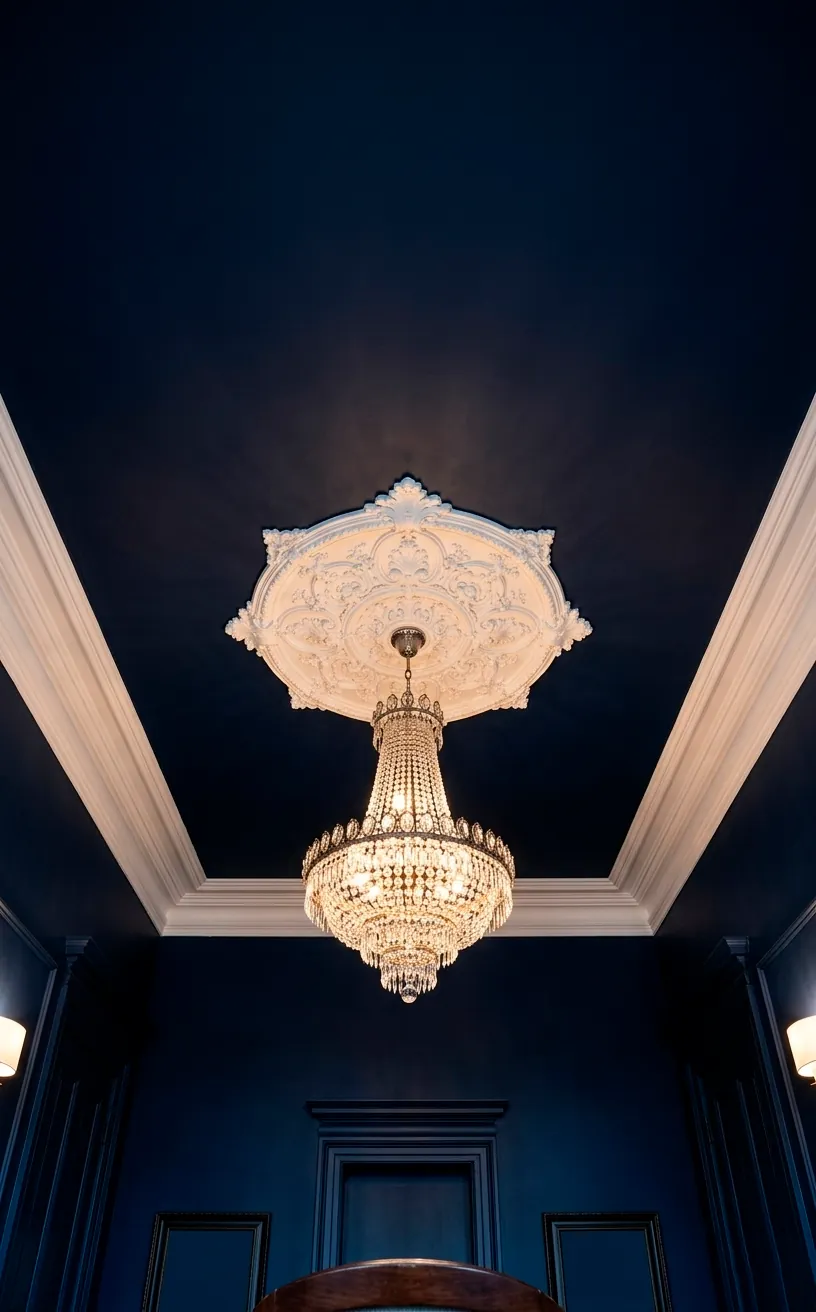
Most people forget the ceiling, but in a moody room, it’s your best friend. I recently saw a room where they painted the ceiling the same dark color as the walls, and the effect was stunning. It creates a ‘jewel box’ feeling that wraps around you. If you’re feeling extra bold, apply a high-gloss finish to the ceiling to reflect the candlelight from below. This trick adds height and a sense of infinite space. It sounds scary, but I promise it works. Just make sure your crown molding is a slightly different shade to define the edges. Who says ceilings have to be white and boring?
Metallic Accents and Dark Hardware
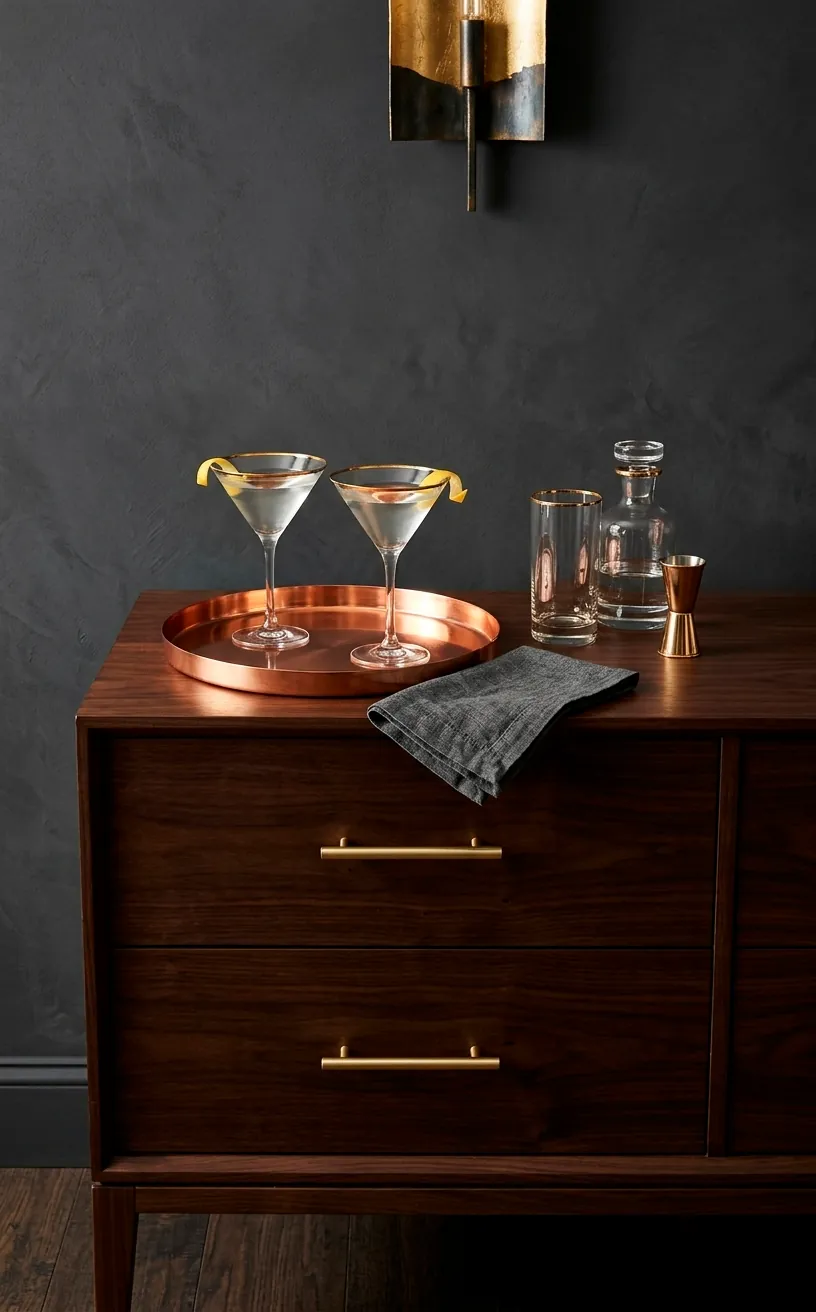
To prevent a dark room from feeling muddy, you need to add some metallic ‘punctuation marks.’ I love mixing gold, brass, and copper throughout the space. Think of these as the jewelry for your room. A gold serving tray on a black sideboard or copper napkin rings on a dark linen tablecloth provide just enough contrast to make the dark colors sing.
You should also consider swapping out your cabinet hardware for something more dramatic. Black-on-black hardware looks incredibly sleek, while brass-on-black looks classic and expensive.
These small details might seem minor, but they pull the whole ‘moody’ narrative together. I find that a few well-placed metallic items make the difference between a room that looks ‘unfinished’ and one that looks like a professional designer handled it. Are you ready to add some sparkle to your shadows?
Final Thoughts on Dark Decor
Creating a moody dining room isn’t about hiding in the dark; it’s about celebrating the mystery and comfort of deep colors. Whether you go all-in with a black ceiling or just swap your chairs for velvet ones, you’re building a space with real soul. I hope these ideas inspire you to pick up a paintbrush and get dramatic! Which of these dark elements are you adding to your home first? Let me know in the comments, and don’t be afraid to break a few ‘design rules’ along the way!