Skip to content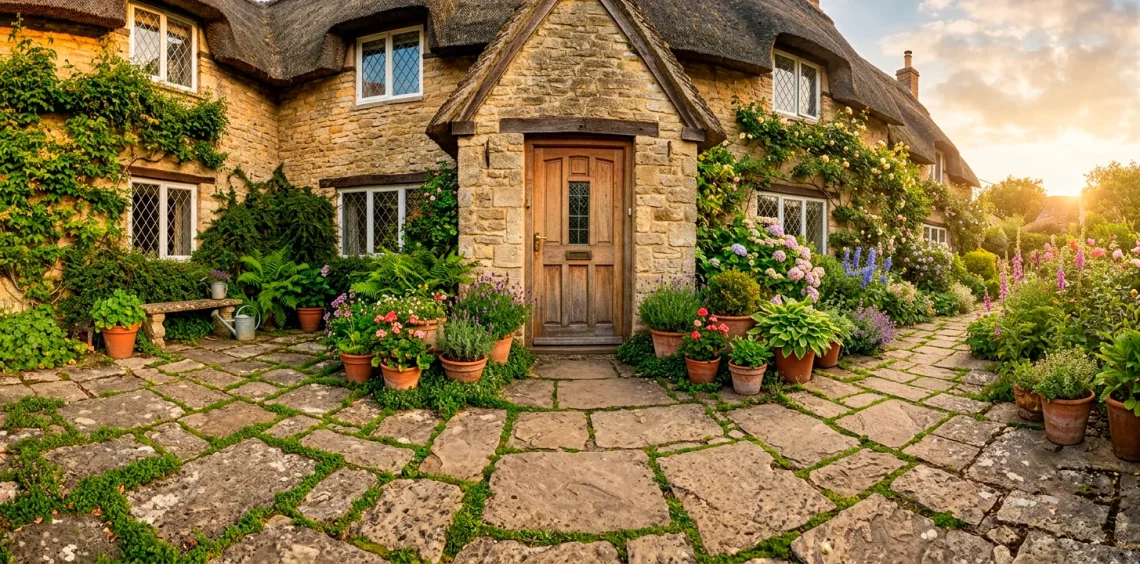
Ever looked at a boring concrete slab and felt your soul die a little bit? I certainly have. Welcome to the world of stone-paved cottage porches, where we ditch the dull and embrace pure character 😉. I recently replaced my tragic front step with natural stone, and it changed everything. Let’s explore fifteen ways to give your home that undeniable rustic charm!
The Classic Flagstone Welcome
Flagstone basically screams “I bake my own sourdough and read poetry in the garden.” I absolutely adore the irregular shapes because they give your porch an instantly aged, organic feel. You just puzzle-piece them together for that perfect uneven look.
Want a pro tip? Sweep some polymeric sand between the joints to keep the weeds out, unless you actually enjoy pulling dandelions on your Sunday mornings. Thick, earthy flagstone pavers handle heavy foot traffic like an absolute champion. Seriously, this rugged material survives the worst weather while keeping its beautiful, muted color palette intact.

Cobblestone Fairy Tale Vibes
Why settle for a normal entrance when you can pretend you live in a 17th-century European village? FYI, cobblestones deliver that intense, textured charm that makes guests stop and stare. I laid a small cobblestone border near my walkway last spring, and I swear it makes the whole house look more expensive. You roll your heavy planters right over them, and they barely even scuff. Rounded granite cobblestones are practically indestructible and bring immense historical weight to a simple cottage facade. Plus, the way rain makes them shine? Pure magic.
A useful little gift for your home
🎁 Free Plant Finder Tool
Filter 250+ houseplants by style, size, and care level to find your perfect green companion in seconds.
We’ll email you the link. Plus, you’ll join our newsletter for fresh home inspiration.

Moody Slate with Creeping Thyme
Slate offers this gorgeous, dramatic moodiness that lighter stones simply cannot match.
Think deep charcoal and rich bluish-grey tones contrasting against bright green foliage. Plant creeping thyme directly in the cracks. Not only does it soften the hard edges, but you also get a lovely herbal scent every time someone accidentally steps on it.
Honestly, walking on a fragrant, soft-yet-solid surface totally elevates your morning coffee routine. Dark slate tiles instantly anchor the space, giving your porch a grounded, earthy atmosphere that feels completely intentional.

Warm Limestone Elegance
If dark and moody isn’t your jam, let me introduce you to limestone. This stone literally glows in the afternoon sun. The creamy whites, soft tans, and subtle gold tones brighten up shaded entryways effortlessly.
I love how limestone stays cool under your bare feet during a scorching summer afternoon.
Essential limestone maintenance tips:
- Seal the stone annually to prevent staining
- Sweep away acidic damp leaves promptly
- Wash with a gentle, pH-neutral cleaner
Limestone absorbs spills like a sponge, and nobody wants a permanent stain on their warm limestone patio. Maintain it well, and it rewards you with timeless beauty.

Brick and Fieldstone Mashup
Can’t decide between brick and stone? Use both!
A brick border framing wild, irregular fieldstone creates a brilliant structural contrast.
The crisp red lines of the brick contain the chaotic energy of the natural stone perfectly. It feels like wearing a tailored blazer over a vintage band tee.
You get the best of both worlds. The mixed-material pathway draws the eye directly to your front door. It requires a bit more planning during installation, but the resulting texture clash is honestly chef’s kiss. This dynamic duo completely redefines standard porch design by blending strict geometry with pure rustic wilderness.

River Rock Borders
Sometimes you just need to fill awkward gaps, and smooth river rocks step up to the plate perfectly. You pack them between larger stepping stones to create a visually soothing, pebble-beach effect. It provides excellent drainage, meaning no annoying puddles forming right where you drop your keys. I highly recommend using multi-colored river pebbles to add a subtle pop of natural color against grey concrete or dark wood steps. Who knew that dumping a bag of smooth stones could look this intentional and chic? It practically transforms a basic walkway into a tranquil, zen-like cottage retreat.

Structured Herringbone Patterns
Herringbone isn’t just for fancy hardwood floors, folks. Laying rectangular stone pavers in this zigzag pattern adds crazy visual interest to a flat porch. It takes serious math to get it right, but the payoff is massive.
The pattern naturally guides your eye toward the entrance. Use tumbled rectangular stones to keep the edges soft and cottage-appropriate, avoiding that stark, modern driveway look. You immediately establish a sense of refined craftsmanship before anyone even crosses your threshold. I once saw a herringbone porch at a cozy bed and breakfast, and I’ve been completely obsessed with the geometry ever since.

The Overgrown Secret Garden
Embrace the beautiful mess! Leave wide, intentional gaps between your massive paving stones and let low-growing ground cover go absolutely wild.
We want that “forgotten cottage in the woods” aesthetic here. Moss, sweet alyssum, or even tough varieties of sedum thrive in these little stone crevices.
You completely blur the line between the garden and the porch. Wide-set natural pavers surrounded by lush greenery make your house feel like it sprouted straight out of the earth. It requires almost zero weeding because the good plants choke out the bad ones!

Terracotta and Sandstone Warmth
Want to channel a sunny Mediterranean villa while staying firmly planted in your rural cottage? Combine weathered terracotta tiles with natural sandstone slabs. The rich oranges and soft pinks immediately warm up cold, dreary mornings. You can arrange them in an alternating checkerboard or just use terracotta for a vibrant border. Textured sandstone pavers provide the necessary grip, so you don’t slip on rainy days. To complete the vibe, this setup pairs brilliantly with natural clay elements; see how you can elevate the space further with 10 earthy terracotta water features.

Chunky Bluestone Steps
Bluestone screams quiet luxury.
Those heavy, solid blue-grey slabs make an incredibly confident statement as porch steps. They look like they weigh a ton, mostly because they actually do.
The distinct color variations—ranging from steel blue to hints of rust and lilac—ensure no two stones look identical.
I love capping a low cottage wall with solid bluestone treads. The thick, chiseled edges catch the light beautifully and offer a sturdy, non-slip surface that easily outlasts the house itself. You seriously install this stuff once, and it becomes a permanent family heirloom.

Pea Gravel and Paver Combo
Let’s talk budget-friendly hacks that still look incredibly chic. Sinking large square stone pavers into a bed of crunchy pea gravel saves you a ton on material costs while delivering a satisfying, tactile experience.
That delightful crunch underfoot announces visitors before they even knock. Washed pea gravel locks together fairly well, but you definitely want a solid edging material to keep the tiny stones from migrating into your lawn. It brings a casual, relaxed vibe that suits a modest cottage perfectly. Plus, it drains rainwater instantly, keeping your shoes clean during those nasty spring downpours.

Rugged Granite Slabs
If you want your porch to survive a minor apocalypse, granite is your best friend. We use large, unpolished granite slabs to create a dramatic, ultra-sturdy entrance. The raw, rough-hewn edges add massive architectural interest without looking overly fussy or manicured. Unpolished granite pavers sparkle slightly in direct sunlight thanks to the natural quartz embedded in the rock. It feels incredibly primitive yet perfectly styled, grounding your delicate cottage in something substantial and raw. Ever wondered why castles used this stuff? It literally never breaks.

Reclaimed Antique Paving Stones
Sustainability meets high design! Hunting down reclaimed street pavers or salvaged barn stones feels like a fun treasure hunt.
These stones carry decades of wear, featuring softened edges and unique markings that new materials just cannot fake. I found a batch of century-old pavers at a salvage yard and practically did a happy dance.
Yes, installing them requires patience because they rarely share a uniform thickness. However, a reclaimed stone patio tells a completely unique story and adds instant, authentic history to a newer build.

Geometric Cut Stone Grid
You can do rustic without doing messy. Crisp, square-cut stones laid out in a perfect grid bring a touch of formal elegance to a relaxed cottage setting.
It creates a calming visual order. I suggest using a contrasting grout color to highlight the strict geometry. Square-cut natural stone bridges the gap between traditional farmhouses and slightly more modern architectural styles. It keeps things tidy, clean, and highly intentional while still retaining that essential earthy texture we crave. IMO, this look totally rules if you love clean lines but hate boring materials.

Winding Pebble Path Entryway
Let’s end with something truly whimsical. Instead of a hard, straight line, build a gently curving entryway using embedded river stones or small cobbles arranged in swooping mosaics. It forces guests to slow down and actually enjoy your garden before reaching the door. You basically paint a picture with rocks! Mosaic pebble paving takes time, but the artisanal, handcrafted result turns a simple walkway into a genuine piece of art. Maximize this cozy entryway vibe by checking out these 15 space-saving small porch vertical herb gardens.

A useful little gift for your home
🎁 Free Plant Finder Tool
Filter 250+ houseplants by style, size, and care level to find your perfect green companion in seconds.
We’ll email you the link. Plus, you’ll join our newsletter for fresh home inspiration.
Conclusion
A stone-paved porch completely transforms your cottage from basic to breathtaking. Whether you choose jagged flagstone, moody slate, or gorgeous reclaimed pavers, natural stone injects authentic soul into your exterior. You build something lasting while designing a highly welcoming entrance. Which rugged stone texture are you grabbing first? Let me know in the comments!