Skip to content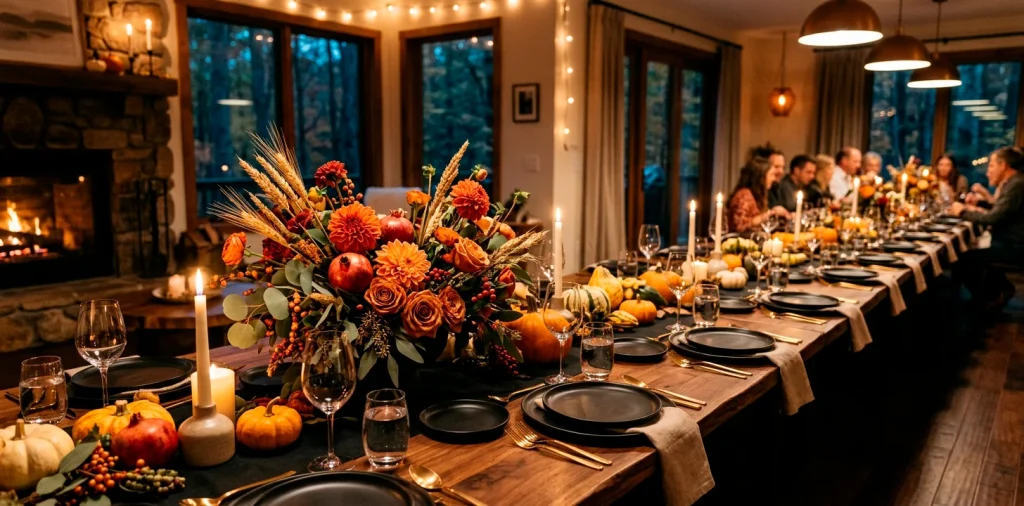
Tired of the same old round pumpkin centerpiece sitting dead center on your Thanksgiving table? I hear you. This year, I am entirely ditching the perfectly symmetrical floral blobs for something with a bit more edge. Let us talk about modern, asymmetrical floral designs that give your holiday table that effortless, high-end look without looking like a stiff hotel lobby.
The Moody Off-Center Cascade
Ever wondered why traditional centerpieces feel so rigid? They try too hard. I prefer anchoring my table with a dramatic, off-center cascade that spills lazily off one side of the table. You simply cluster your heaviest, darkest blooms-think deep burgundy dahlias-near the top and let the greenery trail gracefully down the edge.
This completely frees up the other end of the table for the real star of the show: the gravy boat. Trust me, leaving that negative space creates an undeniably modern tension that guests always comment on. If you want to carry this moody vibe elsewhere, check out this guide on how to style a cozy farmhouse mantel for the holidays.

High-Low Ikebana Vibes
Who says you need a massive bouquet to make a statement? You definitely do not. Borrowing heavily from Japanese Ikebana, this design uses an odd number of stems placed at drastically different heights in a shallow bowl. I usually pin a single dramatic branch reaching far to the right, balanced by a short, bold bloom tucked low on the left. It looks incredibly architectural and chic. Plus, it uses way fewer flowers, saving you enough cash to buy the good wine this year. IMO, less really is more here.
A useful little gift for your home
🎁 Free Plant Finder Tool
Filter 250+ houseplants by style, size, and care level to find your perfect green companion in seconds.
We’ll email you the link. Plus, you’ll join our newsletter for fresh home inspiration.

Foraged Branch & Berry Reach
Want to bring the outside in without spending a dime? Just head to your backyard.
I love snipping wild, twisting branches and heavy berry clusters to build a rugged, lopsided arrangement. The absolute key here is letting the longest branch dictate the shape rather than forcing it into a neat little dome.
Design elements for the wild look:
- A heavy ceramic jug to anchor the weight
- Twisted willow or manzanita branches
- Bright red bittersweet berries
Let those branches stretch wildly across one half of the table. It blocks nobody’s view and looks wildly intentional.

The Dripping Amaranth Edge
Red amaranth literally bleeds modern drama. Instead of centering this gorgeous, weeping flower, I pack it densely into a sleek vase positioned near the edge of a rectangular table. You just let those long, fuzzy red ropes drape directly off the table’s corner. It creates a stunning waterfall effect that feels unexpectedly luxurious. Just make sure you warn Uncle Bob so he does not accidentally wear your expensive florals as a lapel pin while reaching for the dinner rolls. ??

Pampas Grass Swoop
Still obsessed with pampas grass? Same here. But shoving it symmetrically into a tall vase completely blocks everyone’s view and kills the conversation.
Instead, I create a low, horizontal swoop that leans heavily to the left. You weave the fluffy plumes through a low floral foam block, mixing them with dried palm spears facing a single direction.
This creates a wind-swept, bohemian look that pairs beautifully with minimalist modern dishware. It literally feels like a harvest breeze just swept across your dining room.

Citrus and Bloom Lean
Do you ever mix fruit with your flowers? If not, you are seriously missing out on a massive styling secret. I love piling fresh oranges, pomegranates, and figs heavily onto one side of a low, asymmetrical wooden tray.
From that dense pile of fruit, you spring a few delicate stems of ranunculus reaching into the empty space. This stark contrast between heavy, grounded fruit and airy, reaching florals screams modern abundance. It is completely unexpected for a Thanksgiving feast!

Asymmetric Floating Vases
Sometimes, the vessel matters just as much as the flowers. I achieve a brilliantly uneven look by using a cluster of distinct, mismatched floating glass vases pushed entirely to one end of the table. You fill them with varying water levels and float single, bold chrysanthemum heads in them. Leaving the entire opposite side of the runner bare except for a scattering of loose petals looks fiercely contemporary. This simple setup completely reinvents the tired, traditional table runner.

The Velvet Ribbon Drop
Ribbon isn’t just for wrapping presents, my friends.
I build a fairly understated, loose floral arrangement, but I offset the visual weight completely using a massive, trailing velvet ribbon.
You tie a giant, floppy bow around a heavy brass vase and let three yards of luxurious rust-colored velvet pool onto the table and spill onto the floor on just one side.
This basic textile trick instantly creates an asymmetrical silhouette without requiring any advanced floral skills. It practically screams cozy elegance.

Unbalanced Candlestick Forest
Are you afraid of a little wax dripping? I lean right into it by clustering an unbalanced ‘forest’ of taper candles mixed with minimalist floral sprigs. You group seven or eight matte black candlesticks of varying heights closely on the left side of your centerpiece zone. Then, simply weave a few sprigs of seeded eucalyptus through the bases, letting them crawl weakly toward the completely empty right side. It creates a dark, romantic tension that feels effortlessly cool and wildly modern.

Single-Side Floral Runner
Traditional floral runners look gorgeous, but they take up an offensive amount of prime dining real estate. FYI, Aunt Linda needs room for her famous green bean casserole!
To fix this problem, I build a lush, thick floral runner that only runs down the left edge of the table, rather than down the dead center.
It frames the plates on that side beautifully while leaving massive open space in the middle for your actual feast. You get the lush floral aesthetic without sacrificing practical dining space.

Wildflower Tangled Nest
This fun design relies entirely on controlled chaos. You start with a shallow dish and create a dense, messy ‘nest’ of wild grasses and dried foliage heavily weighted to one extreme side.
From that dense nest, you launch a few erratic stems of craspedia (those fun yellow billy balls) shooting off at incredibly sharp angles. The stark contrast between the heavy, tangled base and the sharp, geometric lines of the stems gives your table a quirky, unforgettable energy.

Dried and Fresh Hybrid
I find that mixing dried, dead elements with fresh, vibrant blooms creates my absolute favorite textural contrast. I push a heavy cluster of fresh white hydrangeas to one side of an oval vase, and let structural dried lotus pods and bleached ferns jut out violently in the opposite direction. The fresh blooms ground the piece, while the dried elements break the silhouette entirely. It feels edgy, slightly moody, and captures the exact transitional essence of late autumn. Plus, it lasts way longer than an all-fresh setup.

The Heavy-Set Protea Lean
Want a single flower to do all the heavy lifting? Grab a King Protea.
These massive, prehistoric-looking blooms command attention instantly. I place one giant Protea extremely low and off-center in a wide-mouthed vase.
Next, you balance that intense visual weight by fanning delicate, wispy smokebush branches high and wide on the opposite side.
It creates a stunning seesaw effect. The arrangement balances perfectly in visual weight, even though it completely ignores physical symmetry.

Gourds on the Edge
Yes, I know I mocked round pumpkin centerpieces earlier, but we can totally reinvent them! Instead of a basic pyramid in the middle, I line up an eclectic mix of warty, heirloom gourds in a zigzag pattern starting from the very end of the table. You nestle small floral water tubes between the gourds, popping in single stems of dark scabiosa that lean heavily outward away from the gourds. It creates a crawling effect that feels organic and highly stylized. Goodbye, basic pumpkin patch vibes.

Minimalist Bud Vase Scatter
Let us end with the absolute easiest trick in the book: the strategic scatter. Instead of one large centerpiece, you use five tiny, mismatched bud vases.
Group three tightly together on the far right side of your runner, place one slightly off-center, and leave the last one completely isolated near the left end. Fill them with single, wispy stems of Queen Anne’s lace.
This creates a beautiful, drifting asymmetry across the entire table. For more on creating high-end looks simply, read this DIY wedding flowers look expensive guide.

A useful little gift for your home
🎁 Free Plant Finder Tool
Filter 250+ houseplants by style, size, and care level to find your perfect green companion in seconds.
We’ll email you the link. Plus, you’ll join our newsletter for fresh home inspiration.
Conclusion
There you have it! Ditching symmetry is the absolute easiest way to make your Thanksgiving table feel fresh, modern, and completely unstuffy this year. Whether you go for the heavy protea lean or the moody amaranth drop, breaking the rules just looks better. Which asymmetrical design are you grabbing first? Let me know in the comments below! ??