You finally cleared the clutter, but now your living room feels like a high-end dentist’s waiting room. Does it look clean? Sure. Does it feel like a home? Not quite. Minimalism doesn’t mean you have to live in a white box that lacks a soul. I’ve spent years tweaking my own space to find that sweet spot between ‘zen sanctuary’ and ‘actual human habitat.’ You can absolutely keep those clean lines while still feeling like you can actually sit down and relax. Let’s explore how to inject some much-needed warmth into your sleek sanctuary without bringing back the junk 🧐.
Layer Your Textures Like a Pro
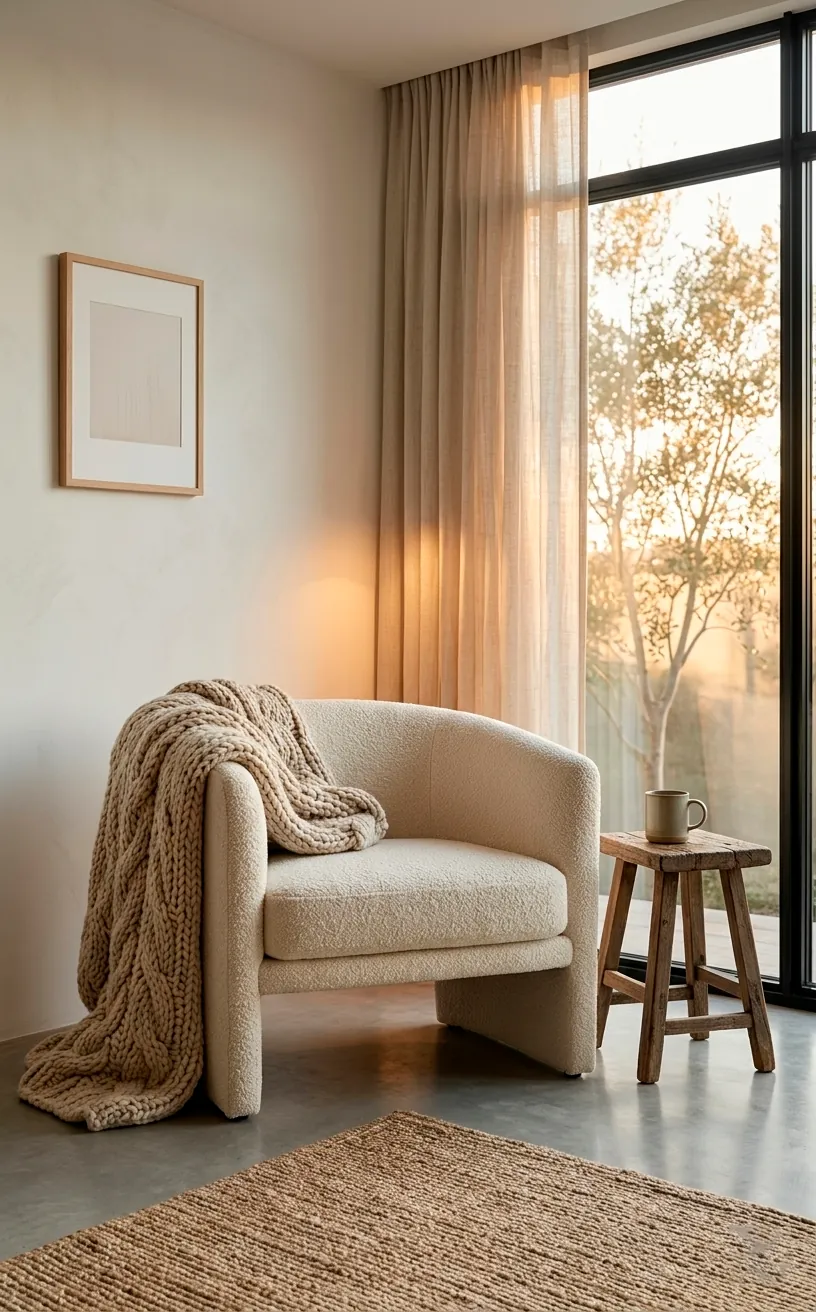
Texture acts as the secret sauce of minimalist design. Without it, smooth surfaces just look flat and uninviting. I always suggest mixing different tactile elements to create visual depth without adding physical mess. Think about a chunky wool throw draped over a smooth leather armchair. The contrast creates an immediate sense of comfort that catches the eye.
You should play with various materials like linen, velvet, and boucle. Even if everything stays within a neutral color palette, the different ‘feels’ of these fabrics will make the room feel expensive and lived-in. I personally love how a rough-hewn wooden bowl looks on a polished marble table. It breaks the monotony perfectly.
Ditch the Interrogation Lights
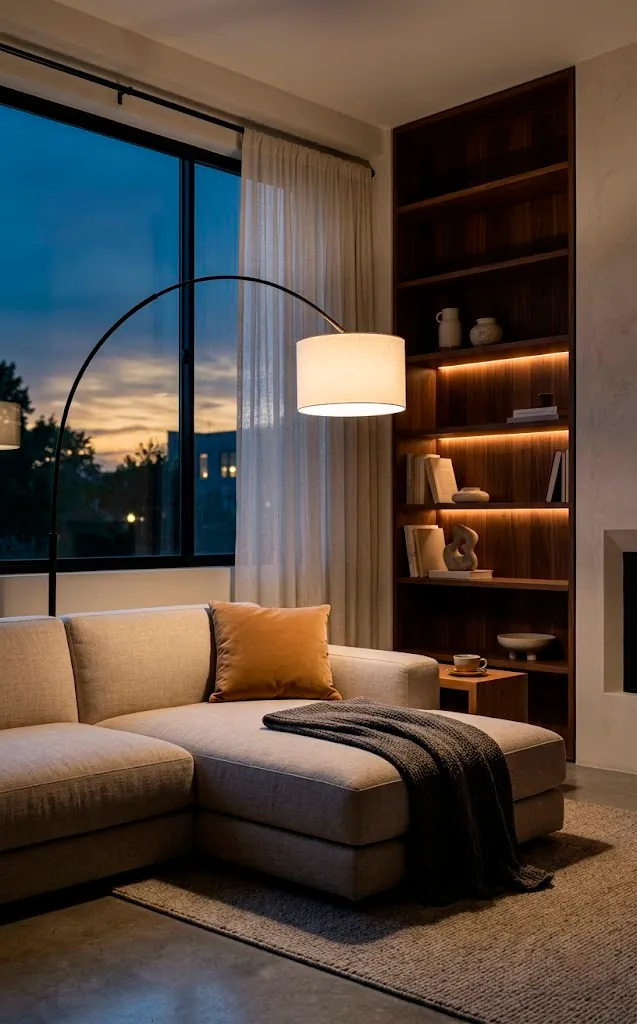
Nothing kills a vibe faster than harsh overhead lighting. It makes everything look clinical and cold, which is exactly what we want to avoid. I recommend using multiple light sources at different heights to create a warm glow. Floor lamps and table lamps provide ‘pools’ of light that make a room feel intimate and cozy after dark.
You should look for bulbs with a warm temperature—somewhere around 2700K. This mimics the cozy feel of candlelight or a fireplace. IMO, smart bulbs are a game-changer because you can dim them to match your mood precisely.
Good lighting essentials:
- Dimmable floor lamps with fabric shades
- Subtle LED strips behind the TV or under cabinets
- Minimalist matte black table lamps for task lighting
Bring the Outdoors In
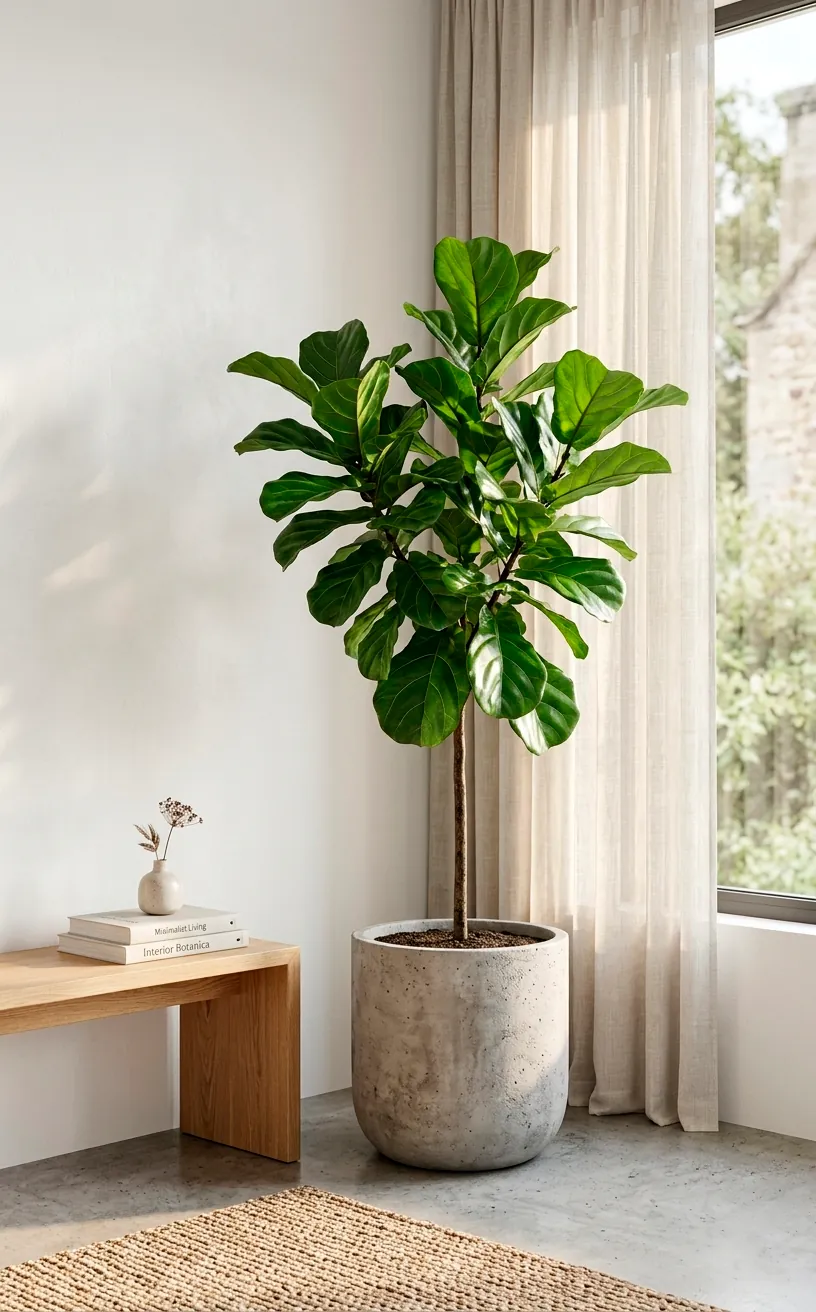
Plants are the ultimate minimalist hack for adding life and color. They soften those sharp architectural corners and literally breathe life into a space. I find that a single, large statement plant like a Fiddle Leaf Fig or a Strelitzia works much better than a dozen tiny pots that just look like clutter. Nature adds an organic element that manufactured furniture simply can’t replicate. If you’re like me and struggle to keep things alive, even high-quality dried botanicals or a few olive branches in a tall vase will do the trick. For more greenery inspiration, check out these 10 sage green living room ideas.
Choose Warm-Toned Neutrals
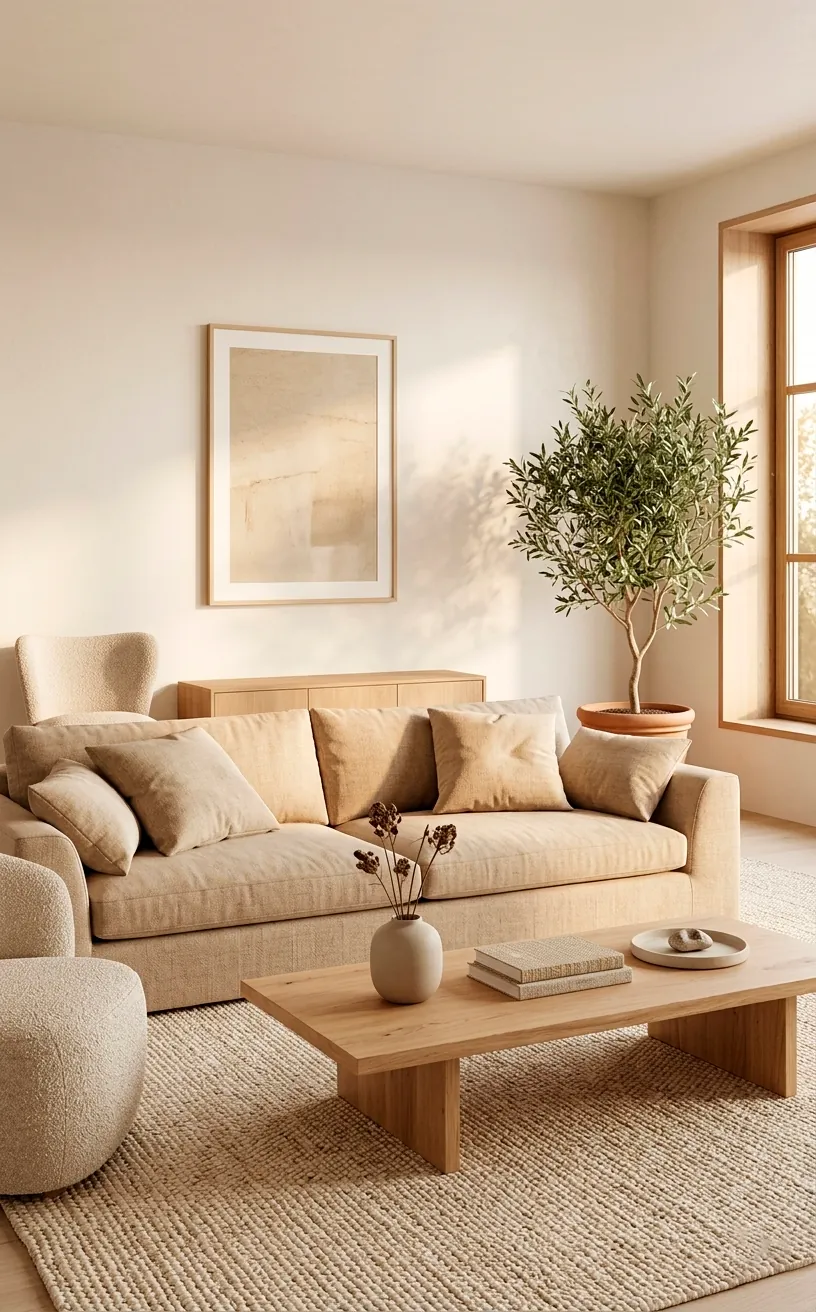
White on white on white is a disaster if you spill coffee. It also makes you feel like you’re living in a laboratory. I recommend swapping out those cold, blue-toned whites for something with a bit of a creamy base. Think about colors like greige, sand, or a very light taupe.
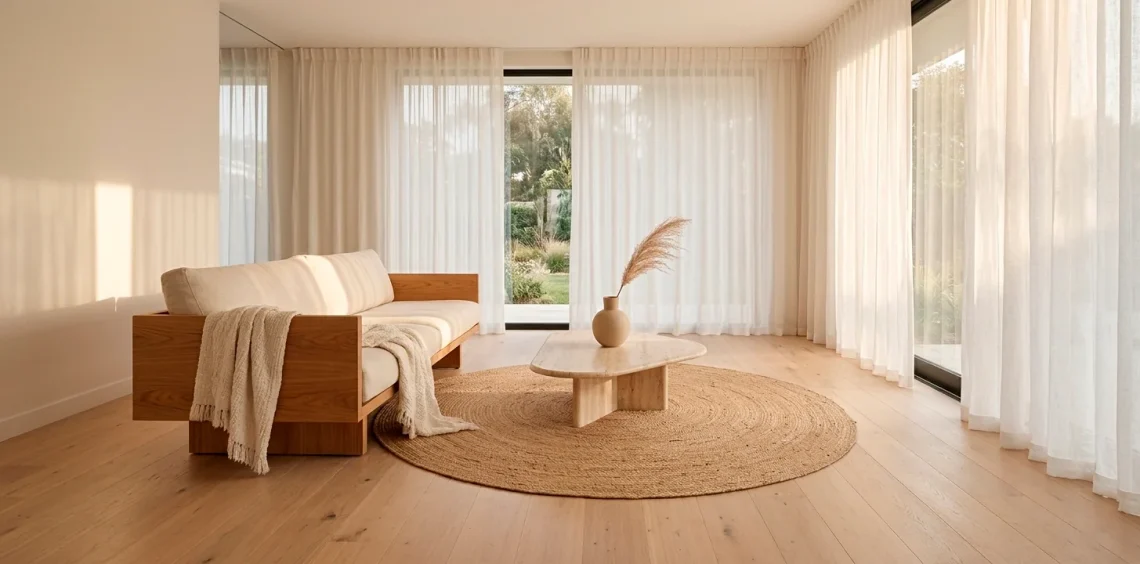
Warm tones reflect light differently than cool ones. They make a room feel like a cozy cocoon rather than a sterile gallery. You can still keep the minimalist look while using a soft, earthy palette. I personally love how a warm wood coffee table looks against a soft beige rug. It creates a ‘grounding’ effect that’s instantly calming ✨.
Essential warm-toned items:
- Sand-colored linen sectional sofa
- Taupe or charcoal area rugs
- Natural oak or walnut furniture pieces
Add a Rug That Actually Fits
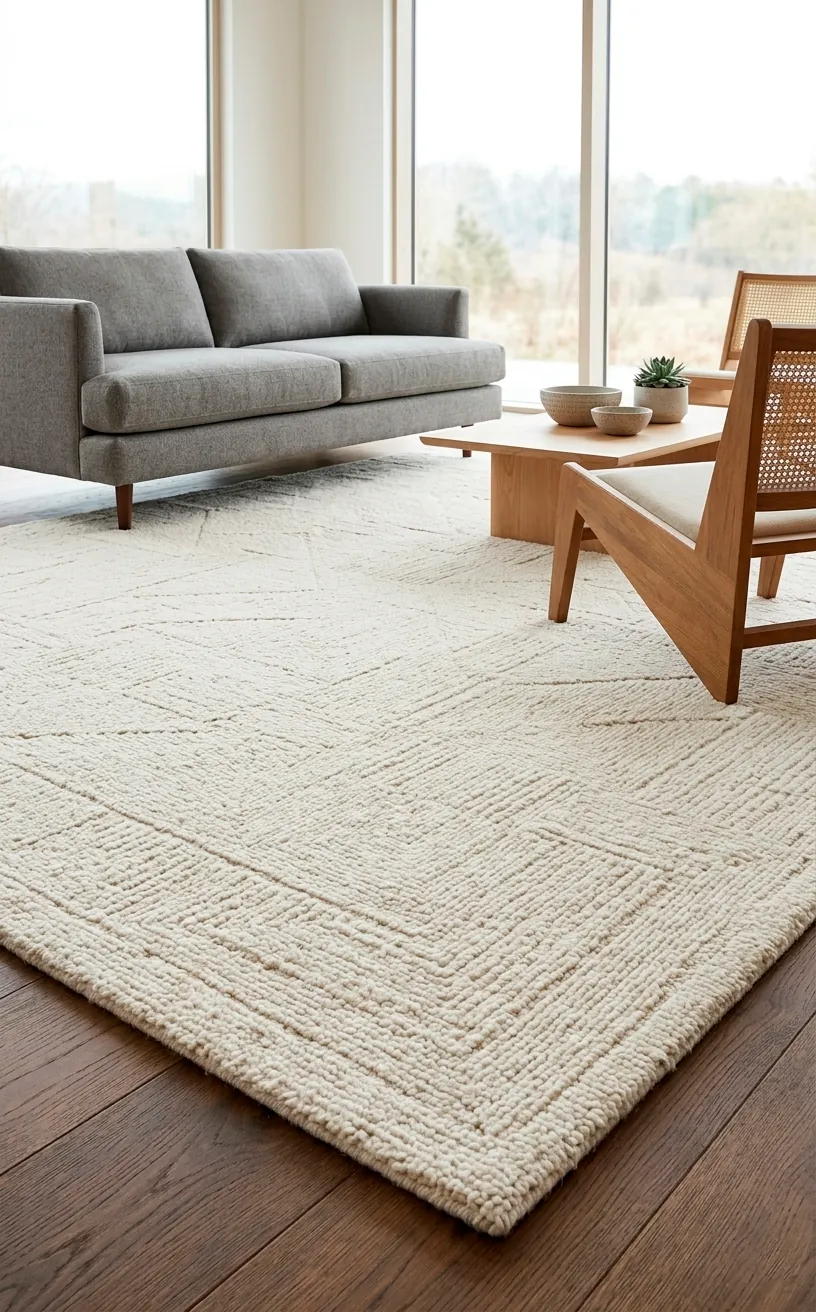
A tiny rug in a large room looks like a postage stamp and makes the space feel disjointed. I always tell people to go as big as they can afford. You want at least the front feet of all your furniture to sit on the rug to ‘anchor’ the seating area. This visual trick creates a distinct zone in an open-plan room. I also love rugs for their sound-dampening qualities; nothing says ‘cold’ like a room with an echo.
You should choose a rug with a subtle pattern or a high-low pile for some extra interest. A plain, flat rug can look a bit cheap if it’s too synthetic. Natural fibers like wool or jute are my favorite because they add a layer of organic texture underfoot. They also feel much better on bare feet on a chilly morning.
Curate Your Personal Soul
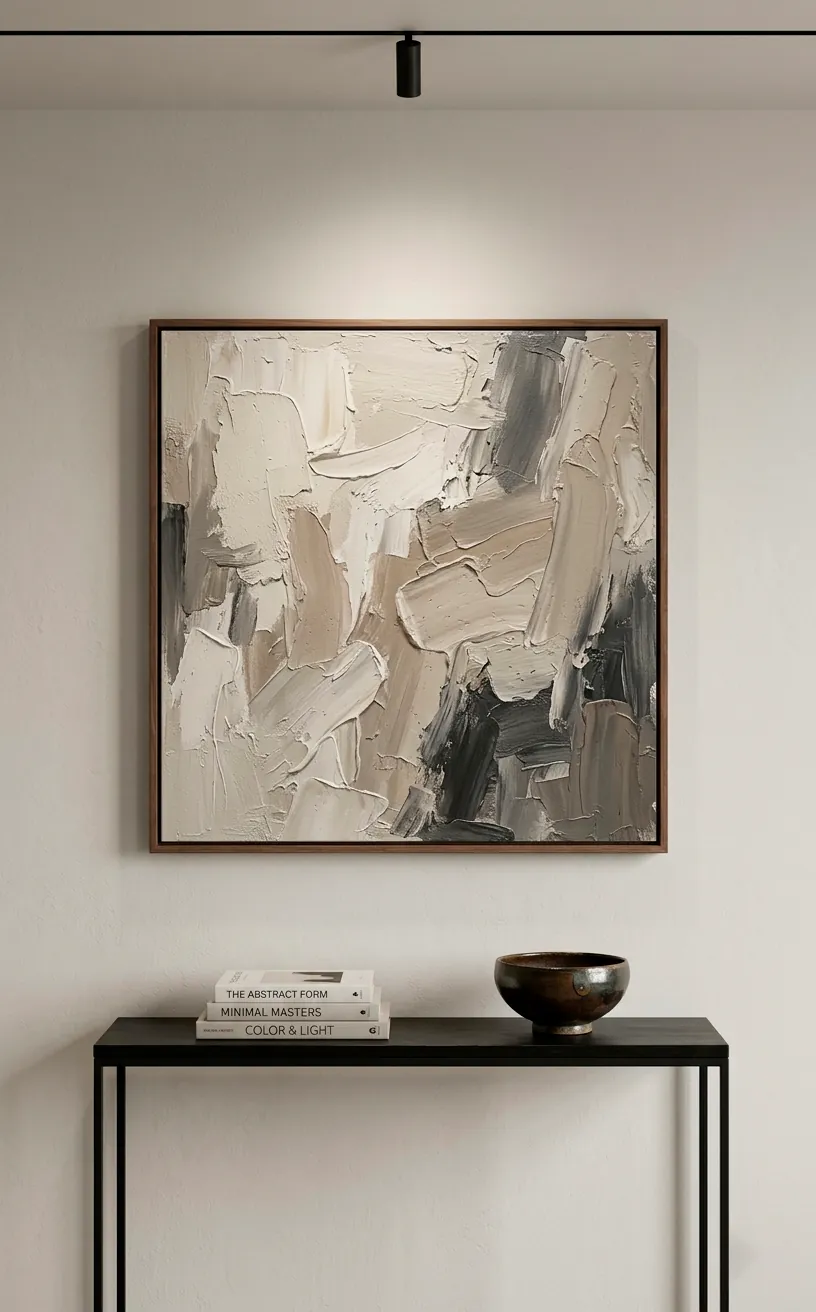
A room without personal items is just a catalog page. I’m not saying you should bring back the collection of ceramic owls, but a few well-chosen pieces make all the difference. I recommend displaying books you actually read or a single, large piece of art that means something to you. These elements act as conversation starters and add much-needed personality. A minimalist space should reflect who lives there, not just a design trend. I like to rotate my personal items every few months to keep the space feeling fresh and intentional.
Introduce Curved Furniture
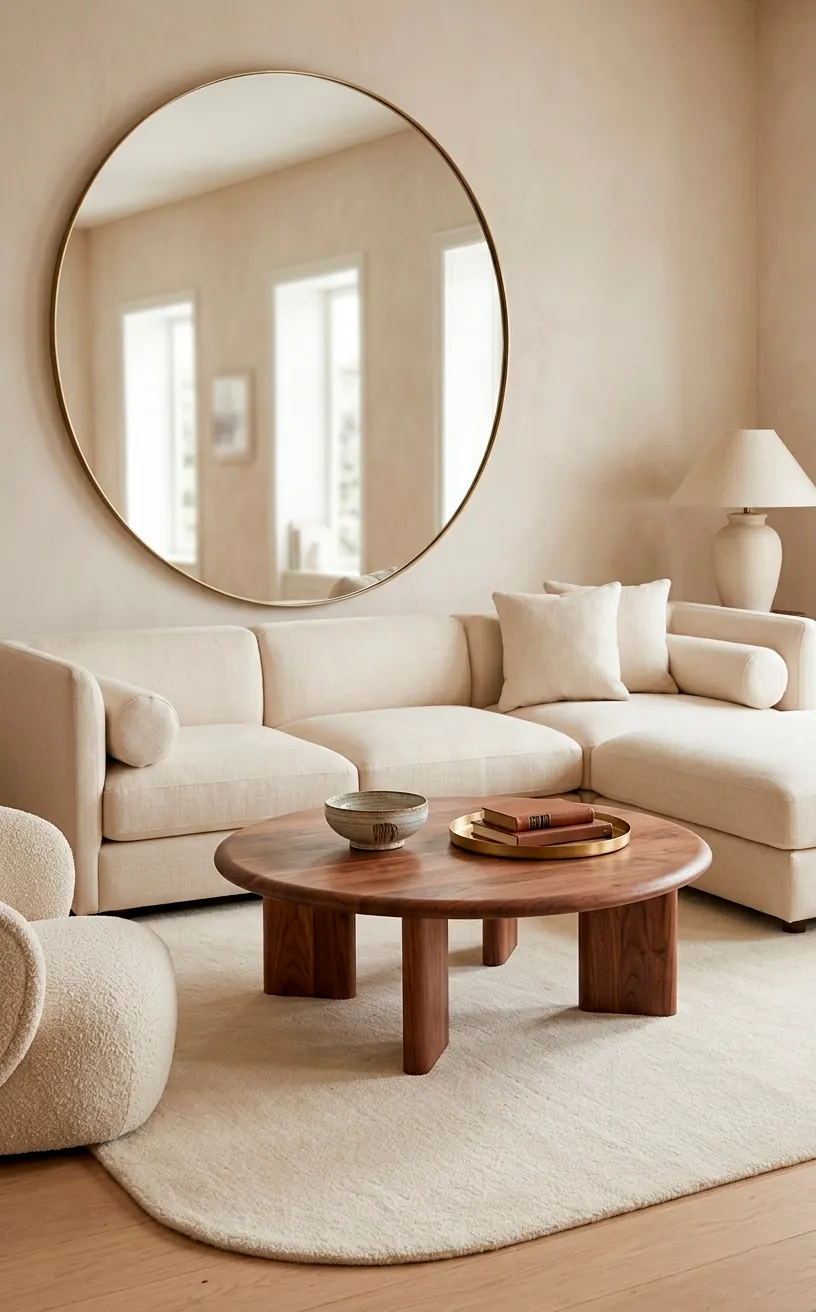
Too many straight lines and sharp angles can make a room feel aggressive and rigid. I find that adding a few curved pieces of furniture helps to ‘soften’ the visual landscape. Think about a round coffee table instead of a rectangular one, or an armchair with a curved back. These shapes mimic natural forms and feel much more approachable.
You should look for pieces that balance the straight lines of your walls and shelving. For example, a round mirror can break up the harsh verticality of a chimney breast. It draws the eye and creates a sense of flow that is much more relaxing. If you have a compact space, you might enjoy these 7 clean line furniture sets for small living rooms.
Furniture pieces to consider:
- Round solid wood coffee table
- Arched wall mirrors
- Curved-back accent chairs
Soften Windows with Linen
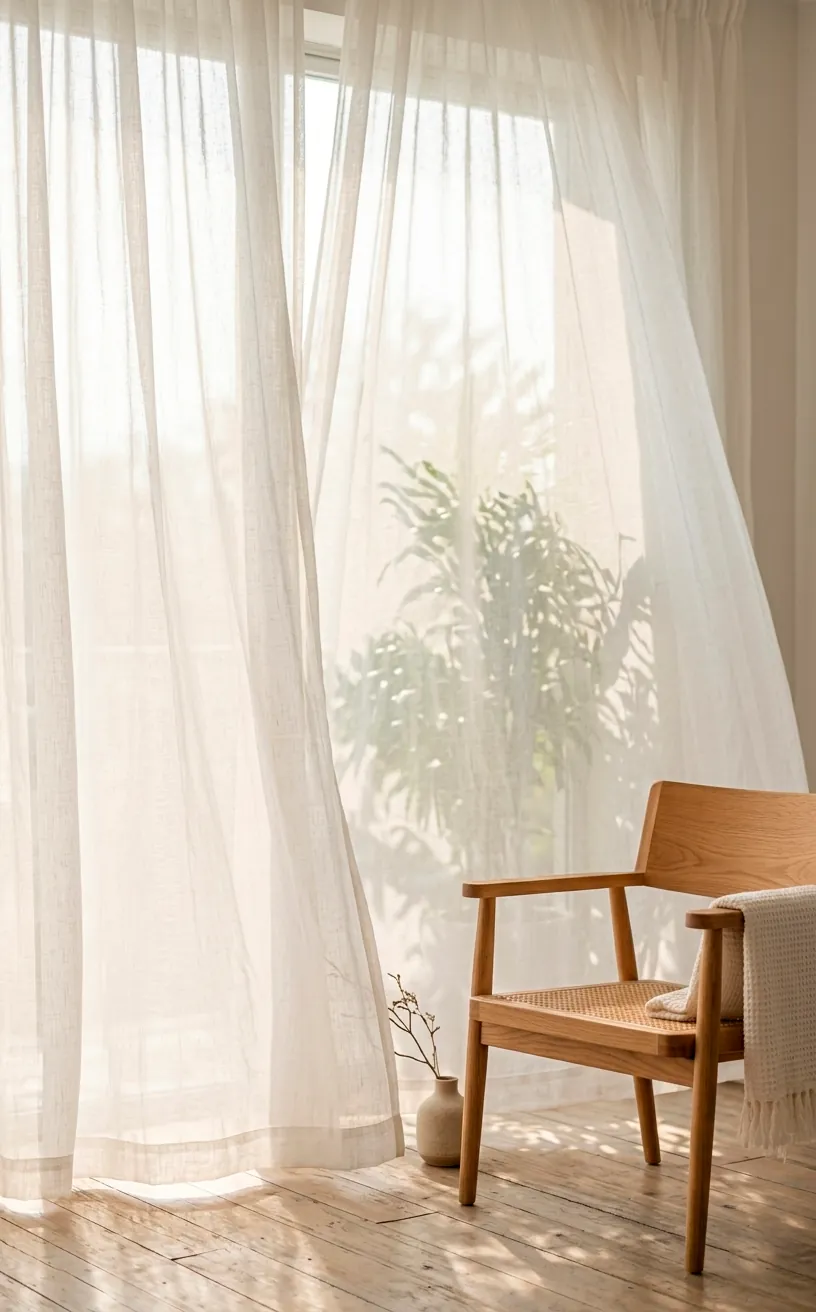
Bare windows can feel incredibly cold, especially at night when they turn into dark, black voids. I always recommend adding sheer linen curtains to filter the light and add a layer of softness to the walls. They don’t block the view or the sunlight; they just take the edge off. I find that floor-to-ceiling drapes make a room feel taller and more luxurious while keeping the minimalist aesthetic intact.
You should choose a light, breathable fabric like linen or cotton in a neutral shade. This keeps the look airy and prevents the room from feeling closed in. I love how the fabric catches the breeze on a summer afternoon, adding a sense of movement to an otherwise still room.
The Final Verdict
You don’t have to sacrifice comfort for the sake of a clean aesthetic. By focusing on texture, lighting, and a few personal touches, you can create a minimalist living room that feels like a warm hug rather than a cold shoulder. I truly believe that an intentional home is a happy home, and these small shifts will help you master that cozy vibe in no time. Which tip are you going to try first? Let me know in the comments below!