Is your TV wall looking a bit… beige? If you want to ditch the bland and embrace the bold, you’ve landed in the right spot. We are talking about the ultimate glow-up: the velvet and brass Art Deco TV wall. It is dramatic, it is textural, and frankly, it makes you look like you have your life way more together than you probably do. Let’s build a masterpiece.
The Foundation: Why Velvet Panels Win
First things first, let’s talk texture. Nothing says ‘I own a yacht’ quite like velvet. When you mount velvet panels behind your screen, you aren’t just adding a color; you’re adding depth that paint simply cannot touch. I once tried to mimic this look with matte paint, and let’s just say it looked like a high school theater set—total fail. Velvet absorbs light beautifully, which means no annoying glare on your screen during those Sunday afternoon movie marathons.
You have a few options for the layout:
- Vertical rectangular panels for a height-boosting effect
- Diamond-quilted velvet for a classic 1920s lounge vibe
- Large-scale smooth panels for a modern minimalist twist
Ever noticed how much quieter the room feels once you add fabric? Velvet doubles as a fantastic acoustic treatment, so your surround sound will actually sound like it belongs in a cinema. Trust me, your ears will thank you as much as your eyes do.
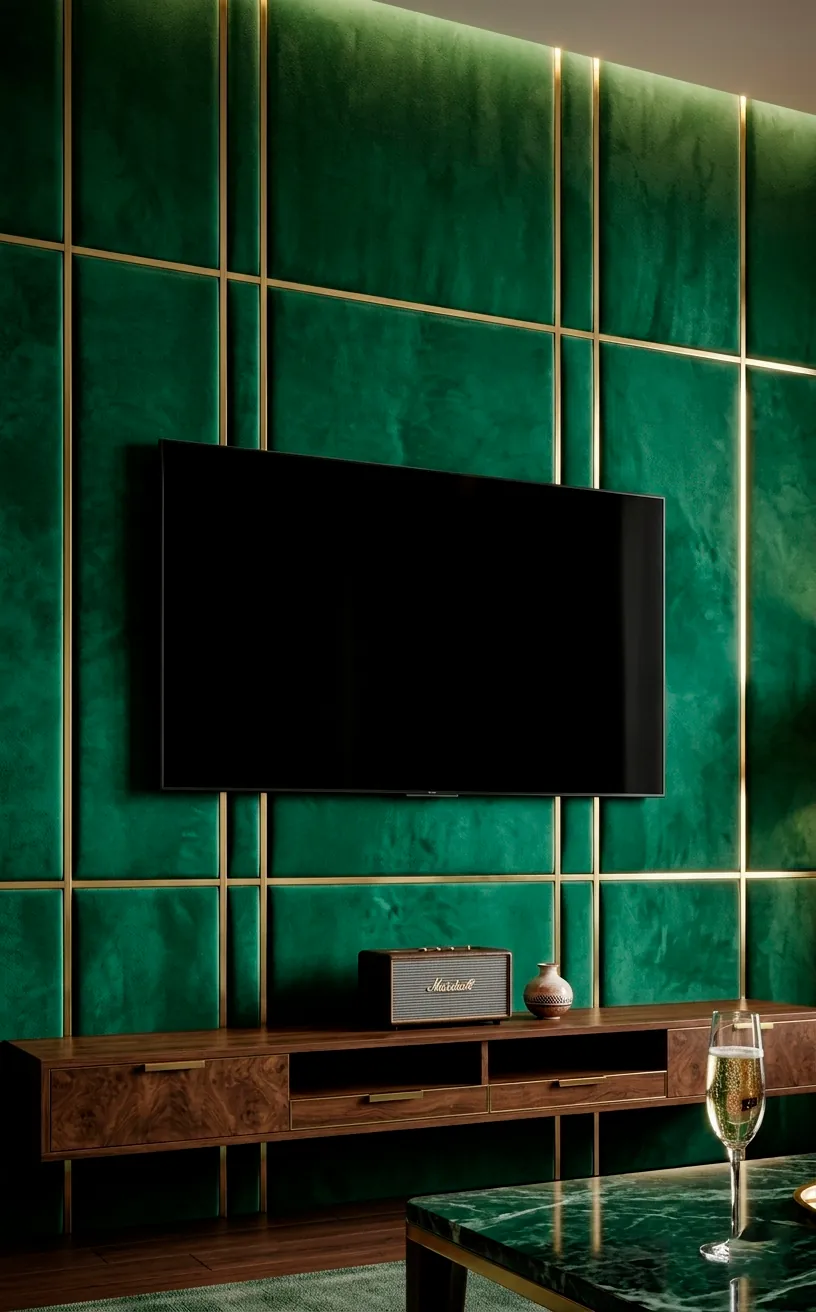
Bringing the Bling with Brass Accents
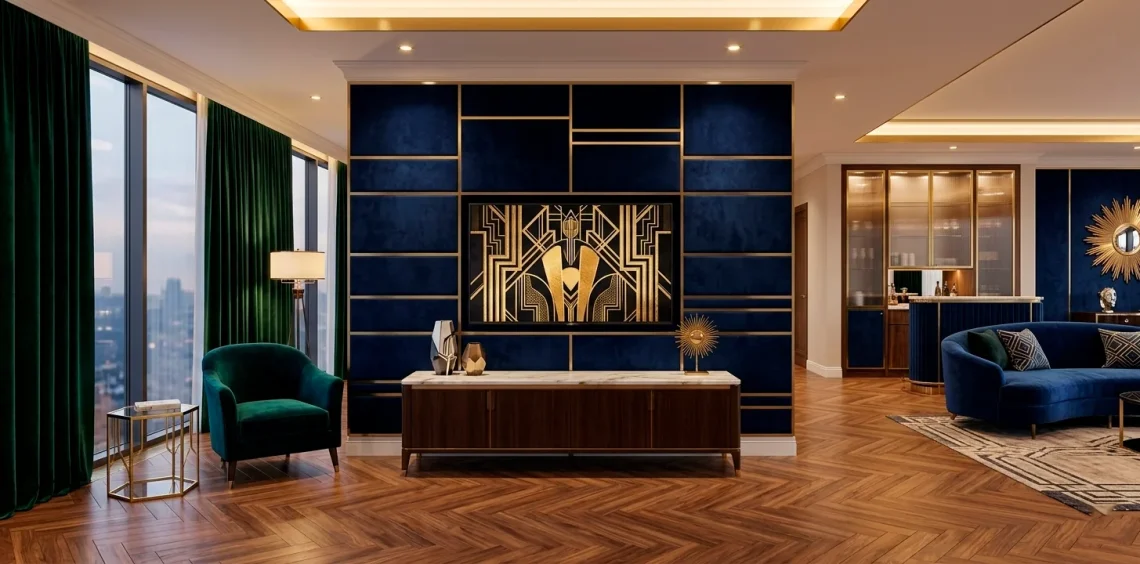
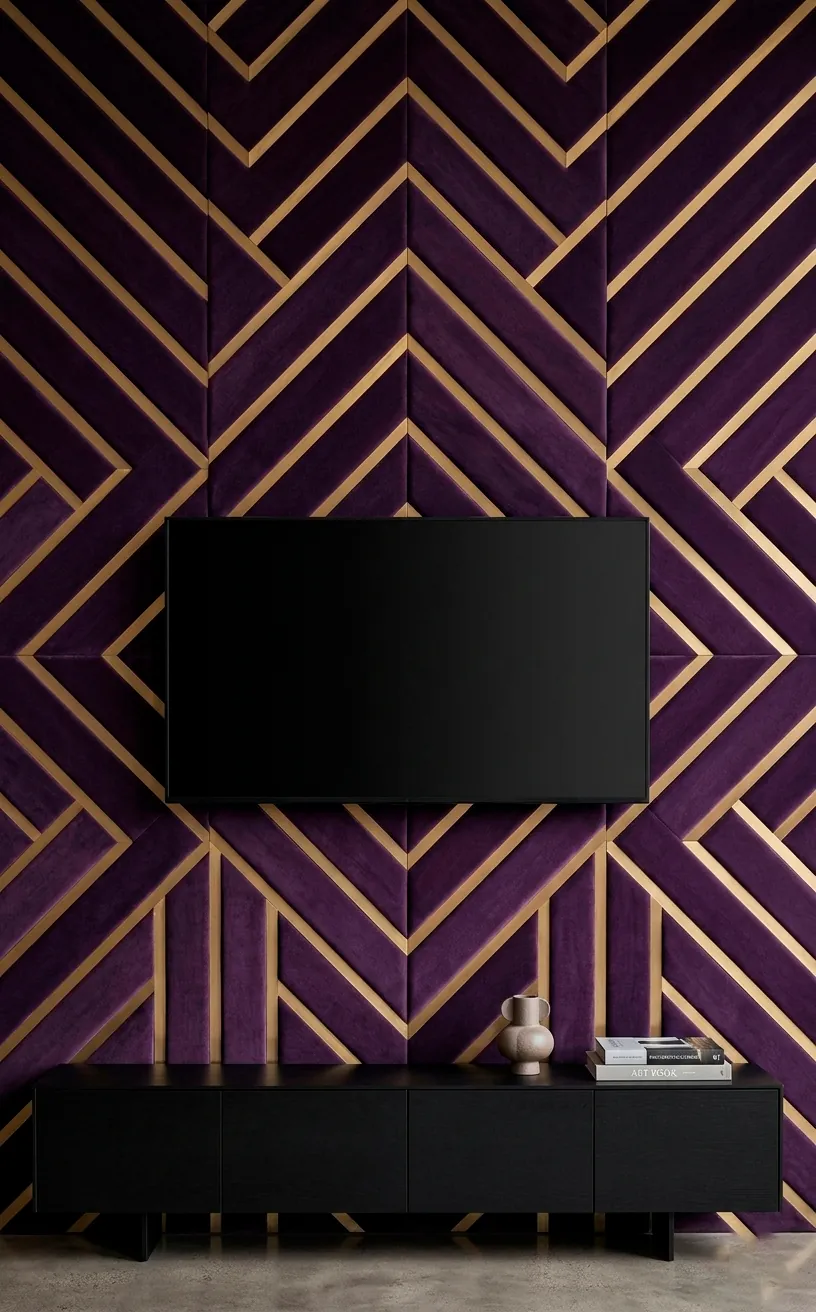
If velvet is the suit, brass is the Rolex. You cannot have one without the other in an Art Deco setup. I love using brass T-bars or flat strips to create geometric patterns across the velvet surface. It breaks up the visual weight and adds that necessary ‘pop’ of metallic light. Just don’t go overboard; you want a sophisticated lounge, not a brass instrument factory. IMO, the secret is in the finish. Go for a brushed or satin brass if you want a subtle glow, or high-polish gold if you’re feeling extra spicy. These metal accents define the geometry that makes Art Deco so iconic, framing the TV like a piece of high-priced art rather than just a plastic box for Netflix.
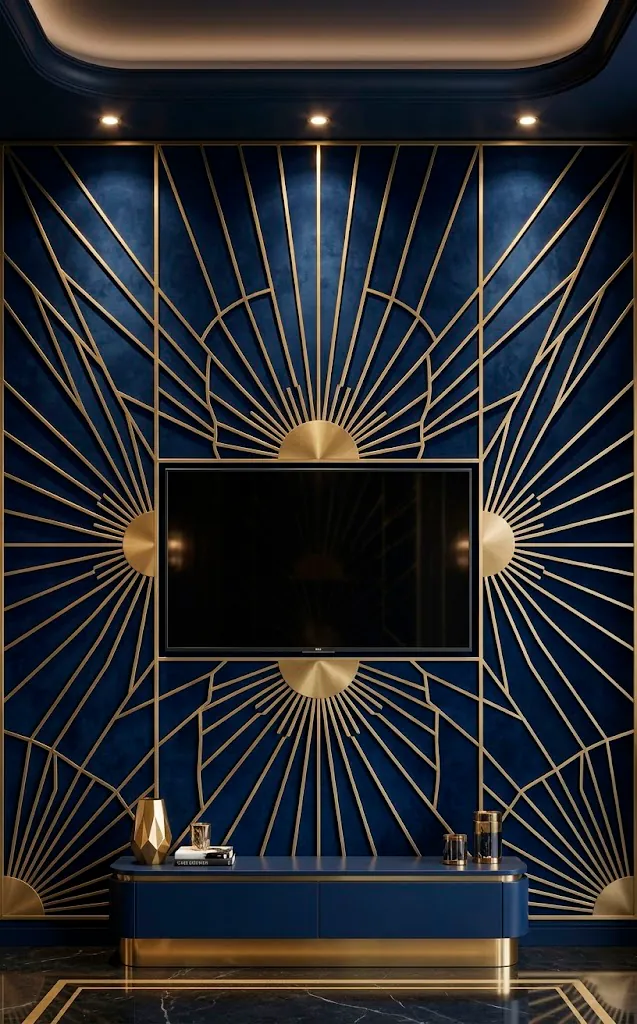
Lighting: The Secret to the Glow
Lighting is where the magic happens, folks. Seriously, why spend money on velvet if you’re going to keep it in the dark?
I recommend a three-layer approach to lighting:
- LED backlighting behind the TV to make it ‘float’
- Vertical brass sconces on either side of the wall
- Recessed ceiling spots aimed at the velvet texture
Ever wondered why some rooms feel like a hotel lobby? It’s the layers.
Directing light across the velvet creates highlights and shadows that make the fabric look three-dimensional. If you use a flat light, the velvet just looks like a dark hole in the wall.
Pro tip: Use warm white bulbs. Cool white light makes brass look like cheap tin, and nobody wants that. Keep it in the 2700K to 3000K range for that golden-hour glow all night long.
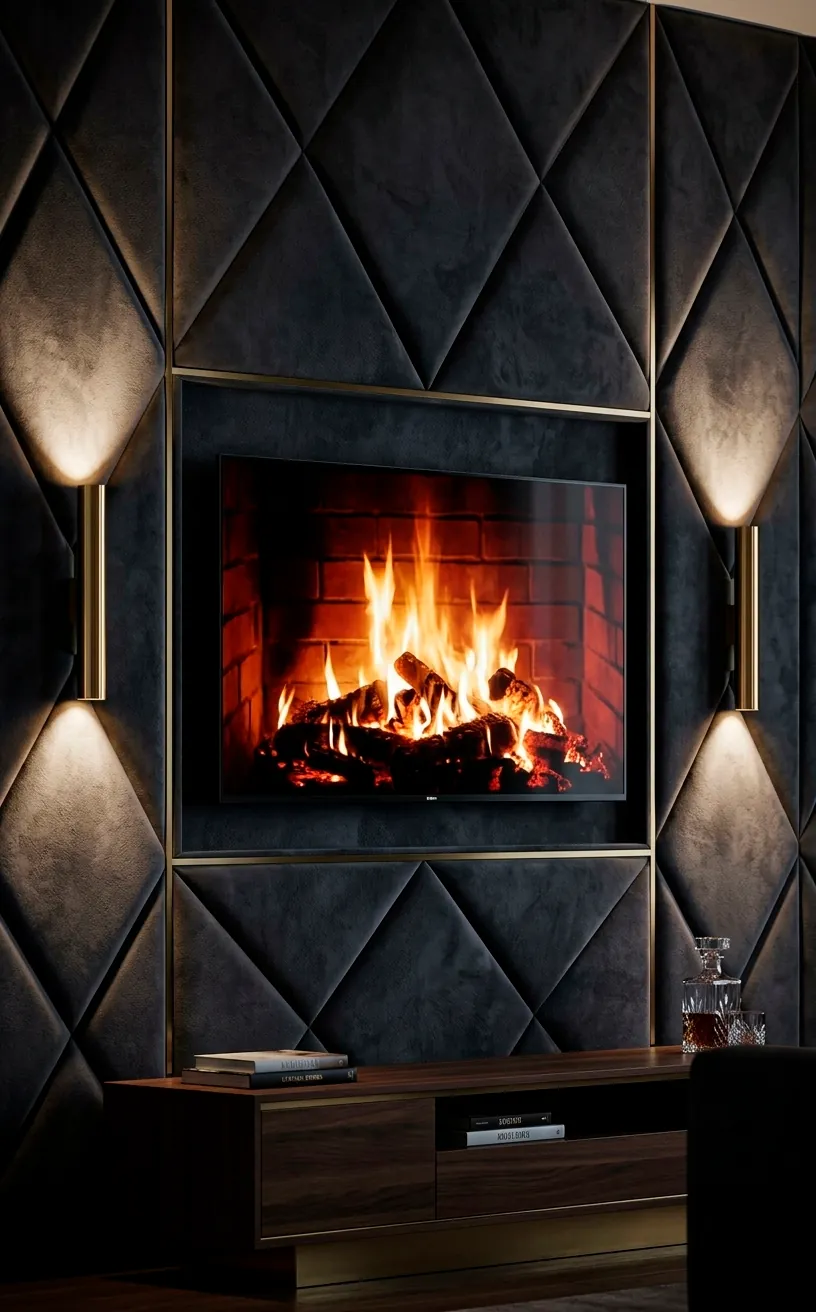
Choosing Your Palette: Jewel Tones vs Noir
Selecting your color is like choosing a personality for your room. Deep jewel tones like emerald green, sapphire blue, or amethyst are the bread and butter of Art Deco. They feel heavy, expensive, and classic. However, if you want something more ‘Bond Villain,’ go for a monochromatic noir look with black velvet and antique brass.
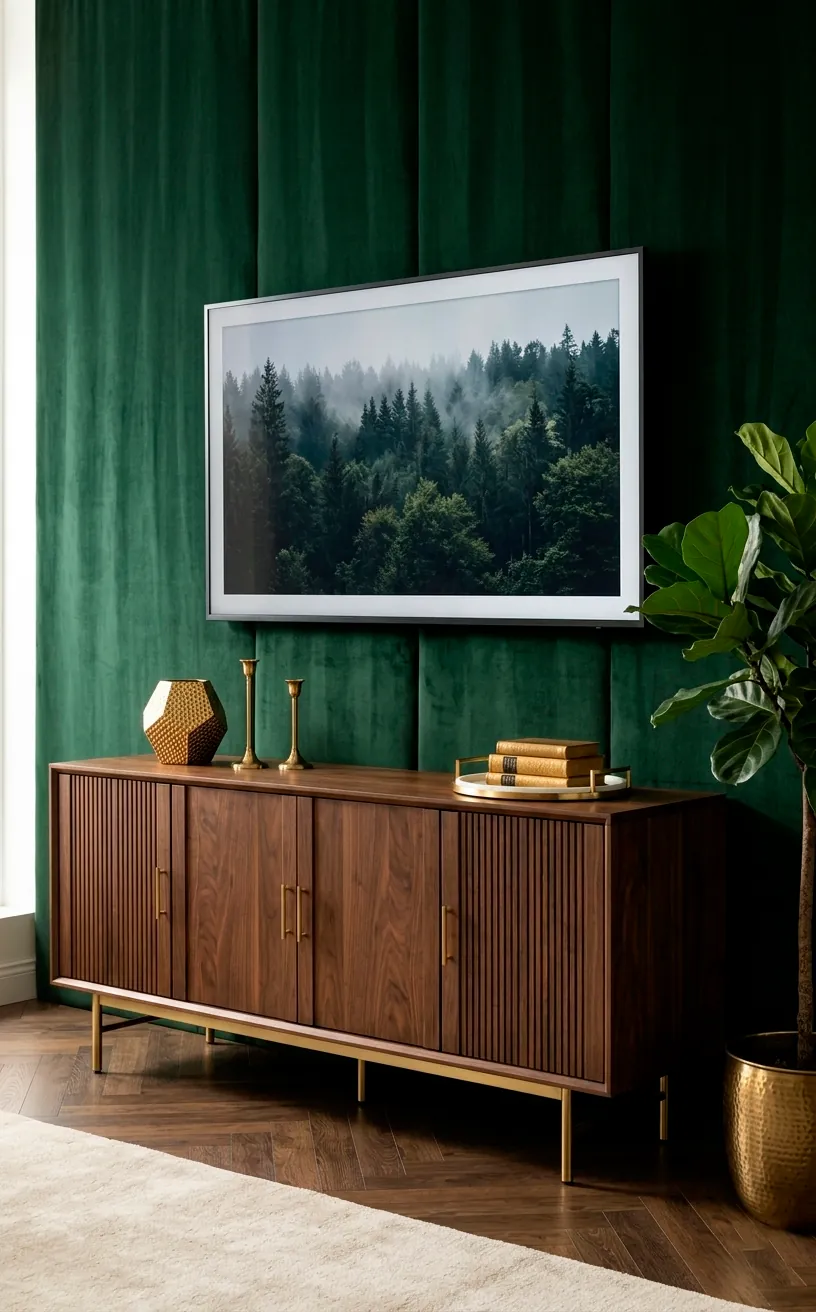
Personally, I find that emerald green hits the sweet spot because it makes the gold brass look absolutely electric. It creates a contrast that is hard to beat. If you aren’t sure which color suits your space best, you should check out these emerald green living room ideas for some major inspiration. Whatever you pick, make sure it complements your existing furniture so the wall doesn’t look like a lone island of luxury in a sea of IKEA.
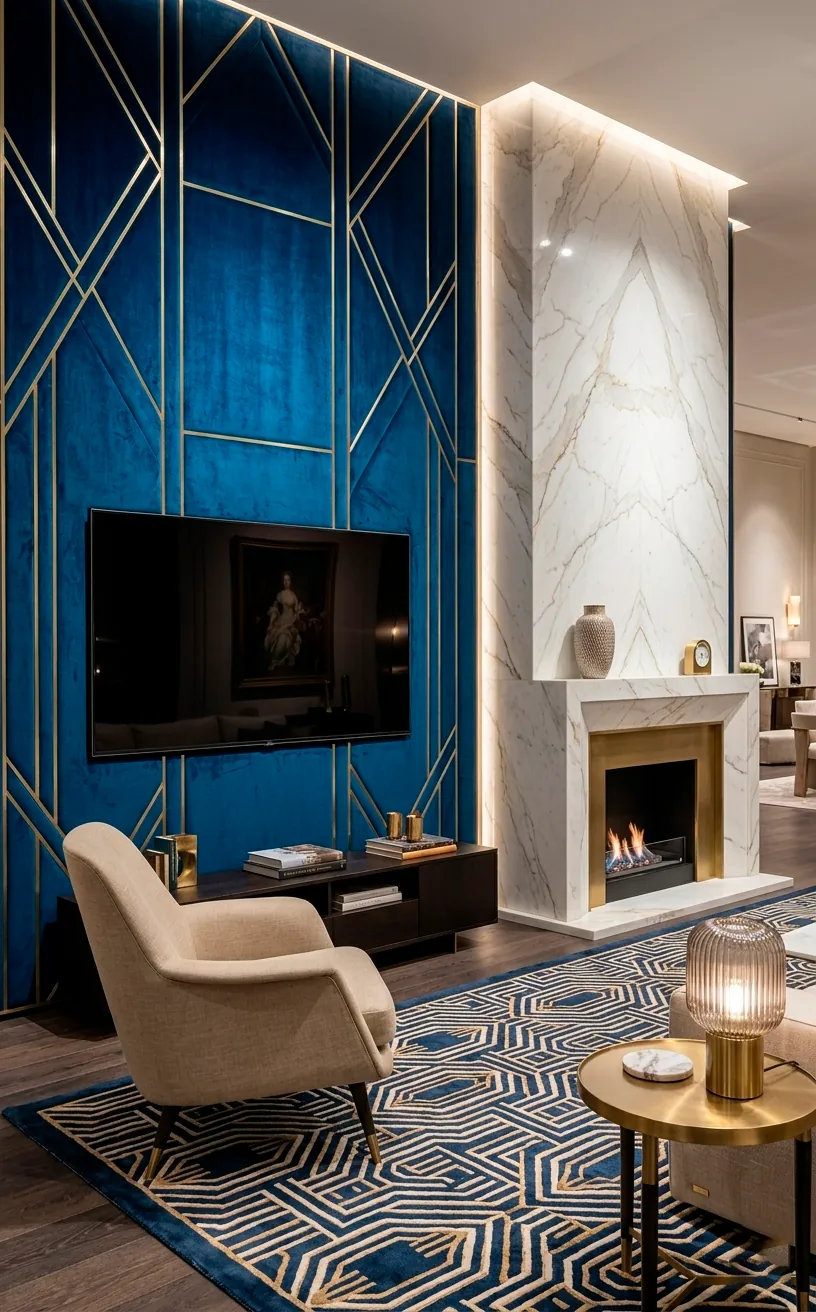
Symmetry and Geometry are Non-Negotiable
Art Deco is obsessed with order. If your brass strips are crooked, the whole vibe is ruined—trust me, my OCD cannot handle a lopsided inlay. You need to plan your lines before you even touch the glue.
Common geometric layouts include:
- The Sunburst: Radiating brass lines from the center
- The Grid: Equal rectangular panels with brass intersections
- The Chevron: V-shaped brass lines for a dynamic feel
Do you want a wall that looks like a 1920s cinema? Go for the sunburst. It draws the eye directly to the screen and makes the TV feel like part of the architecture rather than an afterthought. Use a laser level during installation unless you want your living room to look like a funhouse. Precision is the difference between ‘luxury’ and ‘DIY disaster.’
Finishing Touches: Pairing the Credenza
You’ve built the wall, but don’t just dump a plastic TV stand in front of it. That is a crime against interior design. You need a credenza that matches the energy. Look for something with fluted wood details, marble tops, or—you guessed it—brass legs. A dark walnut or a black lacquer unit usually works best against a velvet backdrop. The credenza should be wider than the TV to provide visual stability. If you want more tips on picking the right unit, take a look at how to style high gloss TV wall units for a truly polished finish. Keep the top of the credenza clear of clutter; a couple of coffee table books and maybe one sculptural vase are all you need. FYI, hiding your cable box inside the cabinet is mandatory if you want to keep the luxury facade alive.
The Final Verdict
Mastering the Art Deco TV wall isn’t just about sticking fabric to a wall; it’s about creating an experience. By mixing the soft touch of velvet with the sharp, cold glint of brass, you create a space that feels both cozy and incredibly expensive. It is a bold move, but isn’t life too short for boring walls? Now that you have the blueprint, which jewel tone are you picking for your velvet panels? Let me know in the comments, and happy decorating!