Skip to content
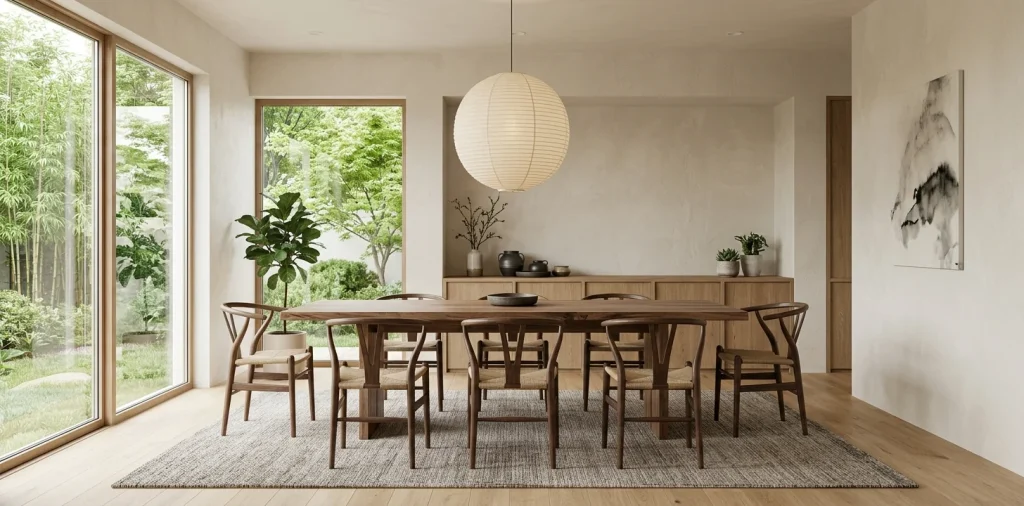
Have you ever walked into a room and felt your blood pressure instantly drop? That is the exact magic of a perfectly executed Japandi dining room. I absolutely love blending cozy Scandinavian warmth with sleek Japanese minimalism. Forget the sterile white boxes you see online. We are crafting a deeply grounding space that actually feels like a real home.
Cracking the Japandi Color Code
People often mistake neutral palettes for boring, flat grayscale nightmares. Japandi completely flips that script. We are talking about rich, complex earthy shades that wrap the room in a giant hug. You want colors that breathe life into your dining space.
Stark hospital white has zero place here.
Instead, I always reach for creamy off-whites, soft oatmeals, and muted taupes. These shades bounce natural light beautifully while keeping the atmosphere incredibly grounded. Ever noticed how a simple beige wall suddenly looks sophisticated when you pair it with the right lighting? That is the Japandi secret.

The Crucial Role of Warm Undertones
You must obsess over undertones if you want this look to succeed. Cold grays will instantly ruin the cozy vibe you are trying to build. I learned this the hard way after painting my own dining room a supposedly neutral gray that ended up looking like a concrete bunker. Always test your paint swatches against the natural light in your room at different times of the day. You need those subtle yellow, peach, or brown undertones to radiate warmth. They act as the perfect quiet backdrop for the natural materials that will eventually steal the spotlight in your beautifully curated space.
A useful little gift for your home
🎁 Free Plant Finder Tool
Filter 250+ houseplants by 6 smart criteria to find your perfect green companion.
We’ll email you the link. Plus, you’ll join our newsletter!

Layering Wood Tones Like an Absolute Pro
Wood acts as the undisputed hero in any Japandi space. You simply cannot pull off this aesthetic without bringing nature indoors.
I usually prefer mixing two distinct wood tones to avoid that dreaded matchy-matchy catalog look.
Pair a deep, rich walnut dining table with lighter white oak chairs. The contrast instantly adds visual depth without breaking the strict neutral color palette rules you set up earlier.
Always choose a matte finish over high gloss. Glossy polyurethane screams mass-produced, while natural oil finishes highlight the raw, organic beauty of the grain.

Why Texture Trumps Color Every Time
When you strip away bold colors, texture steps up to do all the heavy lifting. I rely heavily on tactile materials to keep the room from falling flat. Plaster walls, limewash finishes, and rough-hewn ceramics bring an organic, handmade feel to the dining area.
Do you want to know my favorite texture hack? Layer your textiles thoughtfully. Toss a nubby bouclé runner across the table or drape a crumpled linen cloth over the center. These small additions create shadows and highlights that mimic the complexity of color. You can even mix a few smooth stone elements with woven rattan to keep the eye moving. If you need some cozy entertaining ideas, check out these Japandi romance zen Valentines party essentials.

Securing the Ultimate Dining Table
Your dining table anchors the entire room. I highly recommend investing in a piece with strong, architectural lines. You want a design that feels both substantial and airy at the very same time.
Look for cylinder legs or sleek slatted bases. These shapes honor Japanese joinery traditions while keeping the overall profile minimal.
The surface should invite people to touch it. A live-edge slab offers incredible character, provided you balance it with ultra-minimalist seating. IMO, the table sets the baseline for your entire neutral palette. If you choose a pale ash, you can easily introduce slightly darker chairs to ground the setup visually.

Seating That Actually Speaks Volumes
Finding the right chairs often feels like a competitive sport. You need seating that looks like a sculptural masterpiece but actually forgives you for eating a three-hour holiday dinner. I absolutely swear by the classic Wishbone chair silhouette for Japandi rooms. The curved wooden back and woven paper cord seat effortlessly bridge the gap between Nordic craftsmanship and Asian simplicity. Do you prefer an upholstered option? Stick to textured fabrics in muted stone or oatmeal colors. Just remember to leave enough physical space between each chair. Japandi thrives on breathing room, so stuffing eight chairs around a six-seater table completely kills the serene vibe.

Mastering the Art of Lighting
Harsh overhead lighting instantly destroys a neutral palette.
You must embrace soft, diffused illumination to make those warm tones glow. I always hang a massive paper lantern or a matte ceramic pendant right over the dining table. It draws the eye upward and creates an intimate pool of light for your guests.
Want to nail the exact look? Hang the fixture slightly lower than you normally would.
This simple trick creates a distinct zone of warmth that highlights the natural wood grain of your table perfectly. Use warm bulbs strictly in the 2700K range. Anything cooler will cast a sad, blue tint over your carefully chosen earthy tones.

Grounding the Space With a Rug
A dining room rug defines the eating zone, especially in modern open-concept homes. I usually suggest going low-pile to avoid trapping crumbs, because nobody wants a vacuuming nightmare. A chunky jute rug or a flat-weave wool option adds that essential raw texture without overwhelming the neutral scheme.
Pay close attention to the edge binding. You want something with a very minimal border or no border at all. Subtle, abstract patterns in slightly darker greige tones work wonders here. They hide the occasional wine spill while subtly breaking up the expanse of a solid floor. Plus, the soft textile underfoot perfectly balances the hard lines of your wooden furniture.

Curating the Perfect Centerpiece
Please step away from the massive, colorful floral arrangements. Japandi styling demands strict restraint. I absolutely love using a single statement branch in an asymmetrical wabi-sabi ceramic vase.
Sometimes, a simple low bowl filled with textured moss makes an even stronger visual statement.
You want to honor the beauty of imperfection. Dried foliage, sculptural twigs, or even a grouping of unglazed pottery pieces look incredibly chic against a minimalist backdrop.
Design elements for your centerpiece:
- Hand-thrown stoneware vases
- Foraged dried branches or pampas grass
- Matte black metal candle holders

Embracing Negative Space and Art
The walls in a Japandi dining room should never feel cluttered. Silence holds just as much weight as noise in this design philosophy. I strongly suggest leaving at least one wall completely blank. When you do hang art, choose pieces that reflect the neutral palette. Think abstract plaster canvases, sumi-e ink washes, or simple charcoal line drawings. You want the art to whisper, not scream. Frame your pieces in raw oak or thin matte black metal to keep the focus entirely on the artwork itself. You do not need to spend a fortune to achieve this elevated gallery look either. If you need inspiration, explore these budget decorating hacks and 10 ways to save on art.

The Power of High-Contrast Accents
Every neutral room desperately needs a tiny punch of contrast to prevent it from looking like a giant bowl of oatmeal. I always weave small moments of charcoal or matte black into the design. It acts like eyeliner for the room, sharply defining the soft edges of your palette.
You do not need much to make an impact. A black ceramic pitcher on the credenza, dark bronze cabinet hardware, or even black dining chair frames do the trick beautifully. This deliberate contrast grounds the airy, light-filled space and injects a distinctly modern edge into the traditional Japandi aesthetic.

Keeping the Clutter Completely Hidden
You cannot have a serene Japandi experience if random mail and messy phone chargers cover your lovely dining table.
Hidden storage is absolutely non-negotiable. I always incorporate a low-profile wooden sideboard or a sleek floating credenza into my dining room designs. These pieces hide the chaotic reality of daily life while offering a beautiful surface for your curated decor.
Slatted wood cabinet doors offer a brilliant way to maintain that airy feeling while concealing the mess inside.
Discipline makes this style work. Keep the surfaces impeccably clean. FYI, walking into a perfectly tidy, beautifully neutral room at the end of the day feels incredible.

A useful little gift for your home
🎁 Free Plant Finder Tool
Filter 250+ houseplants by 6 smart criteria to find your perfect green companion.
We’ll email you the link. Plus, you’ll join our newsletter!
Conclusion
Mastering the neutral Japandi palette ultimately comes down to texture, unwavering restraint, and honoring raw natural materials. I hope this guide helps you strip away the excess and build a dining space that actually brings you profound peace. Are you ready to ditch the loud colors and embrace the calm? Let me know in the comments!