Skip to content
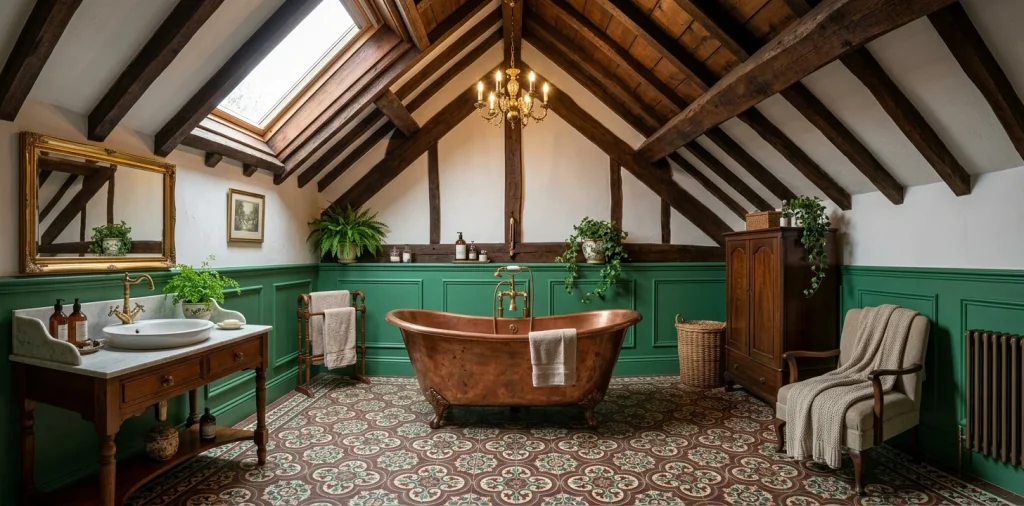
Ever looked at that awkward, slanted-roof attic space and thought it offered zero potential? Think again! Transforming a dusty top floor into a breathtaking, Victorian-style bathroom sanctuary ranks as my absolute favorite design flex right now. We are talking rich hues, dramatic clawfoot tubs, and tiles so gorgeous they belong in a museum. Ready to bring some serious opulent drama upstairs? Let’s get into it! ✨
The Classic Encaustic Floor Sweeper
Nothing screams Victorian wealth quite like a sweeping encaustic tile floor. I obsess over these intricate, matte beauties during almost every vintage renovation project.
These tiles grab your attention the second you walk up those creaky attic stairs. Opt for deep charcoal and cream geometric patterns to ground the space beautifully. They perfectly balance the tricky, sloped ceiling angles of an attic while adding instant historical charm. Honestly, if you only splurge on one single element, make it the flooring. Ever wondered why this works so well? It draws the eye downward, making the room feel significantly taller!

Emerald Green Subway Tile Wainscoting
Want to make your houseguests audibly gasp?
Wrap the lower half of your attic walls in rich, glossy emerald green subway tiles. This specific technique instantly creates that moody, gentleman’s club vibe the Victorian era popularized.
A useful little gift for your home
🎁 Free Plant Finder Tool
Filter 250+ houseplants by 6 smart criteria to find your perfect green companion.
We’ll email you the link. Plus, you’ll join our newsletter!
Using a dark charcoal grout adds phenomenal contrast and keeps the historical look authentic. Plus, it hides dirt like a dream—a huge win in my book!
The glossy finish beautifully reflects whatever natural light sneaks through your dormer windows. Just pair it with brushed brass hardware for the ultimate luxury aesthetic. If you love this dramatic vibe, check out my tips on how to design a statement powder room.

Star and Cross Patterned Accents
Sometimes you need a tile pattern that speaks softly but carries a massive stylistic punch. The classic star and cross tile configuration does exactly that. I highly recommend using these behind your vanity as an ornate, full-height backsplash. Victorians wildly popularized these interlocking Moroccan-inspired shapes during the late 19th century. They add an exotic flair that beautifully breaks up the heaviness of traditional Victorian woodwork. Choose a muted terracotta or soft sage colorway to keep the vibe relaxed yet historically accurate. It truly makes washing your face feel like a royal event!

The Checkerboard Marble Marvel
You simply cannot discuss classic opulence without mentioning the iconic black and white marble checkerboard floor. It acts as the little black dress of vintage bathroom design.
However, laying them perfectly straight sometimes feels a bit rigid in quirky spaces. Lay your marble squares on a diagonal to instantly widen a narrow attic room. The diamond illusion actively pushes the walls outward visually.
I personally love mixing polished and honed finishes here for a subtle textural surprise. It adds that expensive, custom-built look that standard ceramic squares simply cannot match. IMO, this classic never goes out of style.

Gilded Edge Mosaic Nooks
Attic bathrooms usually feature strange little alcoves and awkward dormer nooks. Instead of ignoring these quirky spots, turn them into shimmering focal points!
Line the inside of a shower niche or a window alcove entirely with tiny, gilded mosaic tiles. Gold-leaf infused glass tiles catch the overhead light beautifully and bring serious drama to a dark corner. Imagine taking a hot bath while a glowing, golden alcove elegantly holds your expensive bath salts and candles. It feels incredibly decadent. You instantly transform a structural flaw into a brilliant architectural feature.

Penny Tile with Floral Motifs
Let us talk about the true unsung hero of vintage flooring: the porcelain penny tile. Do not just throw down a boring sheet of plain white circles, though.
Create custom floral rosettes using black penny tiles scattered strategically across a pristine white background. This specific bespoke pattern dominated upscale Victorian homes and instantly signals high-end historical design.
The beauty of penny tile lies in its supreme flexibility. Consider these brilliant benefits:
- Easily hugs weird attic ceiling slopes and tight corners
- Hides uneven vintage subfloors perfectly
- Offers massive custom design potential for borders and words
It requires a bit more patience from your tile setter, but the bespoke, hand-crafted result absolutely justifies the intense labor.

Deep Burgundy Wall Tiles
We all love a deeply moody bathroom, right? Step away from the usual greens and blues and embrace the dramatic, undeniable power of oxblood or deep burgundy wall tiles.
This rich color practically drips with vintage wealth and makes a massive statement in a small room. Stack them vertically to actively draw the eye up toward the peak of your sloped attic ceiling. This simple visual trick successfully combats the claustrophobic feeling slanted walls sometimes create. I once helped a friend pair deep burgundy tiles with a massive antique brass mirror, and the final result felt like pure magic. It reads just like a romantic Gothic novel!

Ornate Border Inlays
If a fully patterned floor completely terrifies you, I have the absolute perfect compromise. Use a simple, subtle field tile for the main floor, but frame the entire room with a highly intricate Victorian border inlay.
This classic technique acts just like a beautiful rug made entirely of stone or ceramic. Run a contrasting Greek key or floral border around the perimeter of your freestanding tub to anchor it perfectly in the space. It gives the room incredible structure and gracefully highlights the unique footprint of your attic layout.
Plus, it shows your guests you care deeply about the tiny, expensive-looking details.

Ceiling-Height Zellige Wonder
Okay, I know Zellige tiles technically originate from Morocco, but wealthy Victorians absolutely loved incorporating exotic global elements into their opulent designs.
Run these beautifully imperfect, glossy squares all the way up the angled ceiling right above your shower. FYI, the irregular surface actively bounces light around the attic room in a thousand different brilliant directions.
Choose a moody charcoal or dusty plum to keep the overall vibe decidedly antique rather than coastal. The texture alone adds so much character that you barely need any other wall decor up there.

The Classic Hexagon Mix
Hexagon tiles offer a phenomenal alternative to standard squares when you want historical accuracy with a slight stylistic twist.
Mixing matte black and white hexagons into a randomized, “falling snow” pattern brings a slightly modern edge to a strictly Victorian space. I find this pattern incredibly forgiving on wonky attic floors! It gives off a charming, slightly distressed vibe that loudly suggests the bathroom hid up there untouched for a century. Pair this floor with a high-tank pull-chain toilet, and you completely nail the vintage aesthetic.

Textured Lincrusta-Style Tiles
Victorians deeply adored Lincrusta—a heavily embossed wall covering that imitated carved wood or stamped leather. Today, you can easily capture that exact same luxurious look using heavily textured, 3D relief ceramic tiles.
Install these tactile beauties as a durable wainscoting alternative around your vanity area. Paint them in a rich, saturated hue or buy them pre-glazed in deep sapphire blue.
They add an unbelievable amount of tactile interest to plain walls. When the morning sun hits those raised geometric patterns, the dramatic shadows they cast look absolutely mesmerizing.

Brass-Inlaid Marble Hexagons
Ready for the ultimate, jaw-dropping luxury upgrade?
Combine natural Carrara marble hexagon tiles with thin strips of real brass inlay. Yes, it certainly costs a pretty penny, but the results genuinely stop people in their tracks.
The brass strips actively patina over time, which only enhances that authentic, lived-in Victorian charm we constantly chase in historical renovations.
I suggest using this show-stopping material strictly inside the shower enclosure. It elevates your daily rinse into a five-star luxury hotel experience. Honestly, who wouldn’t want that? 🛁

Delft Blue Storybook Tiles
For those who prefer a softer, more romantic take on Victorian decor, Delft blue and white pictorial tiles definitely serve as your best friend.
These tiny, hand-painted squares feature intricate landscapes, sprawling florals, or vintage animals.
Use them sparingly as delicate accent pieces mixed seamlessly into a solid white subway tile backsplash. They provide the perfect dose of whimsy without visually overwhelming the small attic space. I remember seeing these in a famous historic home tour, and they totally stole my heart. They give the bathroom a beautifully collected, curated feel, like you spent years hunting down antique treasures at damp European flea markets.

Mirrored Glass Accent Tiles
Attics notoriously lack natural light. To fiercely combat this while maintaining maximum opulence, introduce antiqued mirror glass tiles into your design scheme.
Install a splash of foxed mirror tiles right behind your freestanding bathtub or makeup vanity. The distressed, smoky finish of the glass loudly screams Victorian antiquity while simultaneously bouncing precious light all around the dark room. It creates a stunning illusion of extra square footage, making your cramped eaves feel like a grand, expansive parlor. It acts as a sneaky designer trick that pays off massively!

Rich Terracotta Core
Let us end on an incredibly warm note! Victorian builders frequently used unsealed, natural terracotta tiles in utility spaces, but elevating them in a main bathroom brings unbelievable earthy warmth.
Lay them in a classic herringbone pattern across the entire attic floor.
The rich baked clay tones contrast spectacularly with heavy, dark wood vanities and shiny unlacquered brass plumbing fixtures. It successfully provides a grounded, rustic counterpoint to the more glamorous, shiny elements of the room. If you want to keep your bathroom feeling cozy year-round, you absolutely cannot go wrong here. For a similarly cohesive look in tight, tricky spaces, check out my comprehensive guide to climate controlled attic storage.

A useful little gift for your home
🎁 Free Plant Finder Tool
Filter 250+ houseplants by 6 smart criteria to find your perfect green companion.
We’ll email you the link. Plus, you’ll join our newsletter!
Conclusion
There you have it! Transforming an awkward attic space into a Victorian-tiled dreamland requires embracing rich textures, bold patterns, and deeply dramatic details. Whether you confidently opt for emerald subway tiles or a classic marble checkerboard floor, your top-level sanctuary will feel totally luxurious. Which of these opulent ideas are you grabbing first? Let me know in the comments!