Skip to content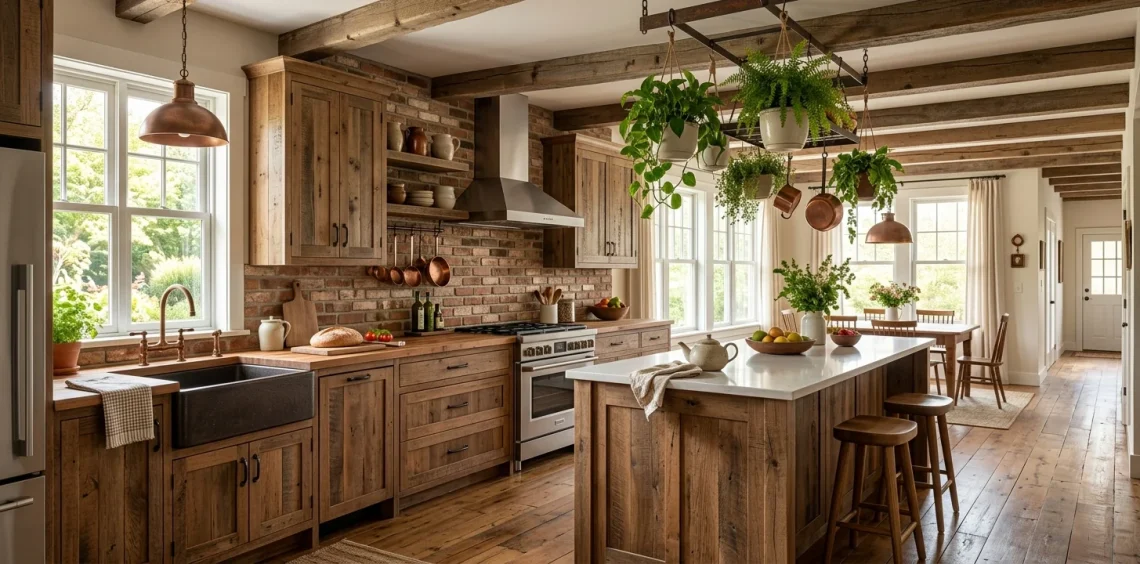
Are you tired of kitchens that look exactly like every other modern showroom? I completely get it. Building an eco-friendly rustic kitchen isn’t just about saving trees; it’s about giving your space serious soul. You want character, warmth, and a room with an amazing backstory. Grab your tool belt, because we are hunting for some gorgeous reclaimed materials today! ???
The Beauty of Salvaged Wood
You simply cannot fake the glorious patina of hundred-year-old barn wood. Those deep grooves and nail holes bring instant texture to an otherwise sterile room.
Ever wondered why this old wood holds up so beautifully? Old-growth lumber features a ridiculously dense grain that modern tree farming just cannot replicate. IMO, it absolutely anchors the whole rustic vibe. Top perks:
- Exceptional durability against daily kitchen wear.
- Totally unique color variations.
- Zero new trees cut down.
It firmly anchors your eco-friendly rustic kitchen with undeniable warmth. Plus, giving these sturdy planks a second life keeps them entirely out of the local landfill. You rescue history while saving the planet.

Hunting at Architectural Salvage Yards
Walking into a local salvage yard feels exactly like entering a messy, glorious museum. You dig through dusty piles, and suddenly, you spot the perfect pair of corbels for your breakfast bar. Bring a tape measure, a strong pair of gloves, and plenty of patience. The staff usually know the exact origin of every single item, so ask them questions! They might point you toward freshly arrived beams from an old local factory. Building relationships with these unsung heroes gives you first dibs on the best rustic treasures before anyone else even sees them.
A useful little gift for your home
🎁 Free Plant Finder Tool
Filter 250+ houseplants by style, size, and care level to find your perfect green companion in seconds.
We’ll email you the link. Plus, you’ll join our newsletter for fresh home inspiration.

Navigating Online Marketplaces
Do not underestimate the power of your smartphone when hunting for building materials. Facebook Marketplace and Craigslist hold absolute goldmines if you check them consistently.
Timing is absolutely everything here. People list leftover renovation materials on Sunday evenings, so set your alerts accordingly!
You must act fast and communicate clearly. I once scored gorgeous copper hardware because I messaged the seller within three minutes of the post going live.
Pro tips for digital hunting:
- Always ask for exact dimensions beforehand.
- Verify if the wood contains any hidden nails.
- Negotiate respectfully; kindness goes a long way.

Repurposing Antique Bricks
A reclaimed brick backsplash transforms a plain wall into a staggering focal point. You get this phenomenal variation in color-from faded terracotta to deep charcoal-that modern manufactured bricks completely lack. Masonry yards often sell these by the pallet, and they look stunning behind a massive range or framing a cozy kitchen window.
Just remember, you must seal vintage bricks properly. Kitchens generate ridiculous amounts of grease and moisture, and unsealed porous clay absorbs everything. Grab a high-quality matte masonry sealer to protect that raw, earthy texture. It keeps the cleanup easy while preserving that rugged charm we all obsess over.

Finding Reclaimed Metal Accents
Wood and brick look amazing, but a truly balanced eco-friendly rustic kitchen desperately needs some metal to break up the heavy textures.
Seek out oxidized copper sheets, old corrugated tin, or wrought iron brackets. You can easily repurpose an old iron gate as a custom pot rack suspended above your giant island. It sounds a little crazy, but it looks incredibly chic in person.
Do not polish away the gorgeous patina! That slight tarnish or safe surface rust provides the exact industrial edge a rustic space requires. Just seal the metal tightly so it never flakes into your morning oatmeal.

The Magic of Vintage Sinks
Nothing screams rustic charm quite like a massive, cast-iron farmhouse sink rescued from a 1920s estate. You can easily hire a professional to reglaze these beauties for a fraction of the cost of buying a new one. They handle massive stockpots with zero issues and anchor your cleanup zone beautifully. I swear by them! Keep an eye out for interesting wall-mounted hardware or unique basin shapes while you hunt. A beautifully restored vintage sink serves as the ultimate crown jewel of your countertops. Just ensure your base cabinets can actually support the massive weight of cast iron.

Sourcing Recycled Glass Counters
Let us shift gears from old barns to brilliant modern recycling. Have you seen countertops made from recycled glass bottles?
They embed crushed glass into a durable resin or cement base, creating this mesmerizing, terrazzo-like surface.
It gives you that smooth, clean workspace without sacrificing your eco-friendly mission. Plus, you can customize the color palette to match your salvaged wood perfectly.
Choose muted greens or amber pieces to complement the rustic vibe, rather than overly bright neon shards. It strikes the perfect balance between earthy warmth and clean, contemporary function.

Upcycling Old Doors into Pantries
Why install a generic, hollow-core pantry door when you can hang a heavy, solid-wood antique? Finding an old door with peeling chippy paint or gorgeous stained glass immediately elevates the entire room. You simply mount it on some heavy-duty sliding barn door track hardware to save precious floor space.
I highly recommend checking architectural salvage yards for doors with their original brass knobs still attached. You preserve a tiny piece of craftsmanship history while hiding your giant stash of snacks perfectly. It functions as a massive, moving piece of art! ?? If you want to make the inside look just as amazing as the outside, you should decorate your walk-in pantry with some gorgeous wallpaper.

Checking for Hidden Toxins
We need to have a quick, serious chat about safety. FYI, older materials often hide nasty surprises like lead paint or harsh chemical treatments. You absolutely must test any painted surfaces for lead before you start sanding or cutting indoors. Buy a simple, cheap testing kit from the hardware store-it saves you from massive health headaches later. If a piece tests positive, hire a professional to strip it safely or simply seal it completely under a clear epoxy coat. Never mess around with mysterious dust in the place where you chop your vegetables.

Tying the Whole Room Together
Now that you gathered all these wildly different elements, you must unify them. The trick lies in balancing the heavy textures.
If you feature highly distressed cabinets, choose a slightly smoother countertop material to rest the eyes. You want an eco-friendly rustic kitchen, not a messy chaotic lumberyard.
Mix in plenty of fresh green plants and warm ambient lighting. A cohesive design weaves these random rescued pieces into a single, beautiful narrative. Have fun playing with the arrangement until the space feels like a welcoming, lived-in sanctuary. And hey, if you need lighting inspiration, definitely explore some soft lighting ideas for a relaxing evening vibe.

A useful little gift for your home
🎁 Free Plant Finder Tool
Filter 250+ houseplants by style, size, and care level to find your perfect green companion in seconds.
We’ll email you the link. Plus, you’ll join our newsletter for fresh home inspiration.
Conclusion
Building a gorgeous, earth-conscious cooking space requires patience, a bit of elbow grease, and a sharp eye for hidden potential. You completely avoid the generic big-box store look while keeping beautiful materials out of the trash. I firmly believe the thrill of the hunt makes the final result infinitely more satisfying. Which rescued material are you grabbing first? Let me know in the comments!