Skip to content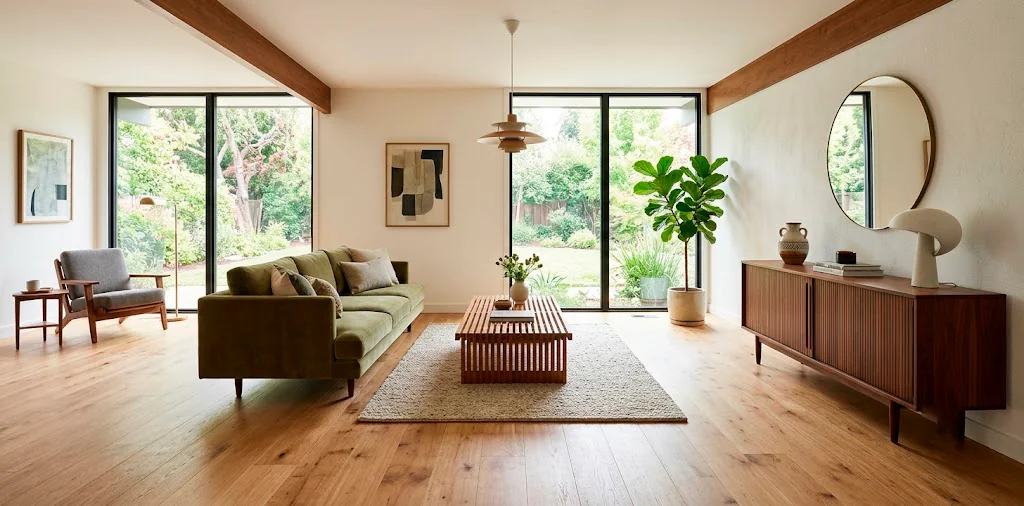
Have you ever stared at a beautiful walnut coffee table and wondered if it will completely clash with your oak floors? I remember freezing in the furniture aisle, absolutely terrified of making a costly mistake. Mixing different wood tones feels intimidating, but matching everything just looks like a cheap motel. Let me show you how to blend woods seamlessly.
Start With a Dominant Tone
Every successful room needs a boss. You must pick one primary wood tone to anchor your entire space. Usually, your flooring dictates this dominant shade, but a massive dining table or bulky built-in cabinets can also claim the throne.
Once you identify this main player, every other wood piece you bring into the room acts as a supporting character.
Think of it like a movie cast. You wouldn’t put three dramatic lead actors in the exact same scene, right? They would aggressively fight for attention. Choose your star, and let the other wood tones play nice in the background.

Identify Your Undertones
Now things get slightly technical, but stick with me. Woods have distinct undertones, much like makeup or paint. You will generally find warm undertones (yellow, orange, or red hues like cherry and pine), cool undertones (grey or ashy hues), and neutral undertones (versatile walnuts). The golden rule of mixing different wood tones is to keep your undertones consistent. If your dominant floor boasts a warm, honey-like glow, you should totally pair it with other warm woods. Mixing warm and cool woods side-by-side often creates a jarring, accidental vibe. IMO, identifying these subtle hues saves you from serious buyer’s remorse.
A useful little gift for your home
🎁 Free Plant Finder Tool
Filter 250+ houseplants by style, size, and care level to find your perfect green companion in seconds.
We’ll email you the link. Plus, you’ll join our newsletter for fresh home inspiration.

Embrace High Contrast
Want to know a rookie mistake? Picking a second wood tone that almost matches your dominant wood, but misses the mark by just a shade. It looks like a frustrating mistake rather than a deliberate design choice.
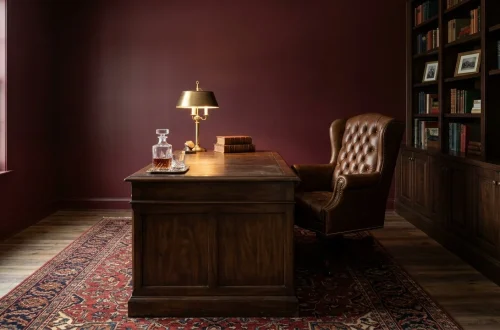
Instead, you must go for high contrast. Pair a dramatically dark espresso cabinet against a light, bleached oak floor. This bold difference creates intentional depth and highlights the unique beauty of both pieces. If you need some visual inspiration on making deep shades work, check out this guide on mastering moody decor with dark wood and brass.

Use a Rug as a Buffer
Sometimes, two wood pieces just refuse to get along.
Maybe you inherited a gorgeous mahogany dining table that completely clashes with your ash flooring. Do you throw the table out? Absolutely not.
You simply need a visual buffer. A large, textured area rug instantly breaks up the friction between conflicting woods.
The rug acts as a neutral boundary line. It stops the eye from directly comparing the table legs to the floor planks. Problem solved, and you get to keep your sanity!

Stick to the Rule of Three
Don’t get carried away with your new mixing skills. A cohesive room maxes out at three distinct wood tones. Your dominant wood counts as one, leaving you room for two accent woods. Adding a fourth or fifth tone crosses the line from “curated eclectic” to “chaotic thrift store explosion.” Keeping your palette limited to three variations ensures your home feels grounded and intentional. If you push past three, your eyes won’t know where to rest. So, pick your top three and rigorously ignore the rest!

Distribute the Tones Evenly
Balance is everything in interior design. If you place all your dark walnut pieces on one side of a room and leave the light oak items on the other, your space will look incredibly lopsided.
You need to scatter your secondary wood tones throughout the room.
Place a dark wood picture frame above a light wood console table. Put a matching dark wood side table on the opposite end of the sofa. Repeating a specific tone at least twice creates a satisfying visual rhythm that tells guests, “Yes, I totally planned this.”

Soften the Look with Painted Pieces
Wood fatigue is a real thing. Too much grain, even when mixed perfectly, makes a room feel heavy and overwhelming. You can instantly cure this by dropping in a few solid painted pieces.
A sleek matte black chair or a crisp white media console breaks up the endless sea of brown. These solid colors give your eyes a much-needed break and actually make your carefully chosen wood tones pop even more. FYI, black is essentially the ultimate neutralizer for rowdy wood grains. It grounds the space effortlessly.

Pay Attention to Wood Finishes
We spend so much time obsessing over colors that we forget about the finish. High-gloss lacquered mahogany brings a totally different energy than raw, reclaimed barn wood. While you can mix different colors, you should try to keep the finishes somewhat related. A room full of matte, open-grain woods feels incredibly cohesive, even if the colors vary wildly. Combining super shiny, polished woods with rustic, heavily distressed pieces often confuses the room’s overall vibe. If you are breathing new life into an old glossy thrift find to match a matte room, check out this ultimate guide to restoring vintage furniture for your living space.

Incorporate Other Natural Textures
Woods love hanging out with other natural materials. If your wood tones feel a bit stiff or disconnected, introduce different organic textures to bridge the gap. Leather, stone, rattan, and woven cotton work miracles here.
Try these texture pairings:
- Woven rattan baskets: Perfect for warming up cool, ashy floors.
- Cool marble coasters: Sharp contrast for warm, orange-toned tables.
- Brown leather: Ties mismatched mid-century legs together beautifully.

Trust Your Own Eye
At the end of the day, rules exist to guide you, not to trap you. I have seen incredibly stylish rooms that brutally violate every single guideline I just mentioned. If you find a combination of mismatched woods that makes your heart sing, you should absolutely roll with it. Confidence is the ultimate interior design hack. Your home reflects your personal journey, not a sterile showroom catalog. So, grab those contrasting pieces, move them around until they feel right, and enjoy your beautifully layered space! 🤷♀️

A useful little gift for your home
🎁 Free Plant Finder Tool
Filter 250+ houseplants by style, size, and care level to find your perfect green companion in seconds.
We’ll email you the link. Plus, you’ll join our newsletter for fresh home inspiration.
Conclusion
Mixing different wood tones doesn’t require a design degree, just a little strategy and a lot of confidence. By identifying your dominant tone, matching undertones, and playing with contrast, you can create a richly layered home. Which wood combo are you grabbing first? Let me know in the comments below!