Skip to content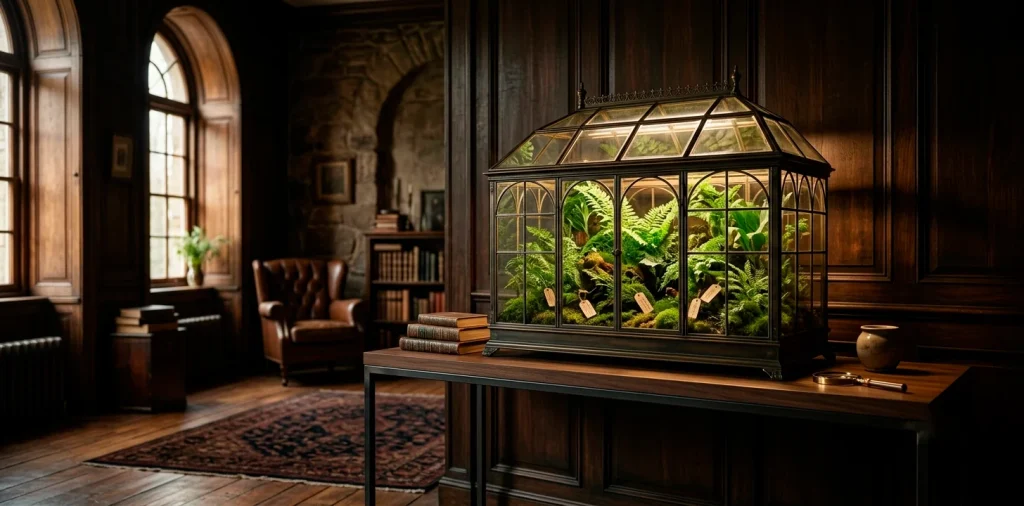
You finally scored that breathtaking Luna moth specimen, and now you face a serious problem. Leaving it exposed to dust and humidity guarantees a heartbreaking disaster. I learned this the hard way after ruining a gorgeous vintage beetle. Victorian glass cases offer the perfect solution. They protect your fragile treasures while adding major visual drama.
The Magic of Wardian Cases
Ever wondered how Victorian explorers kept rare orchids alive during grueling sea voyages? They invented the Wardian case. Nathaniel Bagshaw Ward accidentally created these enclosed glass terrariums, and they quickly became a massive craze. I genuinely believe these miniature greenhouses look just as spectacular today.
You can easily repurpose these architectural beauties to display your dry specimens or fragile antiques. The brass framing and pitched glass roofs instantly elevate anything you place inside. These cases naturally command attention, forcing guests to stop and admire your collection. Plus, they lock out curious pets who view your precious taxidermy as chew toys.

Why Glass Domes Still Rule
Classic glass cloches, or domes, offer unbeatable simplicity. You just place your item on the wooden base, drop the heavy glass cover over it, and instantly create a museum-quality exhibit. I keep my favorite piece of raw amethyst under a tall vintage dome, and it catches the morning light beautifully. These domes excel at showcasing vertical objects like tall crystals, mounted insects, or delicate coral branches. If you want a clean, 360-degree view without any metal framing blocking the shot, a glass cloche wins every single time.
A useful little gift for your home
🎁 Free Plant Finder Tool
Filter 250+ houseplants by style, size, and care level to find your perfect green companion in seconds.
We’ll email you the link. Plus, you’ll join our newsletter for fresh home inspiration.

Controlling the Climate Like a Pro
Environmental damage destroys more rare items than clumsy handling ever will. Fluctuating humidity warps delicate paper, encourages mold on organic matter, and tarnishes antique metals.
You need to control the microclimate inside your display.
Best moisture control supplies:
- Mini silica gel packets
- Digital hygrometers
- Acid-free display cushions
I highly recommend hiding a few silica gel packets beneath a layer of decorative moss or velvet at the base of your case. You must also monitor the situation closely. Slip a miniature digital hygrometer behind your main display piece to ensure the humidity stays balanced. If you love surrounding your cases with lush greenery, you can even carry that natural vibe throughout your space by reading our 15 botanical prints green dining room guide.

Displaying Oddities Without Looking Creepy
Curating a collection of bones, vintage medical tools, or taxidermy easily crosses the line from intriguing to downright terrifying.
You avoid the haunted house aesthetic by leaning heavily into elegance. Use Victorian glass displays to frame these oddities as scientific marvels rather than Halloween props.
The glass barrier creates psychological distance, telling the viewer they are looking at a respected artifact. IMO, resting a fragile skull on a tufted velvet cushion inside a sleek brass-edged box makes it look incredibly sophisticated. 💀

Lighting Your Treasures Safely
Throwing a hot spotlight on your rare specimens guarantees a fast track to ruin. Heat degrades organic materials and fades brilliant colors in record time. You must use LED lighting exclusively. LEDs generate virtually no heat and come in beautifully warm color temperatures.
I tape tiny, battery-operated LED fairy lights along the inside ridges of my larger Wardian cases. This creates a magical, glowing effect that highlights every intricate detail of the display without putting your artifacts at risk.

Maintenance and Cleaning Hacks
Fingerprints and dust absolutely ruin the illusion of a pristine Victorian display. You want the glass to look completely invisible.
I swear by using distilled water mixed with a tiny drop of dish soap instead of harsh chemical cleaners.
Commercial window sprays often contain ammonia, which quickly degrades the antique brass solder and ruins the wooden bases.
Always spray your microfiber cloth, never the glass itself. Direct spraying guarantees liquid will seep under the metal frame and pool around your fragile specimens. Gently buff the exterior in circular motions until the glass vanishes.

Blending Victorian Vibes with Modern Decor
You might worry that adding a Victorian glass case will make your home look like a dusty 19th-century parlor. Rest assured, these pieces blend beautifully into contemporary spaces. Place a highly ornate, antique brass case on a sleek, minimalist acrylic table. This unexpected pairing highlights the craftsmanship of the case without overwhelming the room. I love mixing moody, historical pieces with clean, modern lines. Keep the surrounding decor intentional and sparse so your display acts as a true focal point. FYI, if you want to seamlessly integrate these historical pieces into a fresh aesthetic, read our beginner guide organic modern living room.

Sourcing Authentic Antique Cases
Finding genuine Victorian display cases requires patience and a really good eye. You can scour local antique shops, estate sales, and online auctions for original pieces. I once scored a pristine 1890s glass dome at a tiny flea market for absolute pennies!
Examine the glass closely before you hand over your cash.
Authentic antique glass often features beautiful tiny bubbles and slight warps that give it immense character. If the glass looks suspiciously perfect and flawless, you likely hold a modern reproduction.

The Art of Layering Specimens
You don’t have to limit your display to just one isolated item. Layering multiple specimens inside a single large case creates a rich, immersive cabinet-of-curiosities vibe. I always place tall items in the back and delicate fragments right up front.
Essential layering tools:
- Small velvet display risers
- Authentic antique brass stands
- Clean natural elements like dried driftwood

Avoiding Common Display Disasters
Never pack your Victorian glass case too tightly. Overcrowding destroys the visual impact and makes your rare specimens look like a jumbled mess of junk. Give every single item enough negative space so it commands its own attention. I learned early on that leaving some breathing room dramatically increases the perceived value of the entire collection. When in doubt, edit your display down to the absolute best pieces and store the rest safely away.

A useful little gift for your home
🎁 Free Plant Finder Tool
Filter 250+ houseplants by style, size, and care level to find your perfect green companion in seconds.
We’ll email you the link. Plus, you’ll join our newsletter for fresh home inspiration.
Conclusion
Victorian glass case displays offer the ultimate blend of robust protection and timeless elegance for your rarest finds. You no longer have to choose between keeping your specimens safe and showing them off. Grab a gorgeous glass dome or a striking Wardian case, and elevate your entire collection today. Which rare item are you framing first? Let me know in the comments!