Skip to content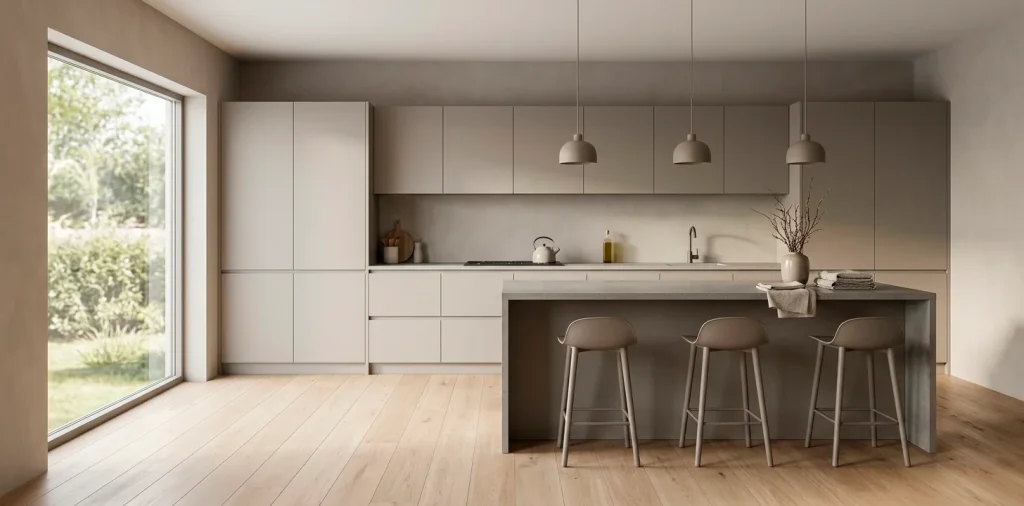
Let’s ditch the idea that kitchens need to look like an explosion in a paint factory. If you crave a cooking space that actually lowers your blood pressure, Scandinavian design is calling your name. I recently overhauled my own chaotic cooking zone, and sticking to a single color palette changed everything. Ready to see why less is absolutely more?
The Magic of Single-Hue Spaces
Ever wondered why monochromatic tones work best in a Scandinavian kitchen? It boils down to pure, unadulterated visual flow. When you stop forcing your eyes to bounce between competing colors, your brain instantly relaxes. I noticed this firsthand after painting my cabinets to match my backsplash. Suddenly, my tiny galley felt twice as large.
By sticking to a strict tonal family, you allow the architecture to speak for itself. You aren’t just matching colors; you’re building a cohesive experience. Honestly, it makes finding the coffee maker at 6 AM way less jarring. Speaking of single-color magic, if you’re taking this vibe beyond the kitchen, check out these 15 monochromatic color schemes for a minimalist bathroom.

Maximizing That Glorious Natural Light
Scandi countries endure incredibly long, dark winters, so they essentially engineered their interiors to capture every single photon of sunlight. Using monochromatic light tones amplifies natural light, bouncing it effortlessly across the room. I love this feature because it completely eliminates those creepy, shadowy corners near the pantry. Whether you lean into soft greys or creamy whites, a unified palette turns a basic window into a massive light amplifier. Who doesn’t want their kitchen to feel perpetually sun-drenched?
A useful little gift for your home
🎁 Free Plant Finder Tool
Filter 250+ houseplants by style, size, and care level to find your perfect green companion in seconds.
We’ll email you the link. Plus, you’ll join our newsletter for fresh home inspiration.

Texture is Your Secret Weapon
Here is where most people mess up. They hear ‘monochrome’ and create a space that feels like a sterile hospital cafeteria. Gross.
The absolute secret sauce to making a single color palette work is texture. If your walls, cabinets, and counters are the exact same shade, they desperately need different finishes to stand out. Think about it: a matte grey cabinet looks wildly different next to a polished grey marble countertop.
Heading phrase:
- Ribbed plaster range hoods paired with smooth quartz.
- Matte flat-panel cabinets next to rough-hewn wooden stools.
- Grooved ceramic backsplashes complementing sleek modern faucets.
Texture creates depth without breaking the color rules. It invites you to touch the surfaces, making the room feel incredibly tactile and lived-in rather than rigid and formal.

Wait, Monochrome Isn’t Just White?
Let’s clear up a massive misconception right now. Monochrome does not automatically mean an all-white, blizzard-blindness situation. While stark white is a classic Scandi staple, I’ve seen some absolutely jaw-dropping kitchens done entirely in muted sage greens, stormy charcoals, or warm beige. The rule is simply sticking to variations of one base hue. FYI, a tone-on-tone moody blue kitchen feels incredibly cozy while still serving that minimalist aesthetic. So pick a color you actually love and just ride that wave from the baseboards to the ceiling.

Eliminating Visual Clutter for Mental Peace
We all collect too much junk in the kitchen. From neon-colored blenders to mismatched spatulas, the visual chaos adds up incredibly fast.
A monochromatic foundation acts like a visual mute button for all that everyday clutter. When the backdrop is beautifully uniform, a stray coffee mug on the counter doesn’t suddenly look like a design emergency. IMO, this is the ultimate hack for lazy organizers.
It forces a sense of intentionality. When you stick to one tonal family, you naturally start choosing appliances and accessories that fit the vibe, slowly curating a space that feels intentionally peaceful and harmonious.

Hardware as the Ultimate Kitchen Jewelry
Since your cabinets and walls are playing on the same tonal team, your hardware finally gets a chance to shine. Think of knobs and pulls as the jewelry of your Scandinavian kitchen. Contrasting hardware breaks up the monotony perfectly.
I swapped my old, blending-in knobs for matte black handles against light grey doors, and the transformation was frankly offensive in how good it looked. You can also lean into brushed brass for a warmer, slightly vintage touch that pops beautifully against a cool-toned backdrop without ruining the serene vibe.

Breathing Life into the Room with Nature
A monochromatic Scandinavian kitchen practically begs for organic elements. Because the canvas is so beautifully restrained, dropping in a vibrant green pothos or setting out a bowl of fresh lemons instantly turns into a dramatic focal point. You don’t need a massive budget for decor when a simple wooden cutting board or a vase of eucalyptus does all the heavy lifting. Nature thrives against a quiet background. If you love displaying your organic finds, you might want to read our cottagecore kitchen open shelving guide.

The Layered Lighting Effect
You cannot talk about Scandinavian design without obsessing over lighting. A single-hue room requires layers of light to create cozy pockets of warmth—what the Danes famously call hygge.
I rely heavily on warm, dimmable LED strips under the cabinets to wash the backsplash in a soft glow. Combine that with a bold, oversized pendant light over the island, and you instantly add architectural interest without introducing chaotic colors.

Flooring that Grounds the Space
You simply cannot ignore the floor when designing a tonal masterpiece. In a Scandinavian kitchen, the flooring acts as the vital anchor for your entire monochromatic scheme. I highly recommend wide-plank white oak or a super subtle poured concrete. These materials ground the space without screaming for attention. They carry that continuous, flowing energy from the baseboards right under your feet. When the floor blends harmoniously with your cabinetry, the entire room feels expansive, grounded, and perfectly balanced.

A useful little gift for your home
🎁 Free Plant Finder Tool
Filter 250+ houseplants by style, size, and care level to find your perfect green companion in seconds.
We’ll email you the link. Plus, you’ll join our newsletter for fresh home inspiration.
The Final Verdict
Embracing monochromatic tones in a Scandinavian kitchen isn’t about stripping away personality; it’s about curating a space that actually lets you breathe. By mastering texture, welcoming natural light, and choosing intentional hardware, you create a timeless cooking haven that never feels overwhelming. Which subtle shade are you grabbing first for your own kitchen transformation? Let me know in the comments below!