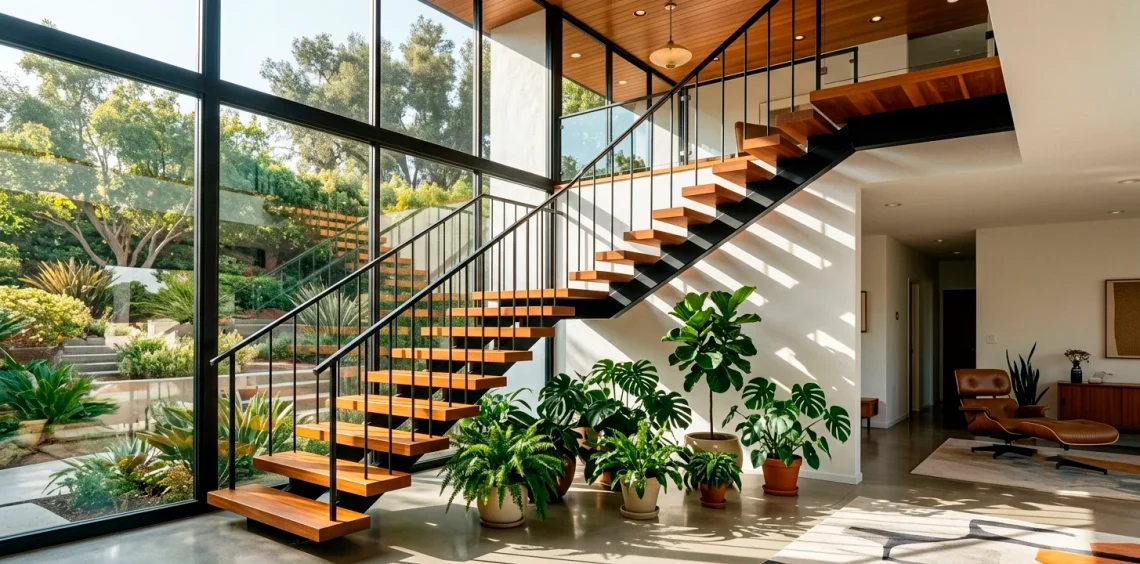
I still remember walking into a stunning 1960s hillside home and completely ignoring the panoramic view. Why? The teak and steel staircase absolutely stole the show. These mid-century modern structures stand as pure functional art. Let me show you how to blend that vintage warmth with industrial grit to build a centerpiece that actually drops jaws.
The DNA of Mid-Century Stairs
You know that feeling when a room just *works*? That is the exact magic of mid-century modern design. We strip away the unnecessary fluff and focus entirely on clean lines and honest materials. It frankly feels like a breath of fresh air in a world obsessed with chaotic maximalism 😅.
Teak and steel are the ultimate power couple here. I consider them the peanut butter and jelly of architectural design, just with a much higher price tag. One brings the cozy, organic warmth, while the other delivers structural confidence and a sleek silhouette.

Why We Worship Teak
Let me tell you a secret about teak: it is practically indestructible. This tropical hardwood boasts natural oils that aggressively fight off moisture, making it a dream for high-traffic zones like your main stairs. I installed teak treads in my own place three years ago, and they still look freshly milled. Beyond sheer durability, teak ages beautifully, developing this rich, golden-brown patina that screams vintage luxury. You simply cannot fake that authentic, sun-kissed glow with a cheap hardware store stain.

Forging the Steel Spine
Steel firmly grounds the whole operation. Ever noticed how a chunky wooden railing can make a narrow hallway feel incredibly claustrophobic?
Thin steel stringers fix that spatial issue instantly. They let light pour through the steps, keeping the entire structure visually lightweight. IMO, matte black or gunmetal finishes work best to avoid that overly shiny, mall-escalator aesthetic.
Plus, metal boldly allows for those ultra-thin profiles that wood simply cannot support safely. If you are updating an older setup, you might want to read our guide on refinishing your banister.

The Magic of Floating Treads
Want to really channel that 1950s architectural genius?
Go for floating treads.
By hiding the structural supports, your stairs literally look like they hover in mid-air. It is an incredible optical illusion that completely opens up a cramped entryway. You get this phenomenal shadow play on the walls when the afternoon sun hits the steel framing.
I swear, watching the light shift through an open-riser staircase never gets old. Just keep your local building codes in mind, because inspectors love to ruin our fun with their strict “safety regulations” regarding gap sizes 🙄.

Mastering the Railing Profile
Let’s talk safety, but make it undeniably stylish. Your handrail is the most tactile part of the staircase, meaning you grab it every single day. I strongly advocate for a continuous teak handrail mounted on minimalist steel balusters. It offers a warm, comfortable grip while keeping the visual bulk strictly in check. Alternatively, horizontal steel cables scream retro-futurism, though they can become a nightmare to dust. If you hate cleaning as much as I do, maybe stick to simple, widely spaced vertical steel rods.

Perfecting the Finishing Touches
Lighting absolutely makes or breaks a modern staircase. You can spend thousands on exotic wood, but if it sits in a dark, creepy corner, you completely wasted your cash.
Top lighting choices:
- LED Tread Strips: Perfect for subtle under-step illumination.
- Wall Sconces: Brass fixtures with Edison bulbs scream vintage charm.
- Pendant Drops: Hang a massive sputnik chandelier in the stairwell for maximum drama.
I personally love tucking LEDs right under the lip of each teak tread. It creates a soft, theatrical glow that stops you from tripping over the cat at 2 AM.

Integrating Decor and Art
Your staircase does not exist in a vacuum. It interacts heavily with the walls and the surrounding decor, so treat that adjacent space exactly like a curated gallery.
A stark white wall beside a teak staircase practically begs for a massive, abstract canvas. Bold geometric shapes and muted earthy tones complement the wood’s warmth without clashing with the severe steel lines. If you need some solid inspiration for styling that blank wall, check out how to blend contemporary art in a mid-century modern room.

Maintaining Your Masterpiece
FYI, keeping your teak and steel pristine requires minimal but highly consistent effort. I quickly wipe down my steel stringers with a simple microfiber cloth once a month to prevent dust buildup from turning into a fuzzy science experiment. Teak is incredibly forgiving, but an annual rubdown with high-quality teak oil keeps that vibrant golden hue from fading into a dull, silvery gray. Trust me, spending twenty minutes a year on simple maintenance saves you a massive restoration headache down the road. Treat your stairs like the high-end furniture they actually are.

Adding Greenery to the Mix
Do you know what flawlessly bridges the gap between cold metal and warm wood?
Houseplants.
Mid-century design heavily embraces the outdoors, and your staircase serves as the perfect spot to introduce some organic life. A massive Monstera neatly tucked at the base of your stairs softens those harsh industrial lines instantly. I even hang trailing pothos from the top landing. It adds this lush, jungle-like vibe that plays beautifully against the severe, rigid geometry of the steel cables. Just ensure your planters strictly match the minimalist aesthetic.

The Investment Value
Upgrading a staircase requires serious capital, but it acts as a massive value-add for your entire property. Buyers lose their minds over authentic mid-century architectural features. It completely shifts the narrative of your home from “standard build” to “custom designer estate.”

Conclusion
Mastering a mid-century modern staircase truly comes down to respecting your materials. Let the rich teak bring the soul, and boldly allow the raw steel to provide the structural backbone. It remains a delicate balancing act that rewards you with an undeniable architectural masterpiece right in your hallway. Which element are you tackling first? Let me know in the comments!