Tired of mopping paw prints off your delicate entryway floors? I feel your pain. Let’s talk about vintage farmhouse slate flooring. This gorgeous, rugged stone transforms a chaotic mudroom into a magazine-worthy space. I swapped my boring tiles for slate last year, and I honestly haven’t looked back. Ready to see why this stone rules the roost?
The Magic of Vintage Farmhouse Slate
Ever wonder why historic homes always look so effortlessly grounded? Vintage slate floors bring an instant sense of history and permanence to any space. I absolutely adore how a freshly laid slate floor tricks guests into thinking it has survived a century of muddy boots.
You get that authentic, lived-in aesthetic without sacrificing an ounce of modern functionality. We demand a lot from our mudrooms, and this natural stone happily takes the beating. The rich textures give your entryway an undeniable charm that artificial materials simply cannot replicate. 🥾

Why Slate Thrives in Chaos
Let’s face facts: your mudroom sees the worst of the weather. Durability matters more here than anywhere else. Slate naturally resists water, scratches, and stubborn stains like an absolute champion. You can toss your soaking wet umbrellas and snow-caked boots directly onto it without wincing. Honestly, the stone practically begs for rough treatment. If you want a floor that actually works for a living, you just found your top candidate. Mudrooms demand tough surfaces, and slate brings unbeatable strength to your daily routine.

Texture That Actually Hides the Dirt
Smooth floors show every single speck of dust.
That drives me completely crazy!
Thankfully, cleft slate offers incredible natural texture. The uneven surface features subtle ridges and dips that brilliantly camouflage daily dirt and dog hair. You basically get a free pass on skipping your daily sweeping routine. IMO, that alone makes it worth its weight in gold.
Plus, that same cleft texture provides outstanding slip resistance when things get wet. No more sliding across the room in your socks after a rainstorm! If you love adding rustic details to your spaces, you might also enjoy these farmhouse kitchen decor small touches.

Color Variations: Nature’s Best Artwork
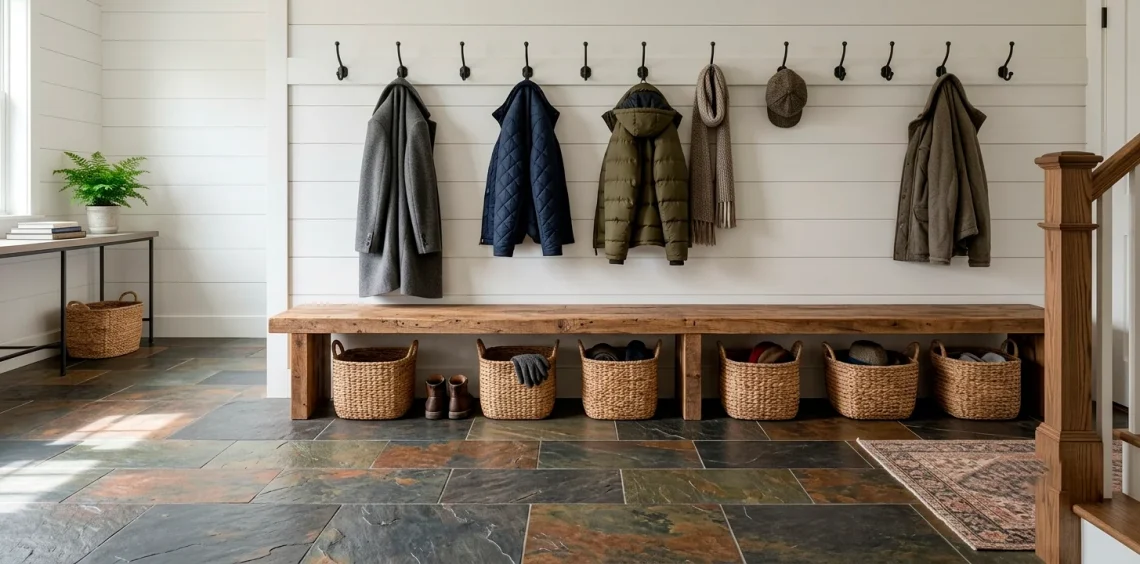
Forget about boring, uniform gray squares. Authentic slate delivers a stunning spectrum of earthy tones. You will spot deep charcoal, subtle rust orange, mossy green, and even hints of plum in a single batch. These natural color variations hide blemishes effortlessly while adding incredible visual depth to your mudroom. I highly recommend buying a few extra tiles just so you can handpick your favorite color patterns before you lay them down. Mixing the colorful pieces creates a truly custom floor that tells a unique visual story.

Installation Quirks You Should Know
Installing slate requires a bit of patience. Since the tiles vary in thickness, achieving a perfectly level floor takes extra mortar and a keen eye.
Here are some essential tools you need:
- Heavy-duty wet saw
- Premium modified thinset
- Thick knee pads
- A high-quality stone sealer
Always seal the stone before you grout! If you skip this step, the porous slate will absorb your grout haze, ruining those beautiful colors forever. Taking your time during installation guarantees a flawless finish that withstands decades of heavy foot traffic.

Keeping It Clean and Pretty
Cleaning slate feels surprisingly simple. Ditch the harsh chemical cleaners right now. They slowly strip away your protective sealant and dull the stone’s vibrant colors over time.
I just use a soft-bristle broom and a damp mop with mild dish soap. You should reapply a penetrating stone sealer every few years to keep everything looking fresh and waterproof. It takes maybe twenty minutes, and it preserves that gorgeous rustic charm indefinitely. Low maintenance floors always win in my book, especially when they look this beautiful.

Pairing Slate With Farmhouse Accents
A dark slate floor practically demands cozy contrast.
I love pairing the moody stone with warm, natural wood elements.
Try adding some classic farmhouse staples:
- Chunky reclaimed oak benches
- Wrought iron coat hooks
- Woven wicker storage baskets
- Soft, vintage-inspired runner rugs
White shiplap walls make the dark floor pop beautifully. The contrast brings a crisp, clean energy to the space, balancing the heavy, grounding effect of the stone. For more cozy inspiration, check out these cozy bench seating ideas for a farmhouse dining room.

The Cost: Worth the Investment?
Slate costs more upfront than luxury vinyl or basic ceramic, but hear me out. This floor literally lasts a lifetime. You only pay for it once, and it completely elevates the perceived value of your home. Cheaper alternatives usually peel or chip after a few harsh winters, forcing you to replace them anyway. FYI, investing in real stone always pays off in the long run. You get unmatched beauty and a sturdy surface that outlasts the house itself.

Conclusion
Vintage farmhouse slate simply outshines the competition when you need a hardworking mudroom floor. You get an unbeatable mix of rugged durability, incredible natural beauty, and everyday practicality. I cannot imagine navigating messy seasons without it. Are you ready to rip out your old linoleum and upgrade to real stone? Let me know in the comments!