Skip to content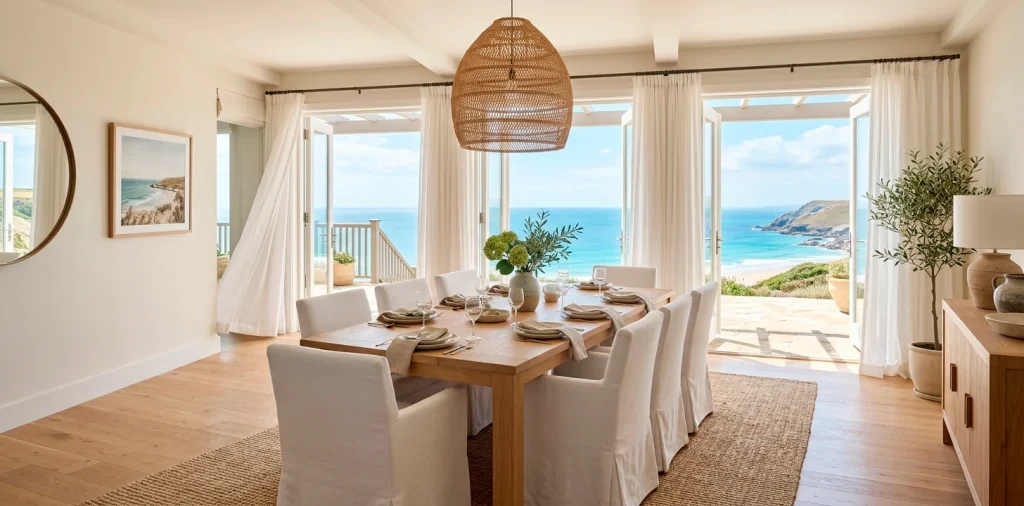
Craving the sound of waves every time you sit down for dinner? Let’s bring that sun-drenched magic straight to your table. A coastal dining room isn’t about plastering seashells everywhere—it’s about capturing a relaxed, breezy mood. I recently overhauled my own space, and eating breakfast now feels like a mini-vacation. 🌊 Let’s create your coastal oasis.
The Foundation: Light and Weathered Woods
Start with the absolute core of the room: the dining table. Dark, heavy mahogany screams Victorian library, not beach house. You need a table that looks like it survived a few gentle years of salty air. Think light oak, whitewashed mango wood, or even a subtly distressed driftwood finish.
It anchors the entire aesthetic without weighing it down. Ever noticed how a lighter table instantly makes the room feel twice as big? It perfectly reflects the natural light bouncing around the space. Plus, those subtle wood grains add instant character.

Seating That Says Relax
Ditch the stiff, formal dining chairs immediately. We are going for a barefoot-contessa vibe here! Slipcovered chairs are basically the holy grail of coastal design because they look effortlessly chic and—wait for it—you can wash them. Spilled red wine? No panic, just toss the cover in the wash. If you want to mix things up, throw in a couple of woven loom chairs at the heads of the table. They break up the white fabric beautifully and add that essential tactile element. For more on getting that textured look right, check out this boho dining room guide to rattan and wicker styling.
A useful little gift for your home
🎁 Free Plant Finder Tool
Filter 250+ houseplants by style, size, and care level to find your perfect green companion in seconds.
We’ll email you the link. Plus, you’ll join our newsletter for fresh home inspiration.

The Magic of Natural Textures
Coastal style falls completely flat without texture.
Seriously, if everything in the room is smooth and glossy, it looks like a modern office, not a beachside retreat. Layering natural materials is your absolute secret weapon.
Introduce elements like seagrass, jute, and cane to warm up the space. A huge woven tray on the credenza or a set of braided water hyacinth placemats works wonders.
These small touches subtly remind your brain of sandy shores and dune grass. I bought some cheap jute placemats last summer, and IMO, they completely transformed my boring Tuesday dinners.

Setting the Color Palette
Step away from the neon turquoise! A modern coastal palette relies heavily on crisp whites, warm creams, and subtle, muted blues. Think of the colors you actually see at the beach on a foggy morning. We are talking soft sea glass green, slate blue, and sandy beige. Paint your walls a creamy white to maximize the light, and use your textiles to bring in those soft oceanic hues. Throw a slate blue linen runner down the center of the table and watch the room come alive.

Lighting That Steals the Show
Your chandelier sets the entire mood of the dining room. A heavy crystal fixture simply doesn’t belong in a breezy coastal setup.
You need an oversized woven pendant or a capiz shell chandelier. Rattan and bamboo fixtures cast incredible, moody shadows on the walls at night.
They also act as massive statement pieces during the day, drawing the eye upward. If you have a longer rectangular table, hang two matching woven pendants side by side. It beautifully balances the room and makes the space feel incredibly custom and high-end.

Coastal Centerpieces & Table Decor
Please, for the love of interior design, do not put a giant glass bowl of plastic seashells on your table. That screams 1990s beach motel! We want elevated coastal.
Elevated coastal elements:
- Oversized glass vases: Fill them with fresh, leafy eucalyptus or olive branches.
- Weathered wood bowls: Perfect for holding fresh citrus or just sitting beautifully empty.
- Hurricane lanterns: Place a simple white pillar candle inside for that classic maritime glow.

The Art of the Rug
The right rug completely grounds your dining space.
It protects your floors and defines the dining zone. But in a coastal room, you must choose your materials wisely.
Thick, fluffy wool rugs trap crumbs and feel too heavy for a breezy aesthetic. Instead, lay down a large sisal or chunky jute rug. They bring incredible organic texture to the floor and handle high foot traffic like an absolute champ.
Yes, they can feel a bit scratchy on bare feet, but the visual payoff is totally worth it. For more ideas on how to incorporate these durable natural fibers, dive into these jute and sisal rug ideas for summer living spaces.

Window Treatments for That Breezy Feel
FYI, heavy velvet drapes have absolutely no place here. To nail the breezy look, you need window treatments that actually catch the breeze.
Hang sheer, unlined linen curtains high above the window frame and let them pool slightly on the floor. White or soft ivory linen beautifully diffuses the harsh afternoon sun while maintaining a glowing, ethereal vibe in the room. When the windows are open, watching those curtains gently billow is basically free therapy. Trust me, it completely transforms the energy of the room.

Wall Art That Doesn’t Try Too Hard
Keep your walls relatively simple. A massive gallery wall easily clutters a serene space. Instead, opt for one or two large, impactful pieces. Framed abstract landscapes featuring soft blues and whites work perfectly. You can also hang a large piece of driftwood or a beautifully framed vintage map of your favorite coastline. These items feel personal and intentional without screaming beach theme. A singular, oversized canvas commands attention and keeps the visual noise to an absolute minimum.

Bringing the Outside In
Finally, breathe some literal life into your dining room with fresh greenery.
Coastal environments thrive on the presence of nature. A large, leafy indoor plant beautifully bridges the gap between your indoor space and the outdoors.
Pop a towering Bird of Paradise or a lush Ficus Audrey into a woven seagrass basket tucked in the corner. 🌿 If you lack a green thumb, simply snipping some palm fronds or monstera leaves and placing them in a tall water vase creates an instant, structural coastal vibe. It adds that perfect pop of vibrant green against the crisp whites.

A useful little gift for your home
🎁 Free Plant Finder Tool
Filter 250+ houseplants by style, size, and care level to find your perfect green companion in seconds.
We’ll email you the link. Plus, you’ll join our newsletter for fresh home inspiration.
Conclusion
Designing your beachfront oasis should feel as relaxing as a walk on the shore. Keep your textures natural, your colors soft, and your lighting airy. You absolutely don’t need a huge budget to make a massive impact. Ready to swap out that heavy mahogany table for something a little lighter? Which coastal element are you grabbing first? Let me know in the comments!