Skip to content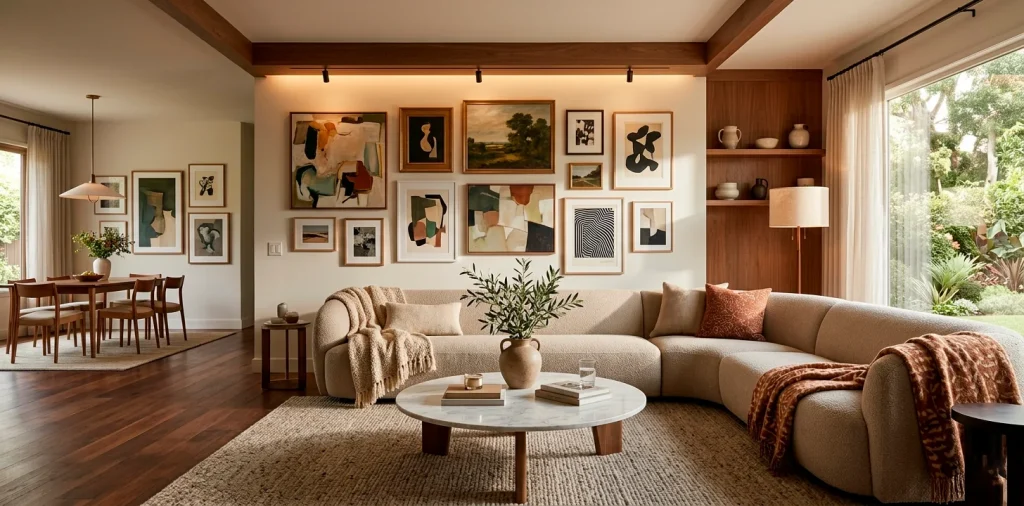
Walking into a perfectly curated space is like breathing fresh air, isn’t it? You immediately notice the balance, the mood, and the undeniable vibe. I used to slap posters on my walls with zero strategy, hoping for the best. Spoiler alert: it didn’t work. Let’s fix that and learn how to elevate your space with the eye of a seasoned gallery director.
The Gallery Mindset
So, what actually makes a gallery feel so special? It all comes down to intention. A professional curator doesn’t just buy a random painting because it happens to match the living room rug.
They look for a piece that sparks a genuine conversation. Think of your walls as blank canvases waiting for a story. Are you telling a tale of bold modernism, or whispering sweet vintage cottagecore nothings? Define your core vibe before you buy a single frame.

Mixing Eras and Mediums
Nobody wants to live in a space that feels like a generic catalog showroom. The real magic happens when you intentionally clash different artistic styles and mediums together. IMO, a sleek digital print looks exponentially cooler when you pair it with an antique oil painting you scored at a weekend flea market. It shows raw personality! Ever noticed how high-end galleries mix heavy sculptures with flat canvases? You can totally replicate that at home by resting small 3D objects on a console table right beneath your wall art.
A useful little gift for your home
🎁 Free Plant Finder Tool
Filter 250+ houseplants by style, size, and care level to find your perfect green companion in seconds.
We’ll email you the link. Plus, you’ll join our newsletter for fresh home inspiration.

Sizing and Scale Magic
Let’s talk about the absolute biggest rookie mistake in interior design.
Hanging tiny art on a massive, empty wall. It genuinely breaks my heart to see a postage-stamp-sized print floating awkwardly in a massive sea of bare drywall.
If you have a big open space, you need big energy. Invest in an oversized statement piece that immediately anchors the entire room. If massive canvases are out of your current budget, don’t panic.
You can easily fake that large scale by grouping several smaller, identically framed pieces in a tight, perfectly measured grid. It visually reads as one massive installation and saves you a ton of cash in the process.

Framing is the Secret Sauce
I will scream this from the rooftops: cheap frames absolutely ruin good art. You can take a literal napkin doodle and make it look like a million bucks with the right matte and frame. Conversely, stuffing a beautiful original canvas into a flimsy plastic border is a visual tragedy. Give your pieces room to breathe with an oversized white matte. If you mix your frames, try sticking to a cohesive finish to unify the collection. Essential framing upgrades:
- Museum glass: Kills reflections and protects against UV fading.
- Acid-free backing: Stops expensive paper prints from yellowing over time.
- Deep float frames: Perfect for giving raw canvas edges a modern, high-end look.

Lighting Your Masterpieces
Have you ever walked through a major museum and noticed how the art seems to literally glow from within? That is certainly not an accident. Gallery lighting acts as the ultimate cheat code for making your entire home look expensive.
You don’t need to hire an electrician to rip up your ceiling drywall, either. Wireless, battery-operated picture lights are an absolute game-changer.
Simply mount a sleek brass light directly above your favorite piece, and suddenly your living room feels like a wing of the Louvre.

Establishing Visual Flow
Think of your art collection as a breadcrumb trail expertly guiding guests through your home. You want the pieces to ‘talk’ to each other from room to room naturally.
If your entryway features a bold, geometric abstract, maybe your hallway echoes that exact energy with a subtler, textured minimalist piece. The colors don’t have to match perfectly, but the visual weight should feel incredibly balanced. Never cluster all your heavy, dark pieces in one single corner while leaving the opposite side of the room completely bare.

The Art of the Edit
More is not always more. Sometimes, it just becomes a cluttered visual mess.
Professional curators know exactly when to pull back. They deeply understand the crucial importance of negative space. Letting a wall stay completely blank gives the eye a peaceful place to rest.
I used to feel incredibly compelled to fill every single square inch of bare wall I had in my house. It felt utterly chaotic! Now, I rigorously edit my collection.
If a piece no longer thrills me or just doesn’t fit the current season of my life, it goes straight into storage. Rotate your art just like you rotate your winter coats. It keeps the space feeling incredibly fresh.

Curating the Perfect Gallery Wall
Ah, the legendary gallery wall. It can act as a stunning focal point or a chaotic disaster. The trick to nailing the salon-style look is starting directly on the floor. Grab some painter’s tape, mark out the exact dimensions of your wall space on your living room rug, and start arranging your frames right there. Always anchor the arrangement with your largest, most visually heavy piece slightly off-center. Then, build dynamically around it with your smaller pieces, keeping the spacing consistently around two to three inches between frames. It creates a beautiful organic rhythm without looking sloppy.

Infusing Personal Narrative
Nobody cares about that generic stock photo print of a bridge you bought at a big box store. Sorry, but it’s true! 😅
The absolute best collections are deeply personal. Frame your grandmother’s handwritten recipe, your child’s wildly abstract watercolor, or a matchbook from the restaurant where you had your very first date.
When you intentionally mix these highly sentimental items in with your fine art, it creates a rich, authentic narrative. Real luxury isn’t about how much cash you dropped; it’s about the unique story your space tells to anyone who walks through the front door.

Patience in the Process
Rome wasn’t built in a day, and a true gallery-worthy collection isn’t curated in a single weekend shopping spree. Give yourself total permission to collect slowly over the years.
Buy a piece when you travel, or actively save up for something from an emerging local artist you genuinely admire. Let your home seamlessly evolve alongside your own personal taste. A collected home always looks vastly superior to an instantly decorated one.

A useful little gift for your home
🎁 Free Plant Finder Tool
Filter 250+ houseplants by style, size, and care level to find your perfect green companion in seconds.
We’ll email you the link. Plus, you’ll join our newsletter for fresh home inspiration.
Conclusion
Curating art is supposed to be fun, not an intimidating chore. Trust your gut, invest in great framing, and don’t be afraid to break a few traditional rules along the way. Your home should reflect your unique personality, one beautifully hung frame at a time. Which piece in your home are you planning to upgrade first? Let me know in the comments!