Ever walk into a dining room and instantly feel your blood pressure drop? That is the magic of Japandi design. I swapped my chaotic glass-and-chrome setup for this aesthetic last year, and honestly, I haven’t looked back. It perfectly marries Scandinavian coziness with elegant Japanese minimalism. Ready to build your own zen oasis?
Light Oak Foundation
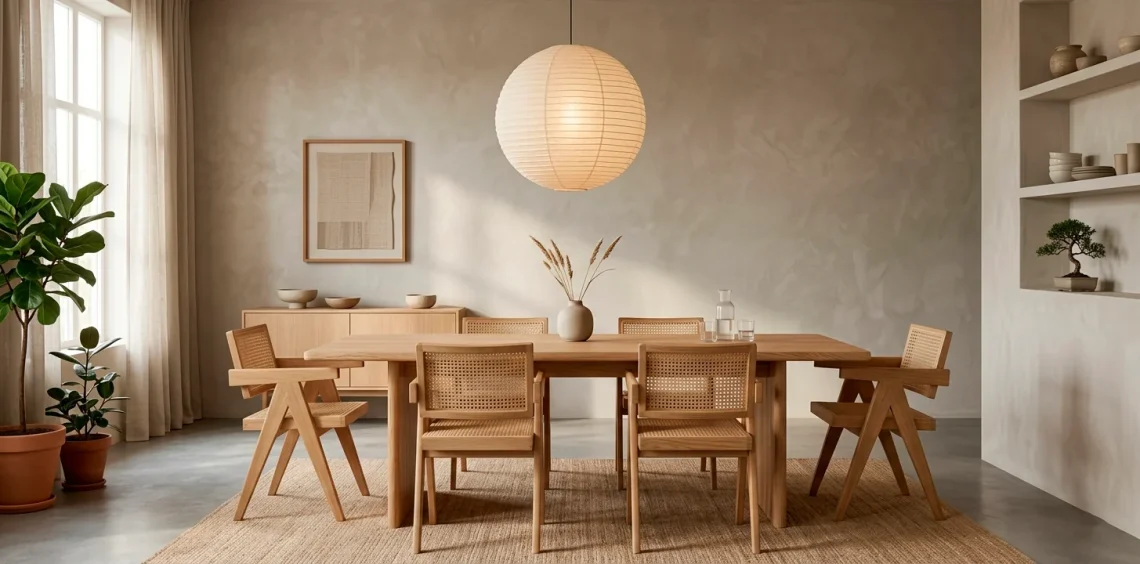
Let’s kick things off with the absolute backbone of Japandi design: light oak. You simply cannot build this aesthetic without a solid, pale wood grounding the space. I snagged a massive light oak dining table a few months ago, and it completely transformed the room’s energy. The subtle grain brings incredible warmth while keeping the visual weight impossibly light. Why settle for dark, heavy furniture when you can literally brighten your mornings with pale timber? If you want to carry this vibe beyond the dining area, check out these light oak slat ideas.

Handcrafted Stoneware Ceramics
Toss those glossy, mass-produced plates right out the window. Handcrafted stoneware ceramics give your dining table that essential wabi-sabi soul.
I absolutely love the organic, imperfect edges of a handmade bowl. They remind you that an actual human made your dinnerware, not a soulless factory machine. Plus, food genuinely looks better on a matte, earthy plate. IMO, it elevates a simple Tuesday night takeout into a Michelin-star experience.
Texture is everything:
- Matte glazes over shiny finishes
- Irregular, organic rim shapes
- Muted tones like sand, charcoal, and moss

Airy Rattan Accents
Craving some visual intrigue without adding unnecessary clutter? Bring in the rattan accents. A set of dining chairs with woven cane backs instantly introduces an airy, breathable texture to your setup.
You get all the structural support of wood but with a much softer, approachable profile. I usually pair my rattan chairs with a solid oak table to strike that perfect balance between sturdy and delicate. Who knew a simple chair could look this good? Plus, the woven material naturally flexes, making those long dinner parties surprisingly comfortable.

Rumpled Washed Linen
If you still use stiff polyester tablecloths, we seriously need to have a talk.
Washed linen brings an effortless, rumpled elegance that defines the Japandi lifestyle. You want your dining room to look lived-in and loved, not staged for a rigid corporate catalog.
I drape a simple, oatmeal-colored linen runner across my table, and it instantly softens the hard wooden edges.
The best part? You actually *want* linen to look a little wrinkled. It saves you hours of ironing and still looks impeccably chic.

Glowing Washi Paper
Lighting completely dictates the mood of your dining room, and washi paper lanterns are the undisputed champions of Japandi ambiance. They diffuse harsh bulbs into a warm, glowing halo that flatters literally everyone.
Swap out that bulky crystal chandelier for a large, sculptural Noguchi-style paper shade. It floats above your dining table like a delicate, weightless cloud, drawing the eye upward without overwhelming the room’s minimalist vibe. Trust me, your dinner guests will definitely thank you for the incredibly flattering, soft-focus lighting.

Earthy Jute & Sisal
Ground your entire dining arrangement with a chunky jute or sisal rug. A dining space needs distinct zones, especially in an open-concept home, and a natural fiber rug anchors the table perfectly. I love how these durable materials stand up to scraping chairs and the inevitable spilled wine, all while adding a rich, earthy texture underfoot. You get a raw, organic base that heavily contrasts with the smooth, refined lines of your furniture. Because nothing ruins a zen vibe faster than a precious, high-maintenance silk rug you are terrified to step on.

Textured Limewash Plaster
Flat, blindingly white paint just does not cut it anymore. Limewash plaster gives your dining room walls a cloudy, suede-like texture that feels incredibly ancient and grounded.
This material reacts beautifully to natural light. As the sun moves across your dining room, the limewash subtly shifts in tone, creating a dynamic backdrop for your meals.
It feels like dining inside a cozy, sun-drenched cave. I applied a warm beige limewash to my dining nook last spring, and the depth it adds to the room absolutely blows my mind every single day.

Sustainable Bamboo
Let’s talk about the unsung hero of natural materials: bamboo.
Whether you use it for window blinds, placemats, or subtle decorative trays, bamboo injects a distinct Japanese flavor into your Scandinavian foundation.
I rely on bamboo Roman shades to filter the harsh afternoon sun. They cast these stunning, linear shadows across the dining table that look like modern art.
FYI, bamboo grows incredibly fast, making it a highly sustainable choice for the eco-conscious decorator. You save the planet and elevate your home simultaneously. Win-win!

Warm Walnut Contrasts
While light oak dominates the Japandi scene, you desperately need a little contrast to keep the room from looking washed out. Enter warm walnut. Introducing just a touch of dark, rich wood adds necessary visual gravity to your dining space.
I recommend using walnut sparingly—maybe as the legs of your dining chairs, a sleek floating buffet, or a simple serving bowl. This dark wood cuts through the sea of pale neutrals, providing a sharp, sophisticated edge. To see how this balance works in other spaces, explore warm wood finishes for your living room.

Architectural Travertine Stone
Want to add a touch of quiet luxury to your table? Travertine stone delivers that high-end, architectural feel without shouting for attention. The porous, honey-toned surface of travertine completely embodies the wabi-sabi appreciation for natural imperfections. I keep a heavy, sculptural travertine centerpiece on my table, and it anchors the entire room. You can also incorporate it through subtle candle holders or a stylish serving plinth. It bridges the gap between rugged nature and refined design perfectly, proving that rocks can indeed be glamorous.

Smoked and Fluted Glass
You might not think of glass as a traditional “natural” material, but smoked or fluted glass plays a crucial role in modern Japandi interiors. It provides a sleek, reflective surface that breaks up the heaviness of solid wood and stone.
I absolutely love using fluted glass doors on a dining room sideboard. The ribbed texture beautifully obscures the visual clutter of your spare plates and mismatched mugs, while still catching and reflecting natural light around the room.
Best ways to integrate glass:
- Minimalist smoked pendant lights
- Ribbed water carafes
- Subtle cabinet displays

Matte Black Iron Tension
Every Japandi space requires a tiny bit of visual tension, and matte black iron provides exactly that. Think of it as the sharp, graphic eyeliner that suddenly makes the rest of your neutral, calming room pop.
You honestly only need a few subtle touches to make a massive impact. A slender black metal table base, sleek cabinet hardware, or minimalist candlestick holders instantly modernize the rustic, organic elements surrounding them. It completely prevents the dining room from feeling too soft or sleepy, injecting a necessary dose of crisp, modern edge.

Cozy Bouclé and Wool
Hard wooden chairs look fantastic, but your tailbone might fiercely disagree after a three-hour dinner party.
That is exactly where bouclé and wool come to the rescue. Adding textured seat cushions or an upholstered bench instantly softens the dining experience.
The nubby, looped texture of bouclé visually mimics sheepskin, bringing a heavy dose of hygge into the space without feeling overly shaggy.
I threw a minimalist wool throw over my dining bench, and my guests actually linger at the table now. Comfort really does matter, folks!

Earthy Cork Details
Do not underestimate the stylistic power of natural cork. Once banished to 1990s bulletin boards, cork has made a massive, chic comeback in Japandi dining rooms. Its incredibly warm, speckled texture adds an unexpected earthy element to your tablescape. I swapped my boring vinyl placemats for thick, raw cork mats, and they instantly elevated my daily dining routine. Besides looking incredibly cool, cork naturally resists heat and moisture, making it an insanely practical choice for hot plates and sweaty water pitchers. Practicality meets killer design!

Raw Foraged Branches
Finally, no Japandi dining room feels truly complete without a touch of raw nature. Foraged branches or dried botanicals offer the perfect, low-maintenance centerpiece. Ditch the perfectly symmetrical, brightly colored supermarket bouquets.
Instead, showcase a single, twisting oak branch or a few stalks of dried pampas grass in a heavy ceramic vase. The asymmetrical, architectural lines of bare branches perfectly capture the Japanese concept of wabi-sabi. It celebrates the fleeting, imperfect beauty of nature right in the middle of your dining table.

Conclusion
You do not need to overhaul your entire house to achieve this serene look. Start small by swapping out your textiles or bringing in a raw wood accent, and watch the room’s energy completely shift. The Japandi aesthetic thrives on intention, simplicity, and a deep respect for natural materials. Which of these 15 materials are you adding to your dining room first? Let me know in the comments!