Skip to content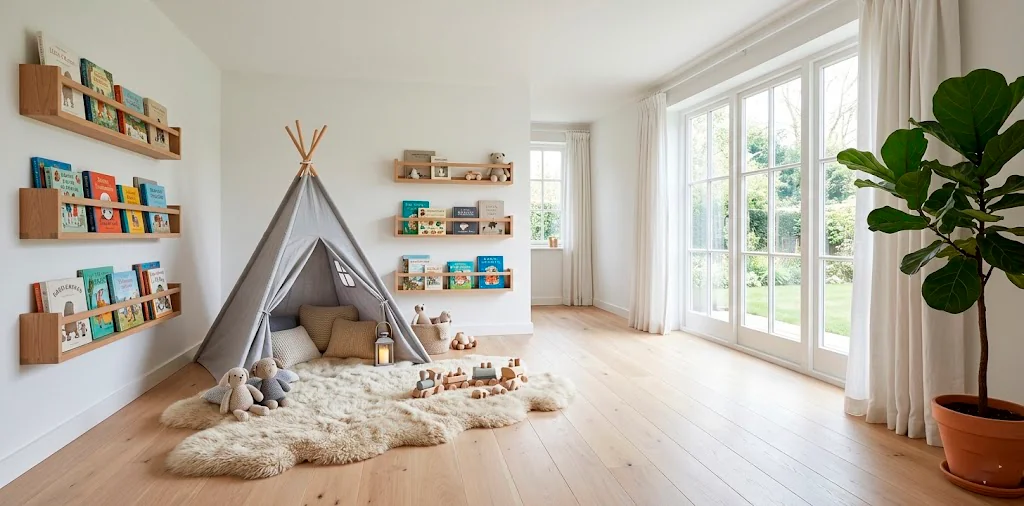
Creating a reading nook shouldn’t feel like a chore, but let’s be honest, finding that perfect balance between ‘Instagram-worthy’ and ‘actually functional’ is a struggle. I’ve spent way too many hours scrolling through minimalist designs only to realize my own kid would probably use a white linen canopy as a napkin. Scandinavian design saves us here because it values durability just as much as those clean, airy vibes. You want a spot where they’ll actually sit still for ten minutes? These 15 ideas bring that cozy ‘hygge’ magic home without cluttering your floor plan. 🛋️
The Classic Canvas Teepee
I truly believe every childhood needs a secret headquarters. A canvas teepee provides that perfect ‘indoor camping’ feel while keeping your living room from looking like a primary-colored plastic factory. IMO, the best ones use raw birch poles and heavy cotton canvas because they won’t collapse the second your toddler decides to do a wrestling move.
You just need to throw in a thick sheepskin rug and a few neutral pillows to finish the look. Ever noticed how kids suddenly find books more interesting when they’re reading them in a tent? It’s basically science. Plus, you can fold it away when you finally need your floor space back for a yoga mat you’ll never use. ✨

Built-In Window Nooks
If you’re lucky enough to have a deep window sill, you’ve already won half the battle. I love how a built-in seat uses natural light as a primary design element. You just add a custom-cut foam cushion covered in a durable grey marl fabric. It creates a seamless transition between the indoor comfort and the outside world. Seriously, who wouldn’t want to watch the rain while diving into a story? Just make sure the glass is tempered and the height is safe for your little adventurer. A few wooden bins tucked underneath can hold the ever-growing book collection without creating a visual mess. 📚
A useful little gift for your home
🎁 Free Plant Finder Tool
Filter 250+ houseplants by style, size, and care level to find your perfect green companion in seconds.
We’ll email you the link. Plus, you’ll join our newsletter for fresh home inspiration.

The Floating Library Corner
Space is a luxury, isn’t it? When floor space disappears, I always look at the walls. Floating shelves—especially those thin, ‘invisible’ metal ones or classic wooden picture ledges—turn book covers into actual wall art. It’s a genius way to rotate books based on seasons or interests.
I suggest mounting them at your child’s eye level. If they can’t see the cover, they won’t grab the book.
Essential shelf features:
- Forward-facing display rails
- Sustainable birch or pine materials
- Rounded safety edges
This setup keeps the floor clear for play while keeping the ‘library’ within arm’s reach. It’s a win for your toes and their brain. FYI, I’ve tripped over enough stray hardcovers to know that vertical storage is a literal life-saver. 😎

Sheer Canopy Nooks
Canopies aren’t just for beds anymore. Hanging a light, ethereal fabric from the ceiling in a quiet corner creates a soft ‘cocoon’ that kids adore. I prefer linen or muslin over cheap polyester because the breathability is much better for long reading sessions. You can anchor the look with a circular play mat underneath. It’s surprisingly easy to install, provided you find a stud in the ceiling—nobody wants a ‘falling sky’ situation mid-story. This setup adds a vertical height element to the room that makes the ceiling feel taller, which is a neat little design trick. ☁️

Nature-Inspired Floor Cushions
Sometimes the simplest solution is just a pile of very soft things on the ground. Scandi style loves bringing the outdoors in, so think of cushions in earthy tones like moss green, slate, and ochre. I personally love the oversized ‘pouf’ style cushions that offer a bit of back support.
You can layer different textures to keep it interesting. Try a wool rug, a corduroy floor cushion, and a cotton throw blanket. It feels organic and unstudied, which is exactly the vibe we’re going for.
Why this works:
- Easy to move around the house
- No assembly required (thank goodness)
- Low profile makes the room feel bigger
It’s the ultimate low-effort, high-impact reading spot. Just try not to fall asleep in it yourself during bedtime stories. 🧸

The House Silhouette Nook
Have you seen those wooden house-shaped frames? They are everywhere in Nordic design because they define a space without closing it in. You can buy a pre-made frame or, if you’re feeling handy, DIY one with some simple 2×2 timber. I love the ‘room within a room’ effect it creates.
You can even drape a light fabric over the ‘roof’ to make it feel more like a cottage. It’s a great way to encourage imaginative play alongside reading. I’ve seen people paint the back wall inside the frame a different color to really make it pop. It turns a boring corner into a architectural focal point for basically the cost of a few pieces of wood. 🏠

Minimalist Bean Bag Haven
Forget those neon, sticky vinyl bean bags from the 90s. Modern Scandi bean bags come in beautiful washed linen or organic cotton. They mold to the body, making them the most comfortable spot for a long chapter book session. I recommend choosing one with a removable, washable cover because… kids. It’s a practical piece of furniture that looks sophisticated enough for the living room but belongs in the play area. The slouchy shape breaks up the straight lines of typical Scandinavian furniture, adding a bit of much-needed softness to the room’s geometry. 🧘

Loft Bed Library
If you’re working with a tiny bedroom, you have to think vertically. A loft bed with a dedicated reading zone underneath is the ultimate space-saver. I’ve seen some incredible setups where the lower area is lined with bookshelves and a small bench.
It feels like a secret cave, which is basically a magnet for kids. You can add a small battery-operated sconce to ensure they aren’t straining their eyes in the shadows.
Design essentials for lofts:
- Integrated shelving units
- Soft, low-pile rug for sound dampening
- Warm, focused task lighting
It effectively doubles the usable square footage of the room. If you’re looking for more ways to maximize every square inch, check out my guide on the best space-saving nursery furniture pieces. 🏗️

Nature-Inspired Tree Stumps
Bringing raw wood into a room adds instant warmth and a tactile element that plastic just can’t touch. I love using sanded tree stump stools or ‘log’ cushions as little side tables or seats. They look fantastic paired with a simple green rug that mimics grass. It’s a subtle nod to the Swedish love for the forest.
You don’t need much else to make this work. Just a few well-placed items can tell a whole story. I found that my own kids love the ‘forest floor’ vibe, and it actually encourages them to sit and flip through nature guides. 🌲

The Repurposed Closet
Got a closet that’s mostly filled with junk? Empty it out and turn it into a reading ‘grotto.’ I’ve seen people take the doors off and replace them with curtains or just leave it open to the room. It’s a fantastic way to create a ‘built-in’ look without the heavy renovation costs.
Steps to transform a closet:
- Remove lower hanging rods
- Paint the interior a soft, contrasting color
- Add a thick floor cushion and wall shelves
- Install a fun pendant light
This is the ultimate ‘hidden’ gem of a room. It feels private and special, which is exactly what a reading nook should be. Plus, it keeps the books contained in one specific zone rather than migrating across the entire house. 🧺

Rattan Swing Chairs
There is something incredibly soothing about a gentle rocking motion while you read. A hanging rattan chair adds that iconic 70s-meets-Scandi texture to a room. It’s a bit of a splurge, but it’s a piece that grows with them from toddlerhood to the teenage years. Just make sure you have a heavy-duty ceiling mount and enough clearance so they don’t go crashing into the walls. I love how the open weave of the rattan keeps the room feeling light and airy rather than blocked off. It’s basically a vacation in a chair, and honestly, I’m a little jealous I don’t have one in my size. 🌿

The Monochrome Corner
Some people think monochrome is boring for kids, but I disagree. A black, white, and grey palette is incredibly calming and helps a child focus on the vibrant colors of their books. It also makes the room feel much more cohesive.
You can use patterns like stripes, grids, or dots to keep it from feeling too sterile. A black metal book rack against a white wall looks sharp and modern. FYI, black furniture hides fingerprints surprisingly well, which is a major pro for any parent. It’s a sophisticated look that doesn’t scream ‘nursery,’ meaning you won’t have to redecorate in two years. 🎨

Plywood Platform Nooks
Plywood is the unsung hero of modern Scandinavian design. It’s affordable, structural, and has a beautiful, pale grain that looks stunning in a bright room. A simple raised platform can define the reading zone and even provide hidden storage underneath.
I love the raw edges of plywood left exposed—it adds a bit of an ‘industrial-lite’ feel. You can build a small corner bench that wraps around two walls. It’s incredibly sturdy and can handle even the most energetic ‘reading’ sessions.
Why plywood is great:
- Eco-friendly and sustainable
- Highly customizable
- Fits the minimalist aesthetic perfectly
For those who love that raw, organic vibe, you should definitely read up on sustainable wood furniture for kids’ bedrooms. 🛠️

The Geometric Rug & Chair Combo
Sometimes you don’t need a structure at all; you just need a really good chair and a rug that ‘claims’ the space. A bold geometric rug in a neutral palette can act as an island for a comfortable armchair. I recommend a small-scale wingback or a classic mid-century modern lounge chair. It creates a formal yet cozy spot that feels a bit more ‘grown-up’ for older kids. This setup works particularly well in the corner of a larger bedroom where you want to create a distinct zone without adding walls or curtains. It’s all about visual boundaries. 🌈

Under-the-Stairs Hideaway
If your home has a staircase, that awkward triangular space underneath is a goldmine for a reading nook. It’s naturally cozy because of the low, sloping ceiling. I’ve seen people turn these into the most magical little libraries with built-in lights and padded floors.
It’s the ultimate use of ‘dead’ space. You can add a small gate or a curtain if they want total privacy for their secret missions (or just reading Harry Potter). Ever noticed how the best stories always seem to happen in hidden places? This nook literally brings that magic to life. It’s a bit of an investment to get the carpentry right, but the payoff is a permanent, charming feature of your home that adds value and joy. 💡

A useful little gift for your home
🎁 Free Plant Finder Tool
Filter 250+ houseplants by style, size, and care level to find your perfect green companion in seconds.
We’ll email you the link. Plus, you’ll join our newsletter for fresh home inspiration.
Conclusion
Setting up a Scandinavian reading nook is honestly one of the best ways to encourage your kids to unplug and get lost in a book. Whether you go for a simple pile of cushions or a full-blown under-stairs library, the goal is always the same: comfort, light, and a touch of magic. Scandi design just makes it easier to look good while doing it. Which of these nooks would your little one love the most? Let me know in the comments, I’m dying to hear which style you’re planning to try out first! Happy decorating! 🔥