Skip to content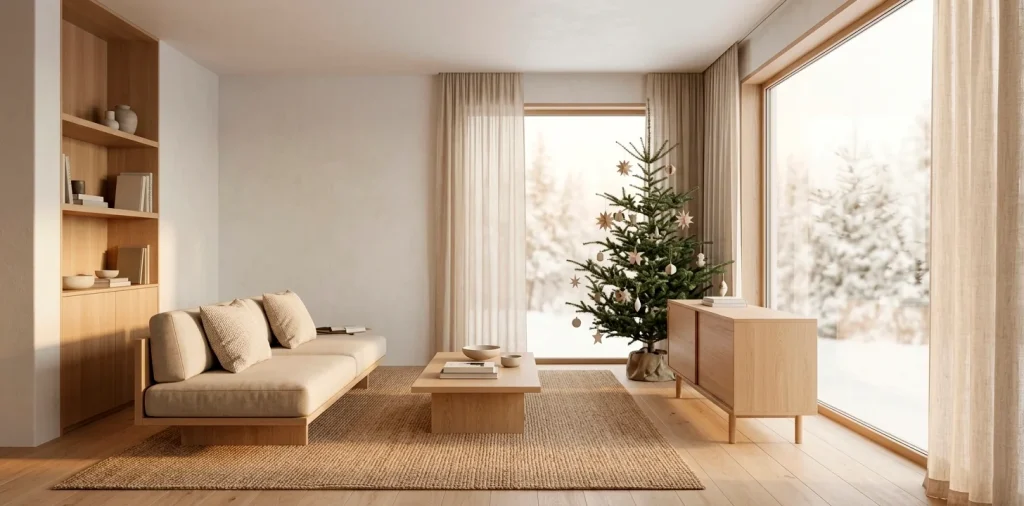
Let’s be honest: we’ve all had those years where our living rooms look like a glitter-covered crime scene. If you’re tired of the tinsel-induced migraines and want a holiday vibe that feels more like a spa day, it’s time to embrace the Japandi style. I’m talking about that perfect marriage where Scandi hygge meets Japanese minimalism. Ready to build a tree that actually lets you breathe? ✨
The Core Philosophy of Japandi Holiday Decor
You want a home that feels calm, not a department store clearance aisle. Japandi styling focuses on quality over quantity every single time. I find that when I strip away the plastic junk, the few pieces I keep actually tell a story. Have you ever felt like your house was closing in on you during December? That is likely the lack of ‘Ma’—the Japanese concept of negative space—talking to you.
By focusing on intentionality, you create a focal point that breathes. I personally love how this style forces me to curate rather than just accumulate. We aren’t just decorating; we are creating a sanctuary. IMO, a tree should enhance your room, not dominate it like an uninvited, neon-clad relative.

Selecting Your Perfect Canvas
Skip those ultra-dense, neon-green fake monsters that look like they belong in a cartoon. I always recommend a sparse Alpine-style tree or a high-quality Nordmann fir with plenty of space between the layers. You need actual gaps between the branches so your ornaments can exist as individual pieces of art, rather than being swallowed by a sea of plastic needles. Who wants their expensive handmade baubles lost in a green abyss? I certainly don’t! Choosing a tree with a slightly asymmetrical, organic shape captures that wabi-sabi vibe perfectly, making the whole setup feel authentic and grounded. 🌿
A useful little gift for your home
🎁 Free Plant Finder Tool
Filter 250+ houseplants by style, size, and care level to find your perfect green companion in seconds.
We’ll email you the link. Plus, you’ll join our newsletter for fresh home inspiration.

Mastering the Muted Palette
Red and green are fine for some, but we are going for ‘elevated earthling’ here. Your palette should feel like a hike through a winter forest, not a bowl of fruit punch.
I suggest sticking to creams, soft ochres, charcoal, and warm wood tones. These colors naturally harmonize with the wood and stone found in Japandi homes.
Do you really need that neon pink flamingo ornament? Probably not if you want this look to work. Stick to tones that reflect nature.
Layering these neutrals creates incredible depth without the visual noise. It is essentially a warm latte for your eyes, keeping the vibe sophisticated yet cozy.

The Magic of Paper and Origami
Nothing says Japanese influence quite like origami-style paper ornaments. I am obsessed with how light catches the sharp folds of a paper star or a pleated bauble. These pieces add a geometric interest that contrasts beautifully with the soft needles of the tree. Plus, they won’t shatter when your cat inevitably decides the tree is its new climbing frame—total win-win. If you want to lean into the Scandi side too, you can find more inspiration in these Nordic Christmas decor touches that blend seamlessly with this look.

Lighting: Glow Over Sparkle
Please, for the love of all things aesthetic, ditch the cold blue LEDs. You want a warm, golden glow that makes the room feel like it’s lit by a fireplace.
I prefer using micro-fairy lights on a copper wire because the wire disappears into the branches. It makes the light look like it is floating within the tree rather than being wrapped in an ugly green plastic cord.
Ever noticed how a harsh light ruins the mood? Keep the bulb count low so the light is subtle and inviting.

Embracing Natural Materials
Japandi thrives on tactile honesty, so I always reach for materials like raw wood, linen, and felt. Plastic just feels ‘off’ when you’re trying to channel this vibe. I once tried to mix in some shiny tinsel and it looked like my tree was wearing a cheap disco suit. Never again.
Focus on ornaments that feel good in your hand. Felted wool acorns or simple turned-wood spheres add a rustic Scandi warmth that balances the clean Japanese lines perfectly. They bring a touch of the outdoors inside without the mess. 🌲

Grounding the Look with a Tree Base
If I see one more shiny red polyester tree skirt with a cartoon reindeer, I might actually lose it. To stay true to the aesthetic, you must ground the tree with something structural and organic.
Use a woven seagrass basket or a solid wood tree collar. This grounds the tree and hides that hideous metal stand that always ruins the aesthetic of an otherwise perfect room.
I love how a basket adds a chunky texture to the bottom of the display. It makes the tree look like it is actually growing out of the floor.
It also provides a clean perimeter for your gifts. For more tips on keeping your entrance just as serene and functional, check out this guide on 10 Japandi essentials for a calm entryway.

The Power of Negative Space
The hardest part for most people is knowing when to stop. You do not need to cover every square inch of green. In fact, leaving ’empty’ spots is exactly what makes a Japandi tree look expensive and curated.
I usually step back every five minutes to check the balance. If one side looks too busy, I am not afraid to pull things off. Remember, the tree itself is a beautiful natural element—don’t hide it! ✋

Texture Over Pattern
In the world of Japandi, texture is the king of interest. Instead of busy patterns or loud text on ornaments, I look for variations in the finish. Think matte vs. gloss or smooth wood vs. rough stone. This subtle variety keeps the eye moving without being overwhelming. It is the difference between a loud shout and a confident whisper. I find that a mix of sand-textured ceramic baubles and smooth glass ones creates a sophisticated rhythm that feels incredibly high-end.

Maintaining the Vibe Through New Year
Japandi trees are great because they don’t look ‘sad’ once the 26th hits. Because the look is so natural, you can leave it up longer without feeling like you’re living in a holiday hangover.
I just make sure to keep the water levels high if it’s a real tree. A dry, brown Japandi tree isn’t ‘wabi-sabi’—it is just a fire hazard. FYI, a quick misting can keep those needles looking fresh and vibrant.
Keep the surrounding area tidy and clear of clutter to maintain that zen-like feeling until you’re ready to pack it all away. Which part of the Japandi look are you most excited to try out first? Let me know in the comments!

A useful little gift for your home
🎁 Free Plant Finder Tool
Filter 250+ houseplants by style, size, and care level to find your perfect green companion in seconds.
We’ll email you the link. Plus, you’ll join our newsletter for fresh home inspiration.
Conclusion
Styling a Japandi Christmas tree is all about finding peace in the middle of a busy season. By choosing natural materials, a muted palette, and embracing a little empty space, you create a holiday centerpiece that is both timeless and trendy. It’s about quality, not clutter. So, grab a warm drink, put on some chill lo-fi beats, and start curating your most serene holiday ever. Happy decorating! ☕