Skip to content
Struggling with a living room that feels more like a shoebox than a sanctuary? Trust me, I’ve been there, staring at a sofa that seemingly takes up half the zip code while tripping over a stray ottoman. You don’t need a mansion to host a movie night; you just need a smarter plan. I’ve gathered my favorite tricks to help you reclaim your space and sanity. 😉
Pull Furniture Away From the Walls
Most people shove their couch against the wall like they’re trying to hide a giant hole in the drywall. Honestly, I did the same thing in my first studio until I realized it makes the room look like a high-stress waiting room. By pulling your sofa just a few inches away from the wall, you create instant breathing room and a much more inviting vibe.
This “floating” technique tricks the eye into thinking the walls are further away than they actually are. Plus, you finally get a hidden spot to manage those messy charging cables that usually dangle everywhere! It’s a small shift that offers a massive psychological boost to the flow of the room.

Define Zones With Area Rugs
Ever wondered why your tiny room feels like a chaotic mess of furniture? It’s probably because you haven’t “grounded” your pieces yet. Using a large area rug to anchor your seating area creates a distinct “room within a room” without the need for bulky dividers. Make sure all the furniture legs sit on the rug to keep things looking intentional rather than accidental. IMO, a rug that’s too small is the ultimate design crime—it just makes the floor look like it’s wearing a tiny, awkward postage stamp.
A useful little gift for your home
🎁 Free Plant Finder Tool
Filter 250+ houseplants by style, size, and care level to find your perfect green companion in seconds.
We’ll email you the link. Plus, you’ll join our newsletter for fresh home inspiration.

Utilize Vertical Storage and High Shelving
When you run out of floor space, the only way to go is up! I love installing floating shelves near the ceiling to draw the eye upward, which miraculously makes the ceiling feel higher. It’s the perfect spot for books or those knick-knacks you can’t bear to toss but don’t want cluttering your coffee table.
You should also consider tall, narrow bookcases that maximize storage while maintaining a slim footprint. If you keep the floor clear, the whole room feels significantly lighter.
Think about adding some greenery up high to soften the look of hard wooden shelves. Trailing plants like Pothos work wonders for this.
If you want to add a bit of texture to your walls while keeping things airy, check out these macrame fiber art ideas.

Mirror Magic for Visual Depth
This is the oldest trick in the book for a reason: it actually works. Hanging a large mirror opposite a window reflects natural light and creates the illusion of a whole second room. I once lived in a place so small I felt like a sardine until I leaned a floor-length mirror against the main wall. Suddenly, the space felt twice as wide, and I stopped feeling like I was living in a closet! Just ensure you’re reflecting something pretty, like a plant or a painting, rather than your pile of laundry. 😅

Swap the Bulky Table for an Ottoman
Standard coffee tables are often just giant wooden shins-bruisers that take up too much precious real estate. Instead, I suggest using a plush, oversized ottoman. It serves as a footrest, extra seating when friends drop by, and—with a stylish tray on top—a perfectly stable surface for your coffee.
Choose an ottoman with built-in storage to hide away extra blankets or board games. This double-duty furniture is a total lifesaver for anyone dealing with a hoarding tendency like mine.
Design elements:
- Round shapes to improve traffic flow.
- Velvet or leather textures for a premium feel.
- Hidden storage compartments for clutter control.

The Corner Sofa Strategy
You might think a sectional is too big for a small room, but a compact L-shaped sofa can actually save space. By tucking it into a corner, you eliminate the need for multiple chairs and clear up the center of the room. It creates a cozy nook that feels like a warm hug after a long day.
Just make sure you measure twice before buying! There is nothing more heartbreaking than a sofa that blocks the entrance to the kitchen by two inches. Trust me, I’ve had to return a ‘dream couch’ because of my own optimistic measuring skills.

Go Invisible With Acrylic Furniture
If you want the functionality of a desk or chair without the visual weight, go transparent. Acrylic or “ghost” furniture provides a surface to work or eat on while letting the eye pass right through it. It’s like the furniture isn’t even there! This keeps the room looking open and uncluttered, which is FYI, the secret to staying sane in under 500 square feet. I personally love an acrylic coffee table because it shows off a beautiful rug underneath rather than hiding it.

Turn a Window Into a Seat
Do you have a window that’s just… sitting there? Why not turn that ledge into a functional reading nook? Adding a custom bench or even just a sturdy low bookshelf with a cushion on top creates extra seating without taking up the middle of the room. It’s the ultimate spot for people-watching or drinking tea while pretending you’re in a moody indie movie.
You can even build storage drawers into the base of the bench.
This uses space that is usually ignored or blocked by bulky curtains.
By keeping the height low, you also ensure that you aren’t blocking any of that precious natural light coming in.
It’s a functional, cozy, and super smart way to use every inch of your perimeter.

The Console Table Behind the Sofa
If your sofa isn’t against a wall, place a slim console table directly behind it. This creates a functional ledge for lamps, drinks, or decor without needing bulky end tables on either side. It’s a great way to separate the living area from a dining space or entryway in an open-concept layout. I use mine to hold my growing collection of succulents, which—let’s be real—is the only thing keeping my apartment feeling alive.

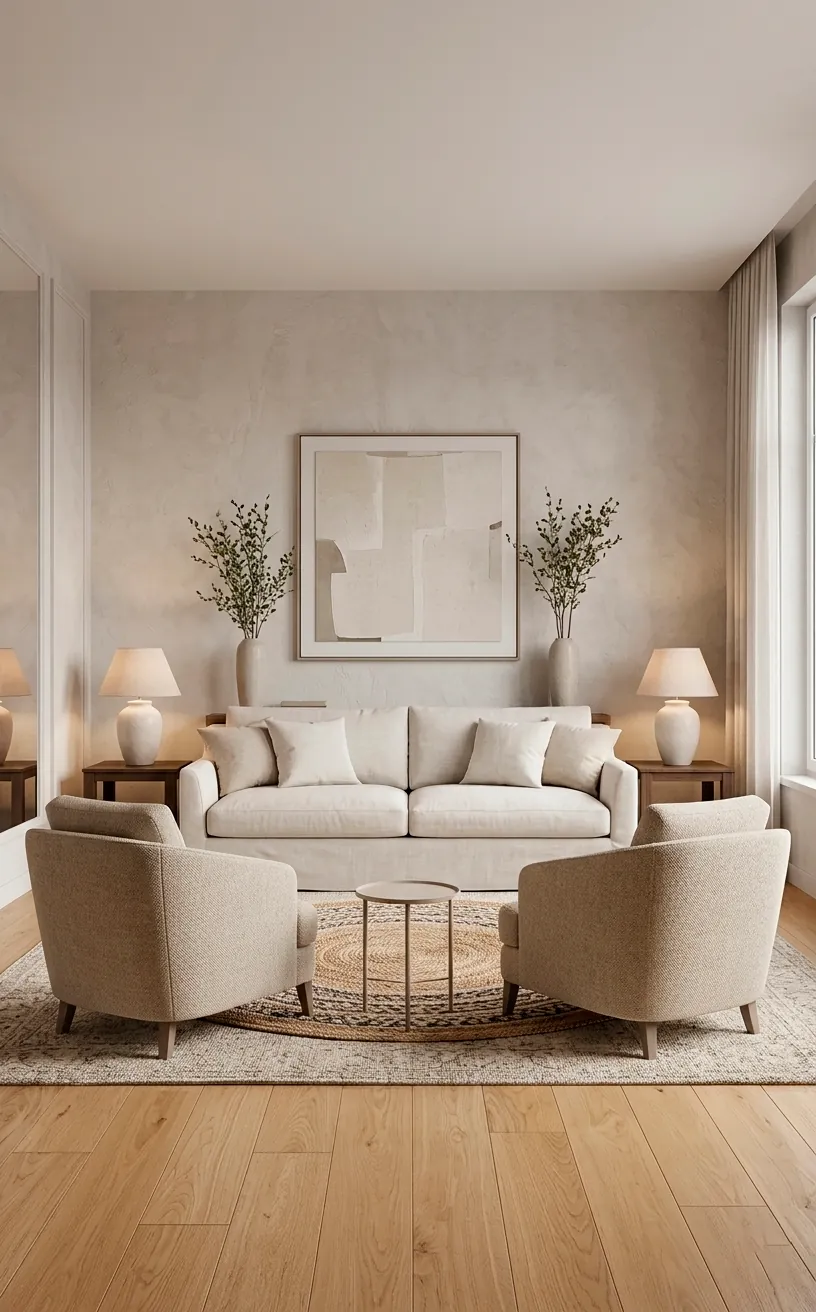
Lean Into Symmetry
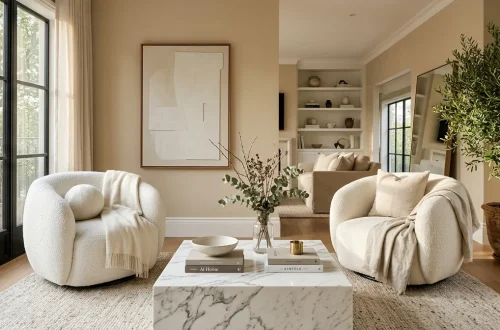
When a room is small, the human brain craves order. Creating a symmetrical layout—like two identical chairs facing each other or matching lamps on either side of the sofa—makes the space feel intentional and calm. It reduces visual noise, which can often make a small room feel cluttered and stressful. I find that a balanced room always feels more high-end and curated, even if the furniture came from a thrift store.
You should try pairing this approach with a neutral color palette to really maximize that serene vibe. For more inspiration on creating a peaceful environment, take a look at these Japandi living room ideas.
Symmetry tips:
- Use pairs of pillows.
- Balance art on the walls.
- Align furniture with architectural features.
A useful little gift for your home
🎁 Free Plant Finder Tool
Filter 250+ houseplants by style, size, and care level to find your perfect green companion in seconds.
We’ll email you the link. Plus, you’ll join our newsletter for fresh home inspiration.
Conclusion
Living small doesn’t mean you have to live without style. By floating your furniture, embracing mirrors, and thinking vertically, you can turn any cramped corner into a functional masterpiece. Which one of these layout hacks are you going to try first? Let me know in the comments—I’d love to hear how you’re transforming your space! Happy decorating! ✨